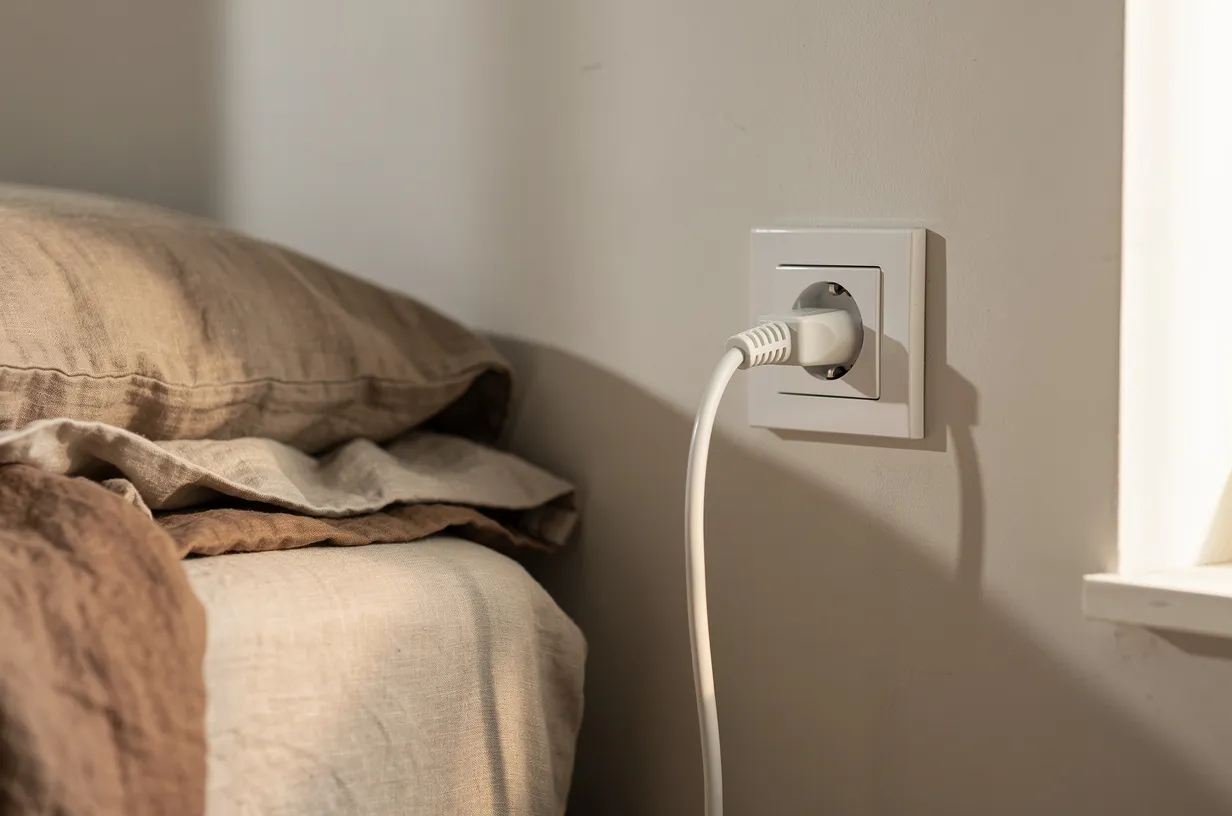
Yes, an extension cord is fine with a grounding sheet, as long as it’s a genuine three-prong grounded cord in good condition, plugged into an outlet you know is actually grounded. A cheap two-prong cord, a damaged cord, or an “ungrounded” adapter defeats the whole point.
Extension cords are safe for grounding sheets when the cord has a working ground pin and the outlet behind it is genuinely grounded. Skip two-prong cords, cheap cube taps, and anything with a bent or missing third prong.
Can you use an extension cord with a grounding sheet at all?
You can. The sheet’s cord clips or snaps to a mat or patch, runs to a plug, and that plug needs a path to earth ground, the same round pin you see on a standard three-prong appliance plug. An extension cord doesn’t change that path, it just relocates it, as long as the cord itself carries the ground wire all the way through.
Where people get this wrong is grabbing whatever cord is in the junk drawer. Some cheap extension cords, especially older two-prong ones or the flat brown kind meant for lamps, have no ground wire at all. Plug a grounding sheet into one of those and you’ve got a cord, not a ground connection.
What kind of extension cord actually works?
Look for a standard grounded extension cord: three flat blades on the plug, a matching three-hole socket on the other end, and a round third prong on both. Most hardware-store cords rated for indoor use are built this way. A short one is better than a long one here, mostly for practical reasons, not because the ground signal weakens over a few extra feet.
Check the cord for cracks, exposed wire, or a wobbly third prong before you trust it. A grounding sheet cord already has a resistor built in to limit current to a trace amount, so the concern isn’t shock from the sheet itself. It’s whether a worn extension cord is doing its basic job of carrying that ground path cleanly.
| Extension cord type | Works for a grounding sheet | Why |
|---|---|---|
| Standard 3-prong grounded cord, good condition | Yes | Carries the ground wire straight through to the outlet |
| 2-prong ungrounded cord | No | No ground wire, nothing to connect to |
| 3-prong cord with a broken or missing ground pin | No | Looks grounded, isn’t |
| Cheap cube tap or power strip with no ground pass-through | Check first | Some pass the ground through, some don’t |
| Grounded surge protector power strip | Usually yes | See our Can You Use a Grounding Sheet With a Surge Protector? guide for the details |
Does the extension cord need to be short?
Not for electrical reasons. A properly grounded cord carries the ground connection whether it’s six feet or twenty-five feet long, the wire itself isn’t degrading the signal in any meaningful way over normal household distances. The practical reason to keep it short is tripping hazards and a cleaner setup near the bed, not conductivity.
How do you know the outlet behind the extension cord is actually grounded?
This is the part worth five minutes and a couple of dollars. A cheap plug-in outlet tester, the kind with three small lights, checks the outlet itself for a proper ground before you ever plug anything into it. If the outlet fails, an extension cord won’t fix that, you’re just moving the same bad ground further from the wall. Older homes and some apartments are the most common places to find a missing or reversed ground. We go through this in more depth in No Grounded Outlet? How to Use a Grounding Sheet if that’s your situation.
If you’re not sure whether your setup is grounded at all, it’s worth reading How to Test a Grounding Sheet With a Multimeter before you assume the extension cord is the weak link. Sometimes it’s the cord, sometimes it’s the outlet, and testing tells you which.
When should you skip the extension cord entirely?
If the only outlet within reach is a two-prong outlet with no ground at all, an extension cord can’t manufacture a ground that isn’t there. In that case you’re looking at a different fix, not a longer cord. No Grounded Outlet? How to Use a Grounding Sheet covers the actual workarounds for that situation, including when a ground rod setup makes more sense than fighting old house wiring.
Also skip any cord you’re not fully sure about. If the third prong wiggles, if the cord’s been run under a rug for years, or if it came free with something else and you don’t know its history, replace it. A new grounded extension cord costs a few dollars next to the point of the whole setup.
The bottom line
An extension cord doesn’t add risk to a grounding sheet on its own. The risk comes from using an ungrounded cord, a damaged one, or an outlet that only looks grounded. Test the outlet, use a real three-prong cord in decent shape, and the extension cord is a non-issue. For the full setup process, including cord connectors and clip placement, our How to Use Grounding Sheets: Setup, Care and Daily Practice guide walks through it start to finish, and Grounding Sheet Cords and Connectors Explained covers the clip and snap hardware if that’s where you’re stuck.
If you’re shopping for a sheet and want one less thing to worry about, Premium Grounding uses stainless-steel fiber instead of silver thread, so it doesn’t oxidize and lose conductivity the way silver sheets can after months of washing. It comes with a standard grounded cord and a 90-night trial, which makes it easy to test your actual outlet setup before you commit.
Premium Grounding Sheet
30% stainless-steel fibers instead of silver, so it will not oxidize and lasts about five times longer. Fits under your fitted sheet, ships worldwide, and comes with a 90-night trial and a 3-year warranty.
Check price on Premium GroundingFrequently asked questions
Will a power strip work instead of a straight extension cord?
A grounded power strip generally works the same way, as long as it passes the ground through rather than blocking it. Not every cheap strip does. If it has a working three-prong outlet and you’ve confirmed the wall outlet feeding it is grounded, it’s fine to use.
Does a longer extension cord reduce how well grounding works?
No, not in any way that matters for household lengths. A grounded cord carries the connection the same whether it’s a few feet or twenty-five feet. Keep it short for safety and tidiness, not because the ground gets weaker.
Can you use an adapter to turn a 2-prong outlet into 3-prong for this?
Those cheater adapters plug a 3-prong cord into a 2-prong outlet, but they don’t create a ground where none exists. Unless the outlet box itself is grounded and the adapter’s tab is screwed to a grounded screw, nothing has actually been grounded.
Is it safe to use a grounding sheet with a surge protector and an extension cord together?
Usually yes, as long as every piece in the chain, cord, strip, and outlet, is properly grounded. Adding links to the chain adds more places for a bad connection to hide, so test the final outlet rather than assuming each piece is fine.
How do you check if an extension cord itself is bad?
Look for a wobbly, bent, or missing third prong, cracked insulation, or a plug that feels loose in the outlet. If in doubt, a cheap outlet tester plugged into the far end of the cord will tell you whether the ground is actually making it through.
- How to Wash Grounding Sheets Without Killing Conductivity
- How to Set Up a Grounding Sheet: Outlet vs Ground Rod
- How Do I Ground Myself? 7 Ways, From Free to Effortless
- Grounding Outside: Best (and Worst) Surfaces for Earthing
- Grounding in the City: How to Earth Yourself in an Apartment
- DIY Grounding Sheets: Can You Make Your Own? (And Should You?)
- Grounding While Traveling: How to Earth Yourself Away From Home
- 7 Grounding Sheet Setup Mistakes That Kill the Connection
- No Grounded Outlet? How to Use a Grounding Sheet
- Using a Ground Rod for Your Grounding Sheet
- Grounding Sheets and GFCI Outlets Explained
- Grounding in an Apartment: What Works
← How to Use Grounding Sheets: Setup, Care and Daily Practice