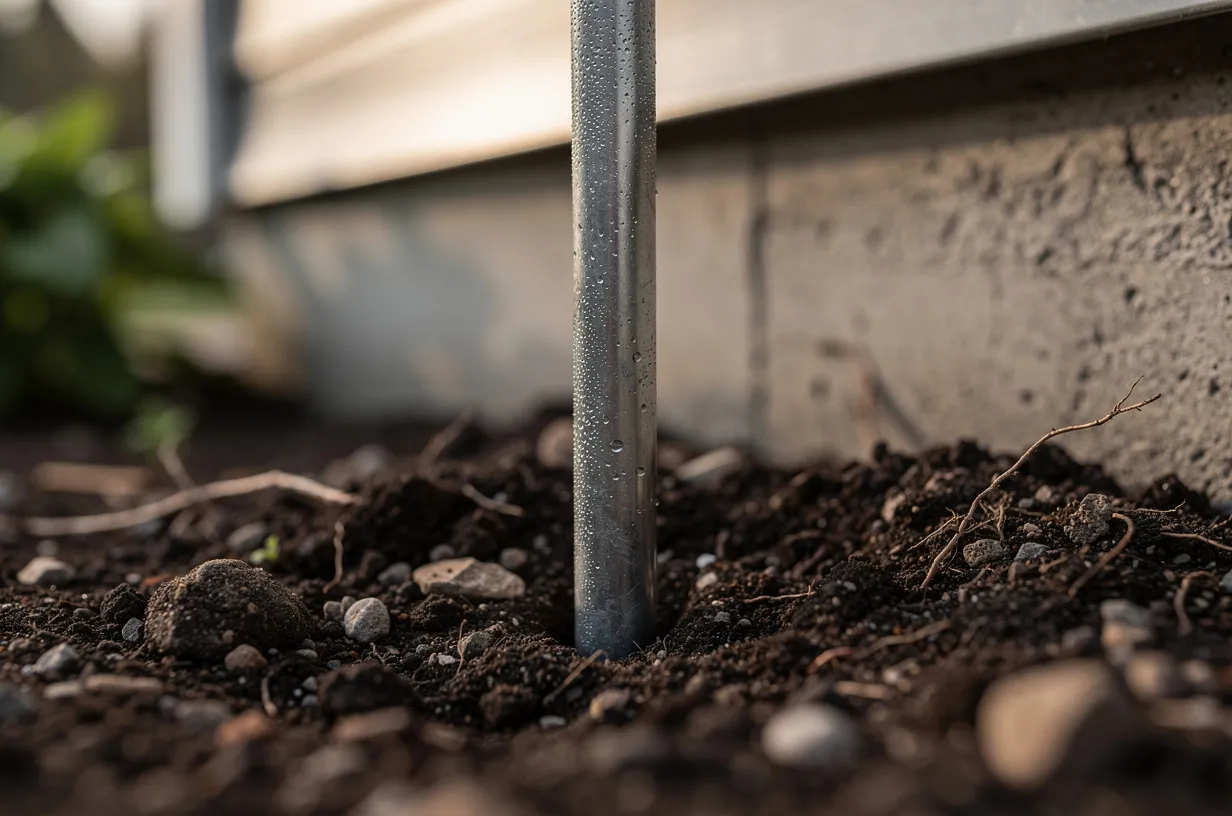
No, a two-prong outlet or an ungrounded circuit won’t give a grounding sheet a real earth connection, but you’re not stuck. You can run an extension cord to a grounded outlet elsewhere in the house, drive a ground rod outside a window, or have an electrician add a proper ground. Skip the “cheater” plug adapters that just snap the third prong off, though: they don’t create a ground, they just hide the problem.
No grounded outlet doesn’t mean no grounding. A ground rod or a grounded outlet in another room both work fine. What doesn’t work is forcing a three-prong plug into an ungrounded outlet and assuming it’s connected.
How do you know your outlet isn’t actually grounded?
Homes built before the early 1960s often have two-slot outlets with no ground pin at all. That’s the obvious case. The sneakier one is a three-prong outlet that looks grounded but isn’t wired correctly behind the wall, which shows up more than people expect in older rewires and DIY jobs.
A cheap outlet tester (the plug-in kind with three lights, a few dollars at any hardware store) will tell you in seconds whether an outlet is grounded, and whether it’s wired correctly. If you want to go further and confirm continuity yourself, we cover the steps in How to Test a Grounding Sheet With a Multimeter. Either way, test before you assume.
Can you use a ground rod instead of an outlet?
Yes, and it’s the most direct option if your outlets are ungrounded or you’d rather skip the wiring question entirely. Most grounding sheet cords are designed to work with either a standard outlet plug or a rod you drive into damp soil outside, usually near a window so the cord can reach your bed.
The rod needs to actually sit in the earth, not concrete or a dry planter, and it needs to stay there consistently for the connection to mean anything. We walk through placement, depth and testing in Using a Ground Rod for Your Grounding Sheet.
What about GFCI outlets? Don’t those count as grounded?
This trips people up. A GFCI (ground-fault circuit interrupter) outlet protects you from shock by monitoring current imbalance, and code actually allows GFCI protection on some ungrounded circuits as a safety upgrade. But that’s a different thing from having an earth ground.
A GFCI-protected outlet on an ungrounded circuit still won’t give your grounding sheet a path to earth. Look for the small “no equipment ground” sticker some electricians leave on these outlets, or just test it. More detail on how GFCI and grounding interact in Grounding Sheets and GFCI Outlets Explained.
What if you’re renting or can’t touch the wiring?
Renters usually have the easiest fix: find a grounded outlet somewhere else in the unit (kitchens and bathrooms are frequently grounded even in older buildings, since code has required it there for decades) and run a longer cord to the bedroom. It’s not elegant, but it works, and it doesn’t require touching anything permanent.
A ground rod through a window is the other renter-friendly route, since it needs no electrical work at all. We go deeper on apartment-specific setups in Grounding in an Apartment: What Works, including what to do when there’s no accessible ground anywhere and no window near the bed.
Should you just call an electrician?
If you own the place and the outlet situation is genuinely bad, an electrician adding a grounded circuit or a GFCI with proper labeling is a permanent fix, and it benefits more than your grounding sheet. It’s the priciest option here, but it’s the only one that also resolves the underlying wiring question for good.
Comparing your options
| Option | Cost | Effort | Best for |
|---|---|---|---|
| Extension cord to a grounded outlet elsewhere | Low | Low | Renters, quick fix |
| Ground rod outside a window | Low | Medium | No grounded outlet anywhere in reach |
| Electrician adds a grounded circuit | Higher | Low (once scheduled) | Homeowners, older houses |
| “Cheater” adapter that removes the ground prong | Low | Low | Nobody, skip this one |
Whichever route you take, an outlet tester or multimeter check afterward is worth the two minutes. A grounding sheet plugged into something that only looks grounded isn’t doing anything, and you’d never know without checking.
Premium Grounding Sheet
30% stainless-steel fibers instead of silver, so it will not oxidize and lasts about five times longer. Fits under your fitted sheet, ships worldwide, and comes with a 90-night trial and a 3-year warranty.
Check price on Premium GroundingIf you already have a working ground and just haven’t set the sheet up yet, How to Set Up a Grounding Sheet: Outlet vs Ground Rod covers the outlet and ground rod setup steps in order. And if your sheet is connected but you’re not sure it’s actually working, Grounding Sheet Not Working? Troubleshooting is the troubleshooting checklist we send people through first.
Frequently asked questions
Can I ground a sheet with no ground wire at all in the house?
Yes, a ground rod driven into soil outside a window bypasses the house wiring entirely and connects the sheet’s cord directly to earth. It’s the standard workaround for homes with no grounded circuits.
Is it safe to use an adapter that removes the third prong?
Skip it. Those “cheater” adapters let a three-prong plug fit a two-prong outlet, but they don’t create a ground path, they just remove the warning that one is missing. Use a real grounded outlet or a ground rod instead.
Do bathroom or kitchen outlets count as grounded?
Often yes, since code has required grounded (and usually GFCI-protected) outlets in kitchens and bathrooms for decades, even in older buildings where bedrooms weren’t updated. Test with an outlet tester before relying on it, since exceptions exist.
Will a GFCI outlet work even if it’s not grounded?
A GFCI outlet can be installed on an ungrounded circuit for shock protection, but that doesn’t give it an earth ground. Your grounding sheet needs an actual ground connection, so test the outlet rather than assuming GFCI means grounded.
- How to Wash Grounding Sheets Without Killing Conductivity
- How to Set Up a Grounding Sheet: Outlet vs Ground Rod
- How Do I Ground Myself? 7 Ways, From Free to Effortless
- Grounding Outside: Best (and Worst) Surfaces for Earthing
- Grounding in the City: How to Earth Yourself in an Apartment
- DIY Grounding Sheets: Can You Make Your Own? (And Should You?)
- Grounding While Traveling: How to Earth Yourself Away From Home
- 7 Grounding Sheet Setup Mistakes That Kill the Connection
- Using a Ground Rod for Your Grounding Sheet
- Grounding Sheets and GFCI Outlets Explained
- Grounding in an Apartment: What Works
- Grounding Sheets on Adjustable Beds
← How to Use Grounding Sheets: Setup, Care and Daily Practice