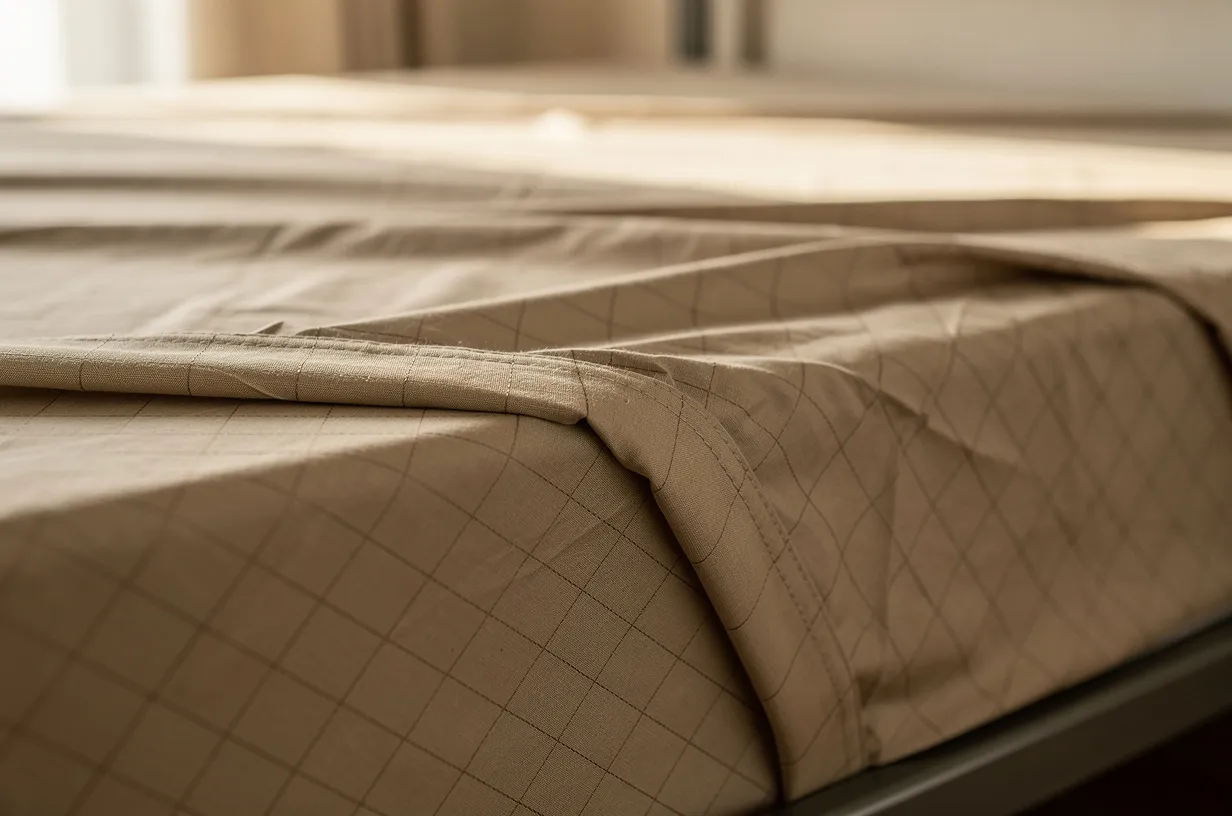
Short answer: it doesn’t matter. A grounding sheet works through the cord that runs from the sheet to your wall outlet, not through your bed frame. Sleep on a steel frame, a wood platform, or a decade-old box spring, and the electrical path is identical. Frame material only shows up as a practical question, not an electrical one.
Metal or wood, your bed frame has no measurable effect on how a grounding sheet functions. The only things that matter are a properly grounded outlet and a snug connection between the conductive fabric and your skin.
Does a metal bed frame change how a grounding sheet works?
Not electrically. A grounding sheet has conductive threads woven into the fabric, usually around a fitted-sheet-sized panel, that connect to a cord. That cord plugs into the round third prong on a US outlet, which ties back to your home’s grounding system. We walk through that full path in How to Set Up a Grounding Sheet: Outlet vs Ground Rod.
Your body sits on the fabric. The fabric connects to the cord. The cord connects to the outlet. At no point does your bed frame enter that circuit, so it can’t add current, subtract current, or interfere with it. A metal frame sitting underneath the mattress is just metal furniture, not a wired component.
Why do people assume the frame matters?
Three reasons come up, and none of them are really about electricity. First, a metal frame looks like it should conduct something, so it’s an intuitive worry. Second, adjustable and motorized bases are usually metal, and those do raise a real practical issue (more on that below). Third, some people are folding in a separate concern about EMF exposure from having more metal near the bed, which isn’t something the grounding studies measured one way or the other.
If EMF exposure is your actual concern, treat it as its own question rather than assuming it changes how the grounding sheet performs. The sheet’s job is narrow: connect your skin to earth ground through the cord.
Metal frame vs wood frame, side by side
| Factor | Metal frame | Wood frame |
|---|---|---|
| Effect on grounding function | None, frame is outside the electrical path | None, frame is outside the electrical path |
| Cord routing | Watch for pinch points at joints, motors or hinges | Usually fewer moving parts to route around |
| Adjustable or motorized bases | Common, needs cord slack | Rare on adjustable bases |
| Sheet care | No special handling needed | No special handling needed |
| Squeaks or static from movement | Occasional frame noise, unrelated to the sheet | Slightly less likely to move or creak |
When should I actually pay attention to my frame?
The one real case is an adjustable or motorized base. Those bend and shift, and a grounding sheet cord that’s routed tight can get pinched or stretched at the hinge. Leave enough slack for the base to move through its full range, and keep the cord clear of any motor housing. If you’re on one of these, our guide to Grounding Sheets on Adjustable Beds covers cord placement in more detail.
Beyond that, most setup problems people blame on the frame turn out to be something else, a loose snap, a cord that’s not fully seated, or an outlet that isn’t grounded the way they assumed. We cover the most common ones in 7 Grounding Sheet Setup Mistakes That Kill the Connection.
What about a metal box spring underneath, the kind with steel coils? Same answer. The coils aren’t wired to anything, so they can’t add or drain conductivity either. If your mattress sits on a metal box spring and a metal frame, you’re not doubling up on anything, you just have two pieces of unconnected furniture doing what furniture does, holding the mattress up.
What if I switch frames later?
Nothing changes. If you move from a wood platform to a metal frame, or the other way around, your grounding sheet doesn’t need retesting because of the frame swap. What’s worth a quick check after any move is the outlet itself, since a different room or a different house means a different circuit. A simple plug-in outlet tester tells you in seconds whether that new outlet is actually grounded, which matters far more than what the bed is sitting on.
What about safety, does a metal frame add any risk?
The real safety variable is the outlet, not the bed frame. A grounding sheet’s cord connects to the outlet’s ground pin, and that connection is only as good as your home’s wiring. A miswired outlet is the actual risk to check for, and a cheap outlet tester from a hardware store settles it in seconds. If you’re not sure your outlet is properly grounded, read No Grounded Outlet? How to Use a Grounding Sheet before assuming a metal frame has anything to do with it.
If you have a pacemaker, another implanted medical device, or you’re pregnant, talk to your doctor before using a grounding sheet at all. That advice doesn’t change based on your frame, it’s about the device or the pregnancy, not the furniture.
If you’re setting up a grounding sheet for the first time, it’s worth choosing fabric that holds its conductivity past the first few months of washing, since that’s a more common failure point than anything related to your frame.
Premium Grounding Sheet
30% stainless-steel fibers instead of silver, so it will not oxidize and lasts about five times longer. Fits under your fitted sheet, ships worldwide, and comes with a 90-night trial and a 3-year warranty.
Check price on Premium GroundingFrequently asked questions
- How to Wash Grounding Sheets Without Killing Conductivity
- How to Set Up a Grounding Sheet: Outlet vs Ground Rod
- How Do I Ground Myself? 7 Ways, From Free to Effortless
- Grounding Outside: Best (and Worst) Surfaces for Earthing
- Grounding in the City: How to Earth Yourself in an Apartment
- DIY Grounding Sheets: Can You Make Your Own? (And Should You?)
- Grounding While Traveling: How to Earth Yourself Away From Home
- 7 Grounding Sheet Setup Mistakes That Kill the Connection
- No Grounded Outlet? How to Use a Grounding Sheet
- Using a Ground Rod for Your Grounding Sheet
- Grounding Sheets and GFCI Outlets Explained
- Grounding in an Apartment: What Works
← How to Use Grounding Sheets: Setup, Care and Daily Practice