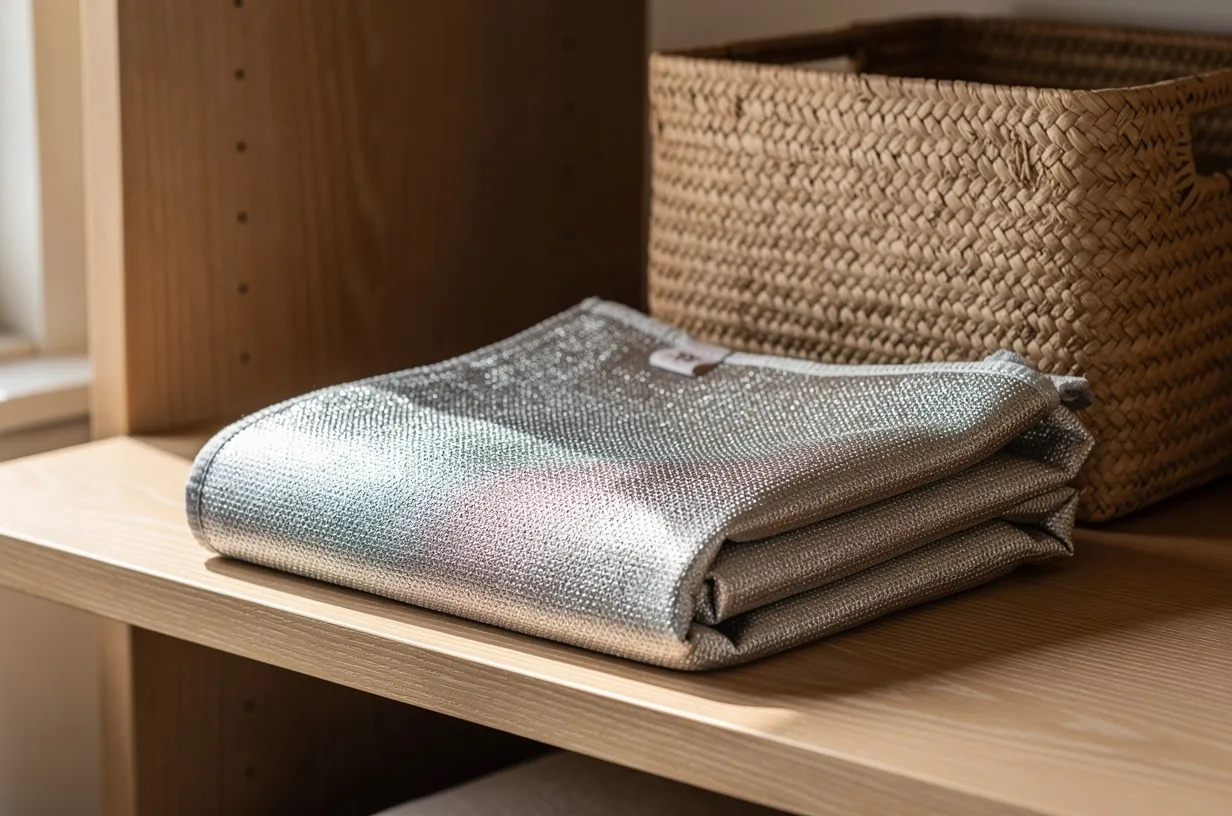
Storing a grounding sheet is not complicated, but it is easy to get careless about it and slowly wreck the conductive threads without ever noticing. The short version: fold it loosely instead of jamming it into a drawer, keep the snap or cord connector free of sharp bends, and store it somewhere dry rather than a damp closet, a garage or a car trunk. Do that and a decent grounding sheet will outlast years of washing cycles and nightly use.
Fold or roll a grounding sheet loosely, protect the snap and cord connector from kinks and crushing, and keep it dry when it is off the bed. You do not need to unplug it every morning, but for storage longer than a few weeks, disconnect it, let it air out, and pick a spot that stays dry.
Do you need to unplug a grounding sheet every day?
No. If you are sleeping on it nightly, most people just leave the cord clipped into the outlet and make the bed around it. Unplugging and replugging every morning adds wear at the connector for no real benefit, and that little metal snap is usually the first thing to fail on a cheap sheet.
Where unplugging matters is travel, deep cleaning, or any stretch where the sheet will not be used for a while. In those cases, disconnect it before you fold anything, so the cord is not trapped under the weight of the fabric.
What is the right way to fold a grounding sheet for storage?
Fold it the way you would fold a fitted sheet you actually cared about: gently, in thirds, without cramming it into a tight square. The conductive fibers, whether silver-coated thread or stainless steel, are thin and can develop weak points if you crease the same fold line over and over.
Roll it loosely instead of folding if you have the drawer space. A loose roll avoids sharp creases entirely, and it is the method I default to for anything I am packing away for more than a season.
Where should you keep it when it is off the bed?
Anywhere dry, at normal room temperature, out of direct sun. A linen closet or a dresser drawer works fine. What does not work: a damp basement, a bathroom cabinet that gets steamy, or a car trunk, especially in a hot, humid climate.
Moisture is the real enemy here, more than temperature. We break down why humidity specifically messes with conductivity in Grounding Sheets, Static and Humidity Explained, but the short version for storage is simple: dry air, dry fabric, dry cord.
Does storage actually affect how well a grounding sheet conducts?
Over time, yes, though washing and daily wear matter more than a few weeks in a drawer. Silver-thread sheets oxidize with repeated exposure to moisture and detergent, which is why older silver sheets often measure worse on a multimeter than a newer one from the same brand. Stainless-steel fiber holds up better against that kind of gradual degradation, which is one honest reason I default to stainless in my own bed.
Storage itself will not oxidize the threads the way washing and humidity do. But storing a sheet damp, right after a wash, is a fast way to encourage exactly that kind of breakdown, along with mildew you really do not want near your face.
What actually ruins a grounding sheet in storage?
Almost every storage failure I have seen traces back to one of a few habits. Here is the quick version, side by side.
| Do | Don’t |
|---|---|
| Let it dry completely after washing before folding | Fold or roll it while still damp |
| Roll loosely or fold along soft, varied lines | Crease the exact same fold every single time |
| Coil the cord loosely, connector last | Wrap the cord tightly around the folded sheet |
| Store in a drawer, closet or under-bed bin at room temperature | Leave it in a car trunk, garage or damp basement |
| Check the snap or plug for corrosion before reuse | Force a corroded connector back into the outlet |
Should you wash it before packing it away long-term?
Yes, if it is going to sit for more than a couple of weeks. Sweat and body oil left on the fabric will set in over time, and a sheet stored dirty tends to smell musty when you pull it back out. We cover the wash cycle, water temperature and detergent choices that protect conductivity in How to Wash Grounding Sheets Without Killing Conductivity, and the same rule applies here: let it air dry fully, flat if you can, before you fold it away.
If you are not sure whether your sheet still grounds properly after a long stretch in storage, that is worth checking before you assume it is fine. Our guide on How to Use Grounding Sheets: Setup, Care and Daily Practice walks through daily setup and care from the start, and it is a good refresher if you have not used the sheet in a while.
How long can a grounding sheet sit in storage before it needs replacing?
Storage alone will not put a sheet on the clock the way daily washing does. A well-stored sheet that has not been used or washed can sit for a long stretch and come back fine, as long as it stayed dry. What actually ages the conductive fibers is cumulative wash cycles and years of use, not shelf time. If you are trying to figure out whether an older sheet is worth keeping around, When to Replace a Grounding Sheet covers the signs to look for.
If you are shopping for one that is easier to store and wash without babying it, stainless-steel fiber sheets tend to be more forgiving of imperfect storage than silver-thread ones, since they resist oxidation better over time.
Premium Grounding Sheet
30% stainless-steel fibers instead of silver, so it will not oxidize and lasts about five times longer. Fits under your fitted sheet, ships worldwide, and comes with a 90-night trial and a 3-year warranty.
Check price on Premium GroundingFrequently asked questions
Can I fold a grounding sheet like a normal fitted sheet?
Yes, the same loose, gentle fold works fine. Just avoid packing it into a tight, compressed square, since repeated sharp creases along the exact same lines are what stress the conductive threads.
Should I store a grounding sheet in a plastic bag?
A breathable cotton pillowcase or storage bag is better than sealed plastic. Plastic can trap any residual moisture against the fabric, which is the opposite of what you want for a sheet with metal fibers woven through it.
Is it safe to leave a grounding sheet plugged in while I’m away for a week?
Yes, a short trip is not long enough to worry about. For anything longer than a few weeks, unplug it and store it properly so the cord is not stressed under a folded pile of fabric the whole time.
Can pets or kids damage the cord while it’s stored?
It happens more than you would think, especially with cats and chew-prone dogs. Coil the cord loosely and tuck it inside the folded sheet rather than leaving it dangling somewhere accessible.
Will storing a grounding sheet unplugged for a month hurt its conductivity?
No. Being unplugged does not degrade the metal fibers. What degrades them is moisture, washing wear and rough folding, not the simple fact of not being connected to an outlet for a while.
- How to Wash Grounding Sheets Without Killing Conductivity
- How to Set Up a Grounding Sheet: Outlet vs Ground Rod
- How Do I Ground Myself? 7 Ways, From Free to Effortless
- Grounding Outside: Best (and Worst) Surfaces for Earthing
- Grounding in the City: How to Earth Yourself in an Apartment
- DIY Grounding Sheets: Can You Make Your Own? (And Should You?)
- Grounding While Traveling: How to Earth Yourself Away From Home
- 7 Grounding Sheet Setup Mistakes That Kill the Connection
- No Grounded Outlet? How to Use a Grounding Sheet
- Using a Ground Rod for Your Grounding Sheet
- Grounding Sheets and GFCI Outlets Explained
- Grounding in an Apartment: What Works
← How to Use Grounding Sheets: Setup, Care and Daily Practice