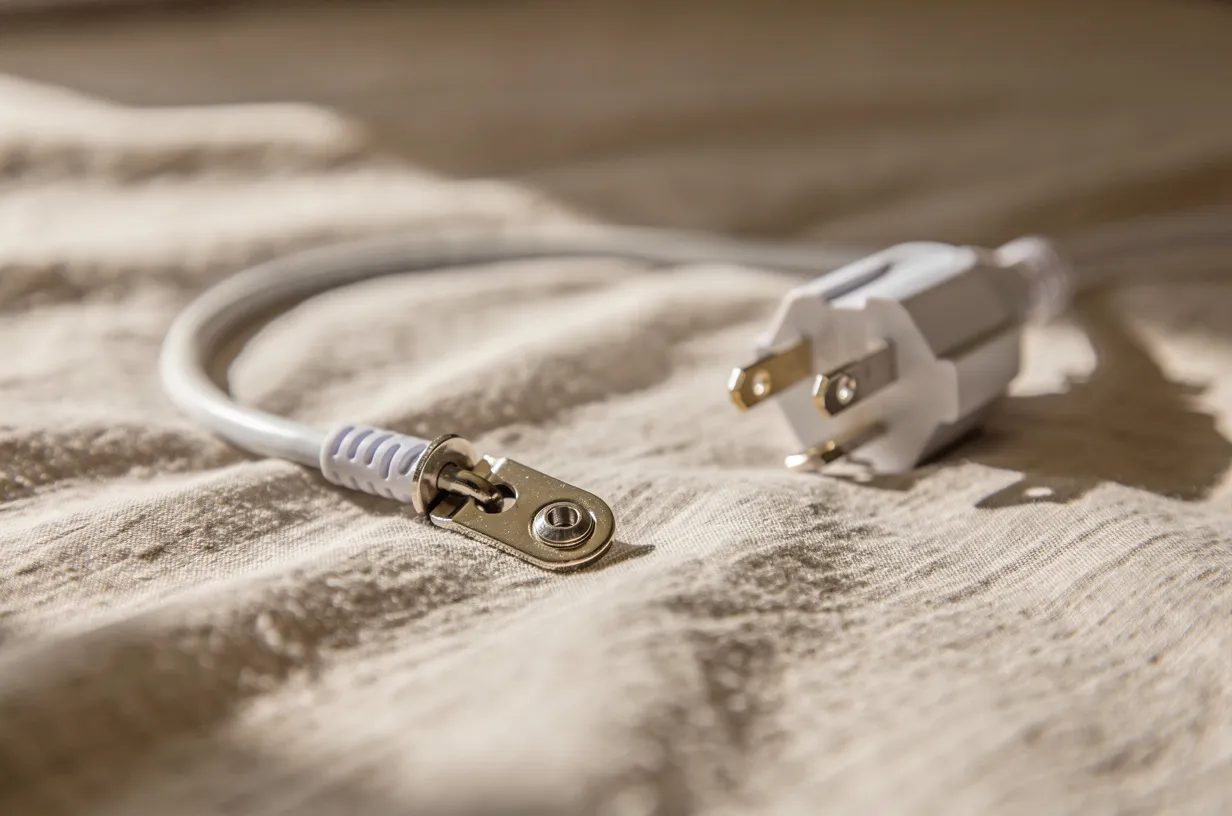
A grounding sheet cord is a short, unglamorous piece of hardware, and it’s also the part most likely to actually go wrong. Not the fabric, not the fibers woven into it. The cord and its connectors are doing the electrical work, so it’s worth understanding what each piece is for and what normal wear looks like versus a real problem.
The cord runs from a snap connector on the sheet to a three-prong grounding plug in your wall outlet. Two parts, one job: carry a path from the conductive threads in the fabric to your outlet’s ground. If either part is damaged, the whole setup stops doing anything.
What’s actually in a grounding sheet cord?
Strip it down and there are really only three components. A snap connector (sometimes a small alligator clip on cheaper kits) attaches to a conductive panel sewn into the sheet, usually near a corner seam. A length of insulated wire, typically 10 to 15 feet, runs from that snap to a plug. And the plug itself is a standard grounding plug shaped to fit the ground pin of a US three-prong outlet, not the two hot/neutral slots.
That last part matters more than it looks. The plug is designed to connect only to the ground pin. It isn’t drawing power and it isn’t touching live current, which is the detail people miss when they worry a grounding sheet is somehow “plugged into electricity.” We go through this in more detail in our guide to How to Set Up a Grounding Sheet: Outlet vs Ground Rod.
Snap connector vs alligator clip: does it matter?
Most sheets in this price range use a 10mm snap, the same kind you’d find on a jacket cuff, just metal-to-metal instead of metal-to-fabric. It’s quick to attach, low-profile enough to sleep near without noticing it, and it disconnects cleanly for washing.
Cheaper kits sometimes ship with an alligator clip instead. It works, but I’ve found it’s more likely to slip loose overnight if you toss around, and the teeth can snag delicate fabric over time. If you’re buying a replacement cord and have the choice, a snap-style connector is the more durable option for daily use.
What’s normal wear, and what means the cord is bad?
A cord that’s seen a year or two of daily use will usually show some cosmetic wear: the jacket near the plug might feel slightly stiffer, the snap might need a firmer press to click in. That’s fine on its own.
What isn’t fine: a cord jacket that’s cracked or split enough to show the wire inside, a plug pin that’s bent, loose, or discolored (a sign of past overheating), or a snap that no longer stays connected under light tension. Any of those means replace the cord rather than keep using it. The good news is that cords are cheap and sold separately from the sheet by most brands, so a worn cord isn’t a reason to replace the whole product.
| Sign | Normal, keep using | Replace the cord |
|---|---|---|
| Cord jacket | Slightly stiff near the plug | Cracked, split, wire visible |
| Snap connector | Needs a firm press to click | Won’t stay attached under light tension |
| Plug pin | Minor surface tarnish | Bent, loose, or discolored/scorched-looking |
| Continuity test | Reads continuity sheet-to-pin | No continuity or an intermittent reading |
If you’re not sure which category you’re in, a $10 multimeter settles it in under a minute. We walk through the exact steps in How to Test a Grounding Sheet With a Multimeter, and it’s worth doing once when the sheet is new so you know what a healthy reading looks like.
Can you extend or replace a cord yourself?
You can extend the run with a properly grounded extension cord if your outlet is farther from the bed than the stock cord reaches. See Grounding Sheets and Extension Cords: Is It Safe? for what to check before you do. What I wouldn’t recommend is cutting and splicing the cord yourself unless you actually know what you’re doing electrically. It’s a low-current path, not a high-risk one, but a bad splice defeats the whole point, since you’d have no reliable way to confirm the connection is still intact.
Replacement cords are the simpler fix in almost every case. Most manufacturers sell them separately for a fraction of the sheet’s price, and swapping a snap-style cord takes seconds.
Does the plug design affect how well grounding works?
Not meaningfully, as long as the plug fits your outlet’s ground pin snugly and the outlet itself is genuinely grounded. That second part is the one that actually determines whether any of this does anything. A pristine cord plugged into an outlet with a faulty or absent ground connection won’t ground you, no matter how new the hardware looks. If you’re not sure your outlet is properly grounded, a cheap outlet tester (the three-light kind sold at any hardware store) is worth the few dollars, and it’s a five-second check. If you’ve got an older home or an outlet you’re unsure about, our guide to No Grounded Outlet? How to Use a Grounding Sheet covers what to do when there’s no reliable ground available.
Premium Grounding Sheet
30% stainless-steel fibers instead of silver, so it will not oxidize and lasts about five times longer. Fits under your fitted sheet, ships worldwide, and comes with a 90-night trial and a 3-year warranty.
Check price on Premium GroundingThe cord is a small, replaceable part, and treating it that way, rather than fussing over it, is the right instinct. Check it now and then, replace it when it shows real damage, and confirm continuity with a multimeter if you ever doubt the connection. That’s the whole maintenance routine.
Frequently asked questions
Why does my grounding sheet cord have a snap connector instead of just plugging in directly?
The snap (sometimes called a press stud) is the low-profile connection point on the sheet itself, usually near a corner or the foot end. It clips into the conductive threads sewn into the fabric, and a separate cord runs from that snap to the wall. Splitting it into two pieces means the sheet stays flat and washable, and you’re not stuck replacing an entire sheet if the cord frays.
Can I use any grounding cord with any grounding sheet?
Mostly yes if the snap size matches (10mm snaps are the common standard), but check the manufacturer’s spec before buying a replacement. Some brands use a slightly different fitting or a banana-plug style connector instead of a snap, so a universal cord isn’t guaranteed to seat properly.
Is it safe to use an extension cord with my grounding sheet’s cord?
Generally fine if the extension cord itself is properly grounded (three-prong, undamaged) and you’re not daisy-chaining several together. We cover this in more depth in our guide to Grounding Sheets and Extension Cords: Is It Safe?.
How do I know if my grounding cord has gone bad?
The most reliable check is a multimeter reading continuity from the sheet’s conductive panel through to the ground pin, which we walk through in How to Test a Grounding Sheet With a Multimeter. Visually, look for a frayed cord jacket, a snap that no longer clicks in firmly, or a plug pin that’s loose or discolored.
Do I need to unplug the cord every time I wash the sheet?
Yes. Detach the cord at the snap before washing, always. The cord and plug are not washable, and leaving the snap attached risks tearing the fabric or the conductive thread around it.
- How to Wash Grounding Sheets Without Killing Conductivity
- How to Set Up a Grounding Sheet: Outlet vs Ground Rod
- How Do I Ground Myself? 7 Ways, From Free to Effortless
- Grounding Outside: Best (and Worst) Surfaces for Earthing
- Grounding in the City: How to Earth Yourself in an Apartment
- DIY Grounding Sheets: Can You Make Your Own? (And Should You?)
- Grounding While Traveling: How to Earth Yourself Away From Home
- 7 Grounding Sheet Setup Mistakes That Kill the Connection
- No Grounded Outlet? How to Use a Grounding Sheet
- Using a Ground Rod for Your Grounding Sheet
- Grounding Sheets and GFCI Outlets Explained
- Grounding in an Apartment: What Works
← How to Use Grounding Sheets: Setup, Care and Daily Practice