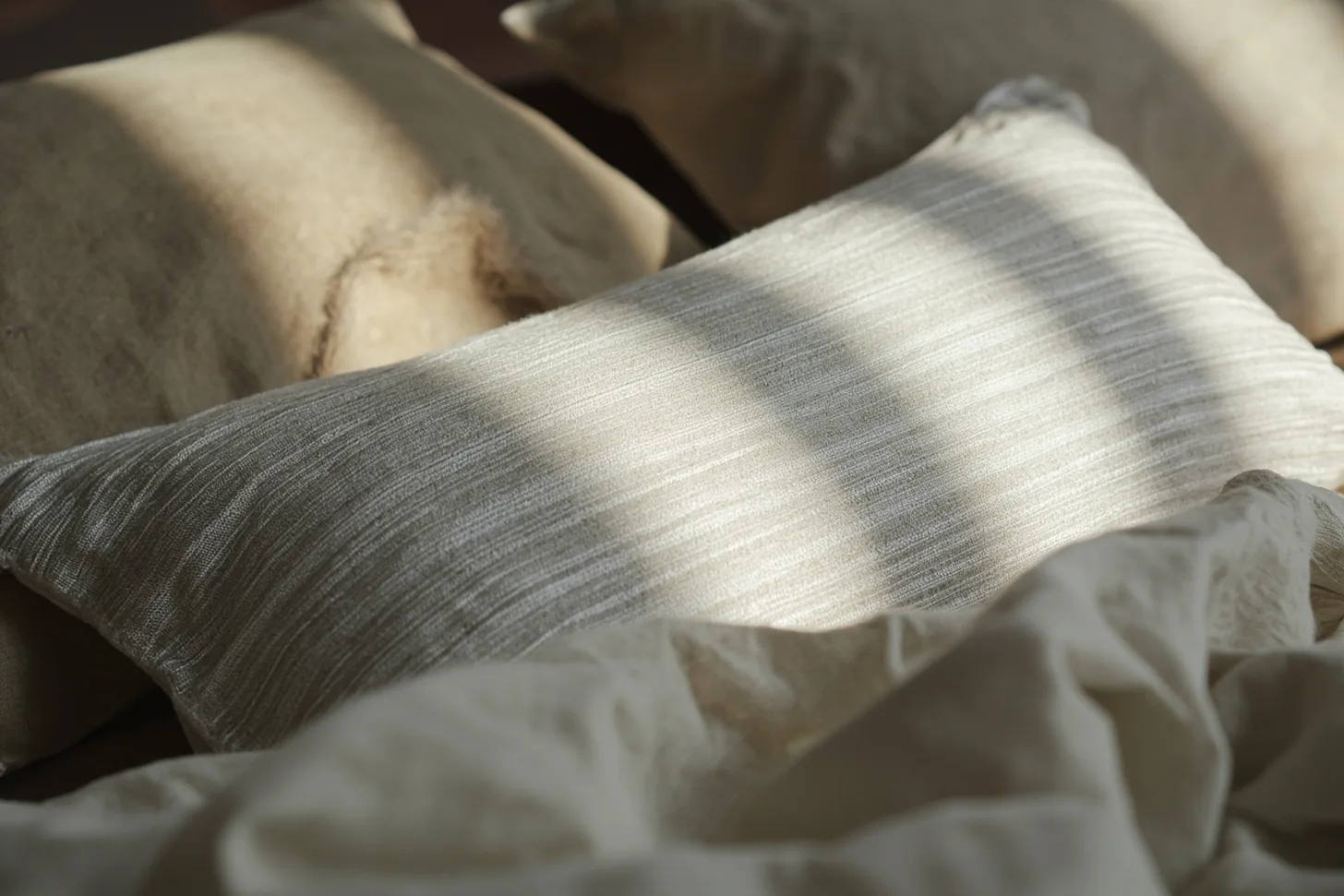
A grounding pillow case works the same way a grounding sheet does, just on a much smaller patch of your body. It’s a real, low-cost way to add a bit of earthing contact around your head, neck or hand while you sleep, but the surface area is small enough that it shouldn’t be your only grounding purchase if sleep quality is the goal.
Fine as a cheap add-on to a routine you already have. Skip it if you’re hoping one pillow case alone will match what a full grounding sheet does.
What is a grounding pillow case, exactly?
It’s a standard pillow case woven with conductive threads, usually the same stainless-steel or silver fiber used in grounding sheets, sewn through a cotton or cotton-blend base. A short cord with a snap connector runs from the case to a plug that goes into the ground pin of a wall outlet, the same protective-earth path a grounding sheet or Grounding Blankets: How They Work and When to Pick One Over Sheets uses.
The idea is simple: wherever your skin touches the conductive fabric, you’re in electrical contact with the building’s earth ground for as long as you’re touching it. That part of the mechanism is not controversial, it’s basic electrical engineering. What’s still debated is how much any of this does for your body, and we get into that honestly on our Grounding Products Beyond Sheets: Blankets, Socks, Pillowcases & More hub.
How much actual contact do you get from a pillow case?
Less than you’d think. Your face and one side of your head touch the fabric for part of the night, and your hand might rest on it occasionally, but that’s a fraction of the skin contact a full sheet gives you across your back, legs and arms. Here’s roughly how the contact time compares by product type.
| Product | Typical skin contact per night | Body area covered |
|---|---|---|
| Grounding pillow case | 2-4 hours, intermittent | Face, ear, one hand |
| Grounding fitted sheet | 6-8 hours, near-continuous | Back, legs, arms, feet |
| Grounding pillow case + sheet | 6-8 hours | Full body plus head and neck |
If you already sleep on a grounded sheet, adding a matching pillow case is a reasonable way to extend coverage to your head and neck for not much money. If you’re starting from zero, the sheet is where the bulk of the contact time comes from.
Grounding pillow case vs full sheet: is it enough on its own?
Honestly, no, not if you’re trying to replicate what the small sleep studies looked at. Ghaly and Teplitz’s 2004 pilot on sleep and cortisol, which is the most-cited study for grounding and sleep, used full-body contact overnight, not a single pillow case. The same goes for most of the other small studies in this space, they grounded the whole body, not one contact point.
That doesn’t make a pillow case useless. It’s just a smaller dose of the same thing. If you’re curious about grounding and don’t want to commit to a full sheet yet, or you already run one and want to extend contact to your upper body, a pillow case is a reasonable, low-stakes way to do that. If you want the setup closest to what the research actually tested, a full sheet like our top pick below is the more direct comparison.
Premium Grounding Sheet
30% stainless-steel fibers instead of silver, so it will not oxidize and lasts about five times longer. Fits under your fitted sheet, ships worldwide, and comes with a 90-night trial and a 3-year warranty.
Check price on Premium GroundingWhat to check before buying one
A few things separate a decent grounding pillow case from a gimmick:
- Stainless-steel fiber holds up to repeated washing far better than silver, which tends to oxidize and lose conductivity within a year or two. This mirrors the same tradeoff we cover for full sheets.
- The cord should terminate in a standard grounding plug, not a proprietary adapter you can’t replace if it fails.
- Look for a case that’s actually machine washable on cold, since you’ll be washing it as often as any other pillow case.
- Check the return window. A short trial period is a sign the company isn’t confident you’ll keep it.
Is a grounding pillow case safe to use?
The electrical setup is the same low-risk arrangement as a grounding sheet: contact runs to the outlet’s protective earth, not to live power. The real-world risk is almost always a miswired or ungrounded outlet, not the pillow case itself, which is why a five-dollar outlet tester is worth using once before you trust any of these products long-term. If you have a pacemaker, another implanted device, or you’re pregnant, check with your doctor first, same as we’d advise for any grounding product.
If you’re weighing this against other small accessories, our guides to Earthing Blanket Guide: Conductive Throws Compared and Grounding Socks: Do Conductive Socks Actually Ground You? cover the same tradeoff between contact area and cost, worth a look before you decide where to spend first.
Bottom line
A grounding pillow case is an honest, inexpensive way to add a little earthing contact to your night, not a shortcut around a full sheet. Buy one to extend a sheet you already have, or as a cheap way to test the waters, but don’t expect it to carry the whole effect on its own.
Frequently asked questions
Does a grounding pillow case do anything on its own?
It gives you some skin contact with a conductive surface for the hours your face, ear or hand touches it, which is real but limited. Most of the reported sleep benefits in small studies used full-body contact through a sheet, not a pillow case alone, so treat it as a minor addition rather than the main event.
Where does the ground wire on a pillow case actually plug in?
The same place as a grounding sheet: a snap connector on the case runs to a cord that plugs into the ground pin of a wall outlet, not the live or neutral side. If you’re not sure your outlet is properly grounded, a cheap outlet tester is worth the five dollars before you rely on it.
Can I use a grounding pillow case with a regular, non-grounded sheet?
Yes, and plenty of people do this as a lower-cost entry point. You just get less total conductive contact than you would with a full grounded sheet, since your torso, legs and arms are on ungrounded fabric all night.
How do I wash a grounding pillow case without ruining the conductive threads?
Cold water, mild detergent, no bleach or fabric softener, and air dry or low tumble heat. Fabric softener coats the fibers and can measurably reduce conductivity over time, which is the most common way people accidentally kill these products early.
Is a grounding pillow case safe to sleep on every night?
For most healthy adults on a correctly wired outlet, yes, this is a low-risk product to use nightly. If you have a pacemaker or another implanted medical device, or you’re pregnant, talk to your doctor before adding any grounding product to your routine.
- Grounding Blankets: How They Work and When to Pick One Over Sheets
- Earthing Blanket Guide: Conductive Throws Compared
- Grounding Socks: Do Conductive Socks Actually Ground You?
- Grounding Mattress Pads: Full-Coverage Earthing Under Your Sheet
- Grounding Shoes and Footwear: Earthing While You Walk
← Grounding Products Beyond Sheets: Blankets, Socks, Pillowcases & More