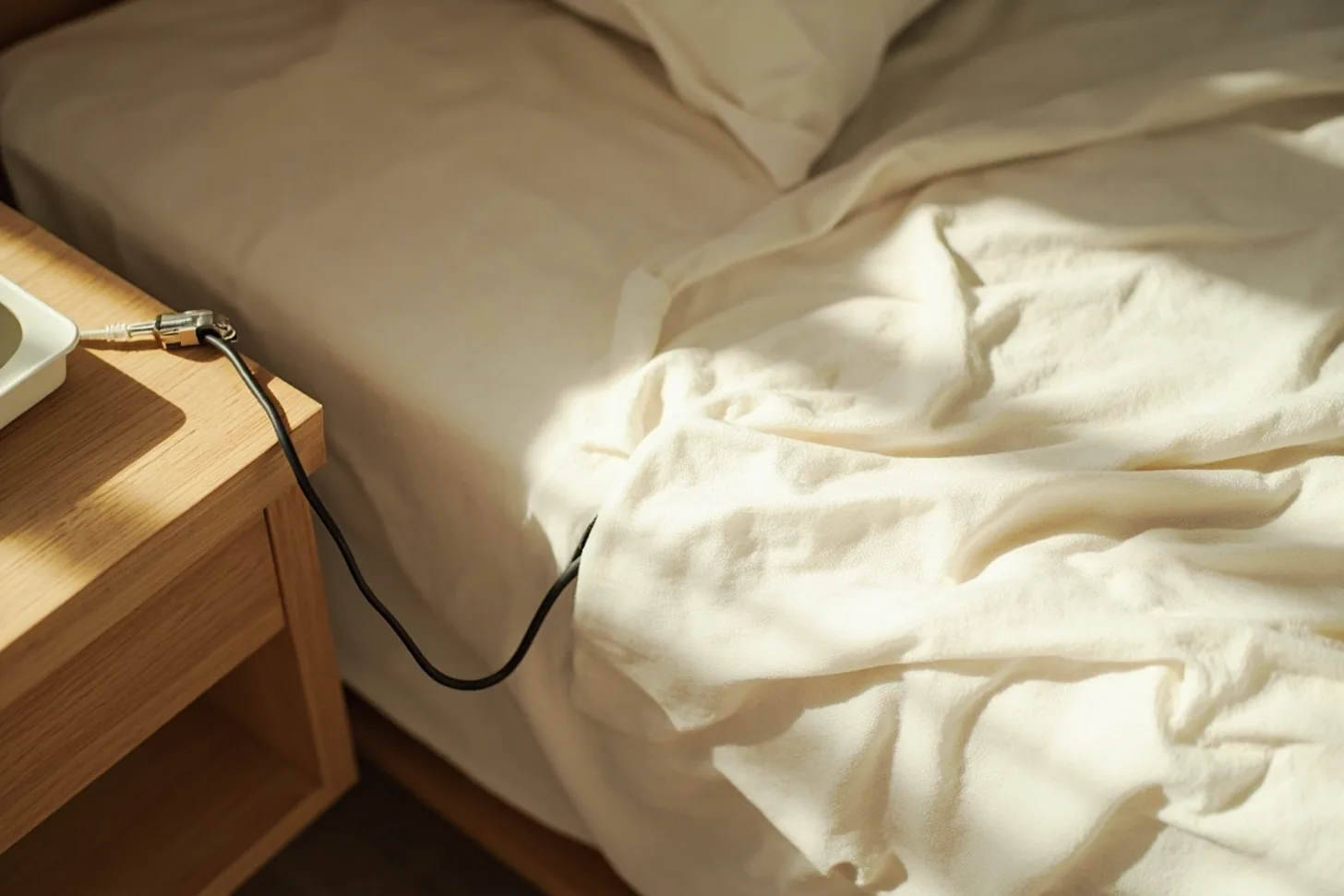
Using a grounding sheet correctly comes down to three things: a verified safe outlet, skin contact with the conductive panel most of the night, and a wash routine that doesn’t fry the fibers. Get those right and the setup mostly runs itself.
Plug into a tested, properly grounded outlet, sleep on the sheet with some skin touching the conductive panel, wash it on the gentle routine your manufacturer specifies, and expect the electrical connection to work from night one, benefits or not.
What do you actually need before your first night?
Three things, and none of them are expensive. A grounding sheet, mat or blanket that fits your bed. A three-prong wall outlet you have reason to trust, ideally one you’ve tested. And a little patience, because most people don’t feel anything dramatic on night one.
If you’re still deciding what to buy rather than how to use what you have, our Best Grounding Sheets of 2026: Tested Picks & Buying Guide guide walks through picks by budget and fabric. For this page, we’re assuming the sheet is already on its way or already on your bed.
How do you set up a grounding sheet the first time?
Lay the fitted or flat conductive panel under your regular sheet so the metallic threads face up toward your body, then run the cord to a nearby outlet and plug it in directly, no extension cord if you can help it. Most sheets ship with a snap connector that clips onto a small metal button sewn into the fabric.
The part people skip is testing the outlet. A cheap plug-in outlet tester with three lights will tell you in seconds whether the ground pin is actually wired to earth, which matters more than anything else here. We go step by step, including what to do with older two-prong outlets, in How to Set Up a Grounding Sheet: Outlet vs Ground Rod.
Once it’s tested and plugged in, that’s it. There’s no daily ritual beyond sleeping on it.
How much skin contact do you actually need?
Enough that some part of you, a foot, a calf, a hand, touches the conductive panel or gets close to it through a thin sheet. You don’t need to sleep naked on bare metal thread. Most nights you’ll have a fitted sheet between you and the panel, which still conducts fine as long as it’s not soaked in lotion or heavily starched.
If you toss and turn and end up mostly on top of your regular pillow-top with no contact, you’re not getting much of a connection that night. It happens, and it’s not a disaster, just not the condition the small sleep studies were testing.
How often should you ground yourself for it to matter?
The research that exists, mostly Ghaly and Teplitz’s small 2004 sleep and cortisol pilot, looked at people sleeping grounded most nights over weeks, not occasional use. So if you’re testing whether it does anything for you, nightly use for two to four weeks is closer to what was actually studied than plugging in occasionally.
That said, this is genuinely low effort once it’s set up. You’re not adding a task, you’re removing the choice of whether to plug in, because it just stays plugged in.
How do you wash a grounding sheet without killing it?
Cold or warm water, a mild detergent with no bleach or fabric softener, and air dry or low tumble heat. Fabric softener and high heat are the two fastest ways to degrade the conductive fibers over time, whether they’re silver-coated or stainless steel.
We wrote a full washing walkthrough with wash counts and what to expect from conductivity over a year or two of use in How to Wash Grounding Sheets Without Killing Conductivity, worth reading before your first load rather than after a mistake.
What if you rent, travel a lot, or don’t have outdoor access?
Apartment living doesn’t change much electrically. A grounded outlet on the fourteenth floor works the same as one on the ground floor, since the ground wire runs back through the building’s electrical system either way. What changes is the outdoor option, since bare feet on real earth is harder to come by in a city.
We’ve covered both angles separately: Grounding in the City: How to Earth Yourself in an Apartment for renters and apartment dwellers, and Grounding Outside: Best (and Worst) Surfaces for Earthing for which outdoor surfaces actually conduct and which ones, like asphalt or a painted deck, mostly don’t.
Are there ways to ground yourself besides buying a sheet?
Yes, and it’s worth trying the free version before spending money if you’re skeptical. Standing or sitting barefoot on grass, sand, dirt or concrete that touches the earth (not sealed or painted) does the same basic electrical job. We rank seven methods by cost and convenience in How Do I Ground Myself? 7 Ways, From Free to Effortless.
Some people also try building their own conductive sheet from grounding fabric and a cord kit rather than buying a finished product. It can work, but the failure points, exposed wiring, a loose ground connection, are on you to catch. We’re honest about the tradeoffs in DIY Grounding Sheets: Can You Make Your Own? (And Should You?).
| Method | Cost | Effort | Best for |
|---|---|---|---|
| Grounding sheet on the bed | $$ | Set up once, then passive | Nightly, hands-off use |
| Grounding mat (desk or floor) | $ | Move it into place daily | Daytime, at a desk |
| Barefoot outside | Free | Requires access and time | Testing the idea before buying |
| DIY conductive sheet | $ | Requires careful assembly | Handy people willing to test their own wiring |
What are the most common setup mistakes?
The biggest one is plugging into an untested outlet and assuming the third prong means it’s grounded. It often does, but not always, especially in homes built or renovated before the 1970s where a two-prong outlet was sometimes swapped for a three-prong faceplate without adding real ground wiring behind it. That’s exactly the kind of thing a $10 tester catches in seconds.
The second mistake is running the cord through a power strip or surge protector instead of a direct wall outlet. Some strips interrupt or filter the ground path, which defeats the purpose. Plug straight into the wall when you can.
The third is giving up after two nights because nothing felt different. Grounding isn’t a stimulant and it isn’t meant to feel like anything in the moment. If you’re testing whether it helps your sleep, judge it after two to four weeks of consistent use, not one night.
How do you know your setup is actually working?
You can’t feel electrons, so don’t rely on sensation. A grounding sheet works if the outlet passed a ground test, the cord connector is snapped in securely, and there’s no visible fraying or damage to the conductive thread. Some people use a simple multimeter check between the sheet and a known ground point for extra confidence, and most outlet testers do double duty for this.
Worth saying plainly: none of this setup work turns a grounding sheet into medical equipment. The best-supported outcome from the research is better subjective sleep and relaxation, from small studies, and even that needs more replication before anyone should call it settled. Skip the sheet entirely if you have a pacemaker or another implanted electrical device without checking with your doctor first.
If any of this sounds like it needs more room than we have here, our full pillar guide to {{LINK:HOMEPAGE}} covers the science, the safety questions and the buying side in one place.
Premium Grounding Sheet
30% stainless-steel fibers instead of silver, so it will not oxidize and lasts about five times longer. Fits under your fitted sheet, ships worldwide, and comes with a 90-night trial and a 3-year warranty.
Check price on Premium GroundingIf you’re setting up for the first time and don’t want to think about fiber degradation for a few years, that’s the main reason we point people toward stainless-steel options over silver ones, the steel doesn’t oxidize the way silver threads eventually do.
Frequently asked questions
See the FAQ block below for quick answers on wash frequency, apartment use and testing your outlet before your first night.
- How to Wash Grounding Sheets Without Killing Conductivity
- How to Set Up a Grounding Sheet: Outlet vs Ground Rod
- How Do I Ground Myself? 7 Ways, From Free to Effortless
- Grounding Outside: Best (and Worst) Surfaces for Earthing
- Grounding in the City: How to Earth Yourself in an Apartment
- DIY Grounding Sheets: Can You Make Your Own? (And Should You?)