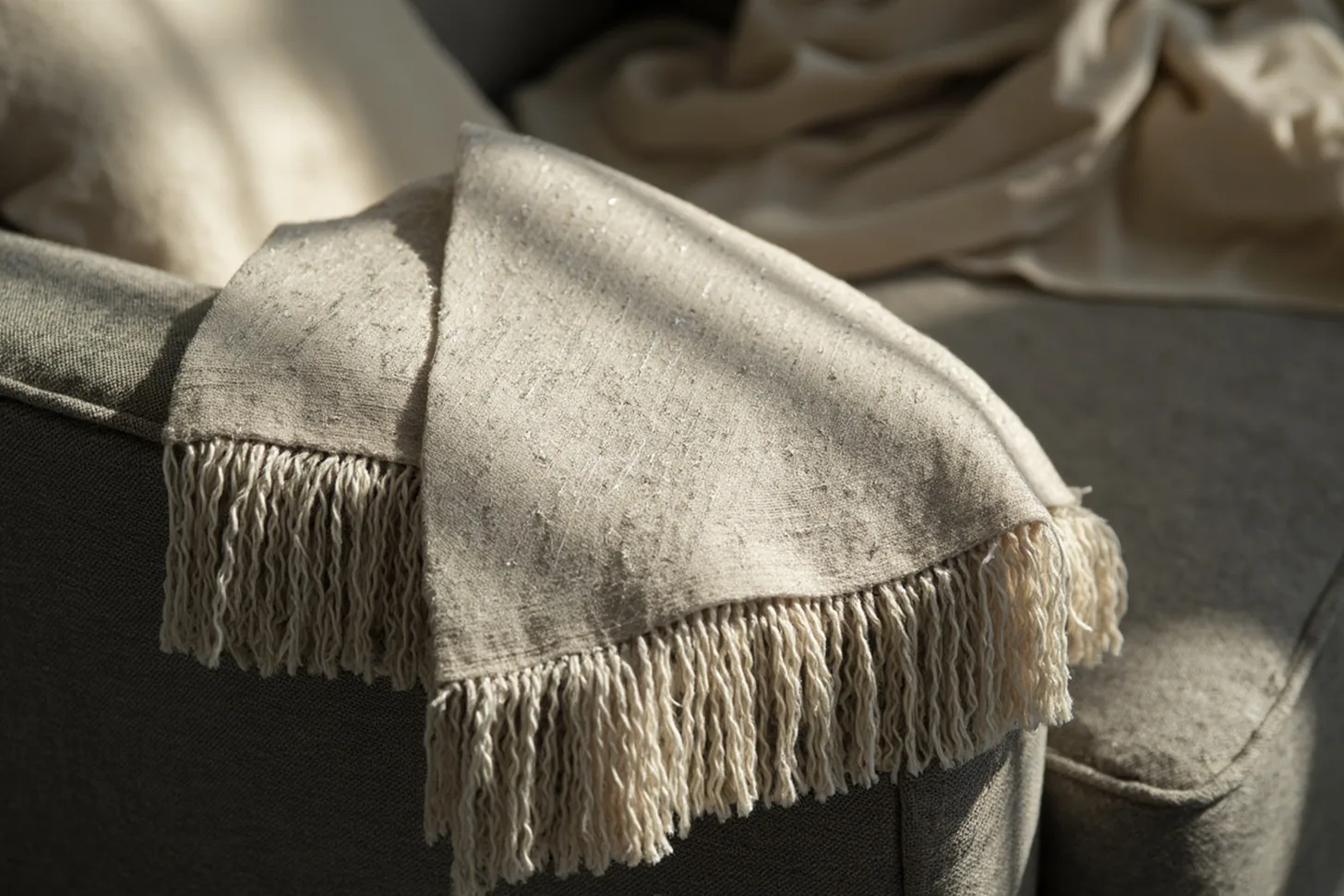
An earthing blanket is a conductive throw, usually woven with fine silver or stainless-steel thread, that plugs into a grounded wall outlet the same way a grounding sheet does. You drape it over your lap, feet or shoulders instead of lying under it all night. It’s a smaller commitment than a full sheet, and for a lot of people it’s the easier way to try grounding before buying bedding.
An earthing blanket works for spot use on the couch or in a chair, but it covers far less skin than a fitted sheet, so treat it as an add-on rather than a replacement for overnight grounding.
What exactly is an earthing blanket?
Structurally it’s a normal throw blanket with conductive thread woven through the fabric in a grid pattern. A short cord runs from one corner to a grounding plug, which connects to the ground pin of a standard outlet rather than the live or neutral prongs. When your skin touches the exposed threads, you’re linked to the same earth-ground path a grounding sheet uses.
Most throws run 100 to 180 dollars depending on size and thread type, noticeably cheaper than a full grounding sheet set. That lower price is the main reason people start here.
How is a blanket different from a grounding sheet?
Coverage is the whole story. A fitted sheet touches your back, legs and arms for six to eight hours of sleep. A throw touches whatever body part you tuck under it while you’re awake and moving around, usually 30 minutes to a couple of hours at a stretch. We cover the tradeoffs in more depth in our Grounding Blankets: How They Work and When to Pick One Over Sheets guide, but the short version is: blankets suit evening wind-down, sheets suit sleep.
Portability cuts the other way. A throw folds into a bag and travels well for a hotel room or a work desk. A grounding sheet set stays on the bed.
What conductive thread should you look for?
Two materials dominate the market. Silver-coated thread conducts well when new and keeps the price down, but silver oxidizes with repeated washing and body oils, and a tarnished thread stops conducting even though the fabric looks fine. Stainless-steel fiber costs more upfront but doesn’t oxidize the same way, so the conductivity tends to hold up over years of regular use instead of months. If you plan to wash the blanket weekly, that difference matters more than the sticker price.
Does sitting under a blanket for an hour actually do anything?
Here’s where we’ll be blunt. The studies behind grounding, Ghaly and Teplitz’s 2004 sleep and cortisol pilot chief among them, measured people grounded overnight in bed, not sitting under a throw for an hour. Sokal and Sokal’s work and the Chevalier blood-viscosity study used similar extended, mostly overnight protocols. Nobody has run a dedicated trial on short daytime blanket sessions, so any benefit from an evening under a throw is an educated guess extrapolated from sleep research, not a tested outcome on its own. That doesn’t mean it’s useless, it means the evidence is thinner than the sheet studies, which were already small.
How do you know the blanket is actually grounding you?
Plug it in, then touch the exposed conductive threads with a standard outlet tester or a multimeter set to continuity mode against a known ground point, like an unpainted metal outlet screw. If the blanket reads continuous to ground, it’s working. If your outlet itself isn’t properly grounded, no blanket, mat or sheet plugged into it will do anything, so a five-dollar outlet tester is worth owning before you troubleshoot the product itself.
How do you wash a conductive throw without ruining it?
Cold water, gentle cycle, no fabric softener and no bleach. Softener coats the threads in a residue that blocks conductivity, and bleach accelerates the oxidation that already threatens silver thread. Air-dry when you can. Stainless-steel weaves tolerate this routine better over time, which is part of why they’re worth the extra cost if you wash often.
Blanket, sheet, mattress pad or socks: which one fits your evening?
If you spend an hour reading or watching TV before bed and want to try grounding without committing to new bedding, a throw is the low-friction entry point. If full-night contact matters more, a fitted sheet or a Grounding Mattress Pads: Full-Coverage Earthing Under Your Sheet covers more skin for longer. If you’re on your feet during the day rather than seated, grounding footwear solves a different problem than a lap blanket does. None of these is objectively better, they just answer different amounts of contact time.
Our full Grounding Products Beyond Sheets: Blankets, Socks, Pillowcases & More guide breaks down how blankets, pads, pillowcases and socks stack up if you’re weighing more than one option.
Premium Grounding Sheet
30% stainless-steel fibers instead of silver, so it will not oxidize and lasts about five times longer. Fits under your fitted sheet, ships worldwide, and comes with a 90-night trial and a 3-year warranty.
Check price on Premium GroundingIf overnight contact is really what you’re after, skip the throw and go straight to a sheet built to last, that’s still the more evidence-backed way to spend your money.
Frequently asked questions
Can I use an earthing blanket instead of a grounding sheet?
You can, but expect less contact. A throw covers your hands, forearms or feet while you sit, not the full-body skin contact you get sleeping under a fitted sheet for eight hours. If sleep is the goal, a sheet does more of the work.
How long do conductive throws actually last?
It depends on the thread. Silver-woven throws typically lose conductivity over a year or two of regular washing as the coating oxidizes. Stainless-steel-fiber weaves resist that corrosion and tend to hold their conductivity much longer, though exact lifespan varies by brand and wash frequency.
Do earthing blankets need a special outlet?
No. They use the same three-prong ground pin as a grounding sheet, plugged into any standard grounded outlet. The real requirement is that the outlet is wired correctly, not that it’s a special type.
Can I wash an earthing blanket in a machine?
Most can go in cold on a gentle cycle, but skip fabric softener and bleach since both degrade the conductive threads over time. Check the manufacturer’s care label first; silver-thread throws are more sensitive than stainless-steel ones.
Will an earthing blanket keep me warm like a regular blanket?
Somewhat, but that’s not its job. Most conductive throws use a thinner cotton or bamboo weave so the metal fibers can reach your skin, so they run lighter than a fleece throw. Layer it under a normal blanket if warmth matters more than contact.
- Grounding Blankets: How They Work and When to Pick One Over Sheets
- Grounding Pillow Cases: Small Upgrade, Real Contact Hours
- Grounding Socks: Do Conductive Socks Actually Ground You?
- Grounding Mattress Pads: Full-Coverage Earthing Under Your Sheet
- Grounding Shoes and Footwear: Earthing While You Walk
← Grounding Products Beyond Sheets: Blankets, Socks, Pillowcases & More