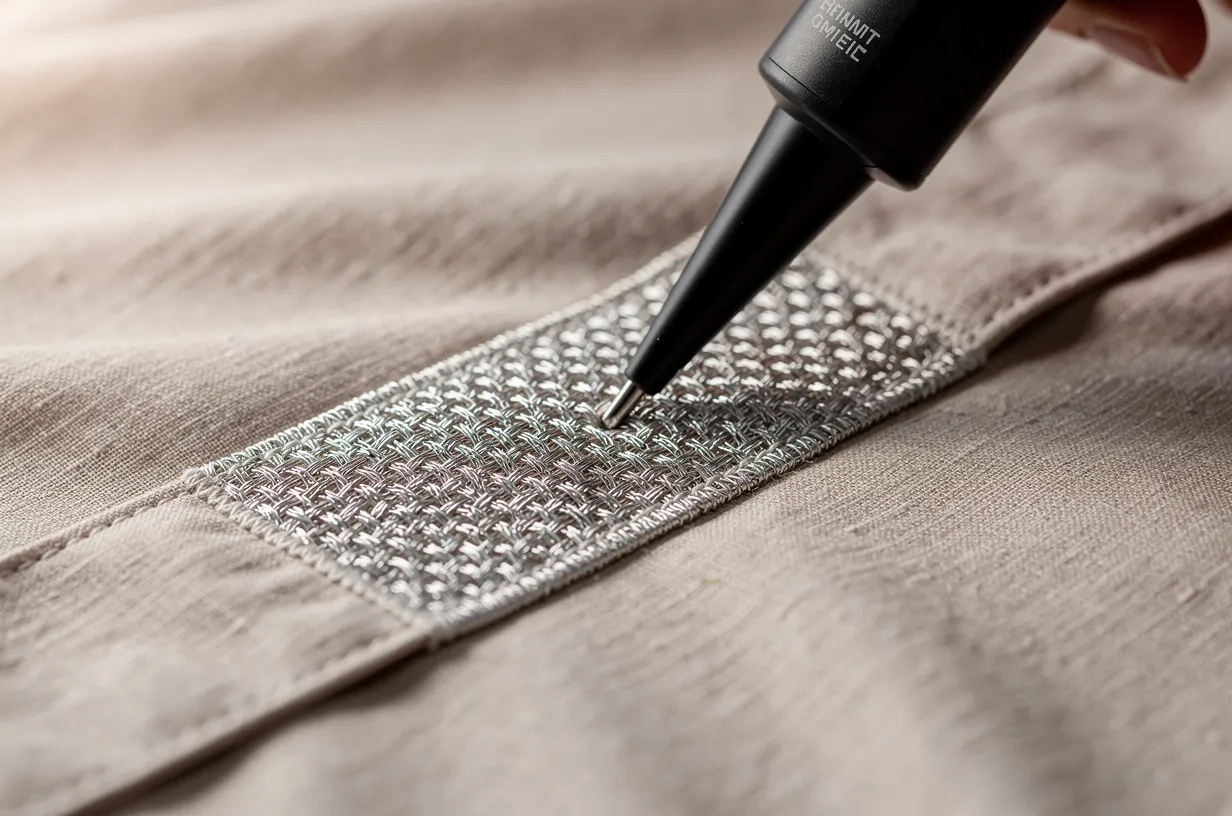
Ohms measure resistance, and a lower number means electricity moves through the fabric more freely. A working grounding sheet should show a real, measurable connection to the ground pin on your outlet, not an open circuit.
A healthy grounding sheet reads somewhere in the hundreds to low thousands of ohms on a standard multimeter, and that number varies by fiber type and cord design. Zero continuity, or a reading that never settles, means something in the sheet, cord, or outlet needs attention.
You bought a grounding sheet to connect your skin to your home’s electrical ground while you sleep. The ohm reading on a meter is the only objective proof that’s happening. Here’s what the number actually tells you, and where people get it wrong.
What does “ohms” mean for a grounding sheet?
Resistance, measured in ohms, describes how hard it is for current to pass through a material. A grounding sheet is woven with conductive fiber, either silver-coated thread or stainless-steel strands, and that fiber is what carries a tiny amount of current from your skin down through the cord to your outlet’s ground pin.
You’re not testing for zero resistance. Fabric isn’t copper wire, and a fully “dead short” reading on a bedding product would actually be a red flag, not a good sign. You’re testing for continuity: does the meter register a connection at all, and does that connection stay reasonably stable when you move the probe around the sheet.
What’s a normal ohm reading for a grounding sheet?
This varies by brand and fiber, and manufacturers rarely publish an exact spec, so treat any number you see online as a rough range rather than a rule. Many cords also include a built-in protective resistor, which is intentional. It limits current flow for safety and means your reading won’t (and shouldn’t) sit near zero.
What matters more than the exact figure is consistency. Test the same spot a few times and you should get a similar reading each time. If the number jumps wildly, drifts toward infinity, or the meter loses continuity entirely when you barely touch the fabric, that’s the actual signal something’s off, not the raw ohm value itself.
Why do silver-thread sheets lose conductivity over time?
Silver conducts extremely well when it’s new, which is part of why it became the default fiber for earthing products years ago. The problem is oxidation. Silver reacts with sweat, detergent, and repeated washing, and a thin oxide layer builds up on the thread. That layer isn’t very conductive, so your ohm reading climbs the more the sheet is used and laundered.
Stainless steel doesn’t oxidize the same way, so its conductivity holds up more consistently wash after wash. We cover the mechanism in more detail in our guide to Do Grounding Sheets Oxidize? Silver vs Steel, and the fiber comparison itself in Silver vs Stainless Steel Grounding Fiber.
| Fiber type | Conductivity when new | After months of regular washing | Typical lifespan |
|---|---|---|---|
| Silver-coated thread | Excellent | Drops as oxidation builds up | Shorter, depends on wash frequency |
| Stainless steel fiber | Very good | Stays fairly stable | Longer, roughly five times in most brand comparisons |
How do you test your grounding sheet’s ohms at home?
A basic multimeter set to resistance (ohms) mode is enough. Touch one probe to the conductive panel of the sheet and the other to the ground pin of a plugged-in, working outlet, or to the grounding prong of the sheet’s own cord if it’s unplugged. Take a couple of readings from different spots on the panel, since a worn patch can read differently than the rest of the fabric.
We walk through the full step-by-step version, including what tools to use and common mistakes, in How to Test if Your Grounding Sheet Is Actually Working. If you want the broader context on why the outlet’s ground pin matters at all, Earth Potential and Grounding, Explained Simply covers that piece.
What does a bad reading actually mean?
A meter that shows no continuity at all, no matter where you test, usually points to one of three things: a frayed or damaged snap connector where the cord attaches to the fabric, a cord that’s failed internally, or an outlet that isn’t actually grounded even though it has a three-prong socket. Older homes are the most common culprit for that last one. A cheap outlet tester from a hardware store checks your wiring in under a minute and rules that variable out before you blame the sheet.
A reading that’s present but unusually high compared to when the sheet was new is more often wear than failure, especially on silver-thread products. It’s worth checking again after a few washes to see if it’s climbing steadily, which would confirm oxidation rather than a one-off fluke.
Does a lower ohm number mean a “better” grounding sheet?
Not automatically. A sheet reading near zero with no protective resistor in the cord isn’t a premium product, it’s a safety gap. What you actually want is a stable, repeatable reading that doesn’t drift upward month after month, which is really a durability question more than a raw-number contest. That’s the practical reason stainless-steel fiber tends to hold its value better than silver over a year or two of normal use, covered in How Long Do Grounding Sheets Last?.
If you’re shopping and durable conductivity matters to you, our tested pick uses 30% stainless-steel fiber for exactly this reason: fewer oxidation issues, a more stable reading over time, and it still fits under a regular fitted sheet.
Premium Grounding Sheet
30% stainless-steel fibers instead of silver, so it will not oxidize and lasts about five times longer. Fits under your fitted sheet, ships worldwide, and comes with a 90-night trial and a 3-year warranty.
Check price on Premium GroundingFor the basics on how the whole cord-to-outlet setup works before you start testing anything, our overview of What Are Grounding Sheets? How Earthing Bedding Actually Works and the mechanism guide in What Is a Grounding Cord and How It Works are good starting points.
Frequently asked questions
Is a higher ohm reading always bad?
Not by itself. Many cords include a built-in resistor for safety, so a reading in the hundreds or thousands of ohms can be completely normal. What matters more is whether the reading is stable and whether it’s climbing steadily over months of use, which usually points to fiber wear rather than a single bad reading.
Can I test my grounding sheet with a regular multimeter?
Yes. A basic multimeter set to ohms mode is enough for a home check. Set it to resistance, touch one probe to the sheet’s conductive panel and the other to a known ground point, like the ground pin of a working outlet, and note the reading.
Why does my meter show no reading at all?
That usually means a break somewhere in the path: a damaged snap connector, a failed cord, or an outlet that isn’t actually grounded despite having a three-prong socket. Check the outlet with a cheap tester first, since a miswired outlet is a more common cause than people expect.
Does the length of the grounding cord affect the ohm reading?
A longer cord adds a small amount of resistance, but it’s minor compared to the effect of fiber type, oxidation, or a damaged connection. Cord length isn’t something to worry about when you’re troubleshooting a reading that seems off.
Should the reading change after washing?
A little drift is normal, especially with silver-thread fabric, since washing accelerates oxidation. A sudden jump to no continuity right after a wash is different and is worth checking the connector and cord for damage rather than assuming it’s just wear.
- What Is Earthing? The Practice Behind Grounding, Explained
- How Do Grounding Sheets Work? The Mechanism Step by Step
- Grounding Sheets vs Earthing Sheets: Same Thing, Different Name?
- What Are Grounding Sheets Made Of? Silver vs Stainless Steel Fibers
- The History of Grounding: How Cultures Slept Connected to the Earth
- How to Test if Your Grounding Sheet Is Actually Working
- Silver vs Stainless Steel Grounding Fiber
- Do Grounding Sheets Oxidize? Silver vs Steel
- How Long Do Grounding Sheets Last?
- Grounding vs Earthing: Is There a Difference?
- What Is a Grounding Cord and How It Works
- Earth Potential and Grounding, Explained Simply
← What Are Grounding Sheets? How Earthing Bedding Actually Works