If your grounding mat feels like it’s doing nothing, the mat is usually fine, the connection isn’t. In most cases the problem traces back to the outlet, the cord, or a loose snap, not a dead product.
Before you assume the mat is broken, test the outlet and the connection with a $10 tester. Nine times out of ten that’s the actual fix.
Why does a grounding mat feel like it’s doing nothing?
Grounding only works if electrons can actually flow from the earth, through your wall outlet’s ground pin, up the cord, and into the conductive fabric under your hand or foot. Break that chain anywhere and the mat sits there looking normal while doing nothing electrically. You won’t feel a shock either way, so there’s no obvious warning sign.
The honest answer is also that grounding’s physical sensations are subtle. Some people report feeling calmer or noticing better sleep within a couple of weeks, but plenty feel nothing at all, working or not. That’s part of why testing the connection matters more than trusting how it feels.
How do I test if my grounding mat is actually working?
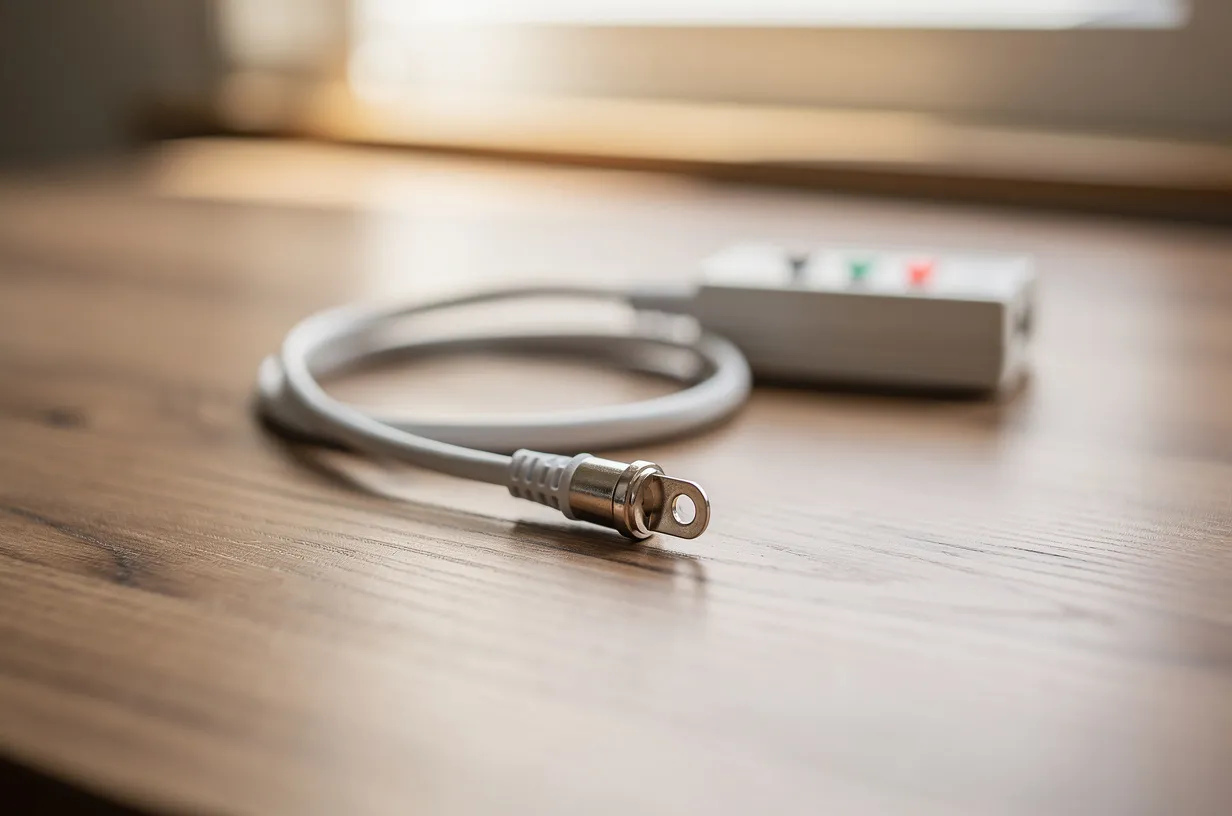
Buy a cheap outlet tester or, better, a dedicated ground continuity tester made for earthing products (some brands sell one for around ten to twenty dollars). Plug the mat’s cord into the tester instead of the wall and check for a continuous light or reading. If it fails, the fault is somewhere between the mat and the outlet, not in your body’s response to it.
You can also do a rough manual check with a standard outlet tester plugged into the same wall socket you use for the mat. If it flags “open ground” or “no ground,” you’ve found your answer before you even touch the mat itself.
Is my outlet actually grounded?
This is the single biggest cause of a “dead” grounding mat, especially in older homes. Some outlets have a three-prong slot but were never wired to a real earth ground, which means the ground pin is cosmetic. A grounding mat plugged into one of those will never work, no matter how new or well made it is.
Run a $10 three-prong outlet tester on every socket you’re considering. Look for the light pattern that means “correctly wired.” If you see “open ground,” “hot/ground reversed,” or anything other than the correct pattern, try a different outlet before troubleshooting the mat further. If every outlet in the room fails, that’s a job for an electrician, not a product return.
Could the mat itself be the problem?
Once the outlet checks out, look at the mat’s own hardware. Snap connectors corrode or loosen with use, especially on mats that get folded, rolled, or dragged across a desk daily. Check the cord for kinks, frayed insulation, or a bent prong. Wipe the conductive surface, since a layer of dust, lotion, or fabric softener residue can reduce contact even when the electronics are fine.
Carbon and leatherette mats (common in the budget tier) also degrade faster than silver-thread or stainless-steel woven products. If a mat is a year or two old and has seen daily use, some drop-off in conductivity is normal wear, not a defect.
Comparing likely causes
| Symptom | Most likely cause | What to try |
|---|---|---|
| Tester shows no continuity at the outlet | Outlet not truly grounded | Try another outlet, call an electrician if all fail |
| Outlet tests fine, mat still fails | Loose snap, damaged cord, or corroded contact | Clean the snap, inspect the cord, try a spare cord if you have one |
| Worked before, now intermittent | Wear on the conductive surface or cord | Retest weekly, plan to replace if it keeps failing |
| New mat, fails from day one | Manufacturing defect | Contact the seller, most reputable brands cover this under warranty |
When should I replace it instead of troubleshooting?
If the outlet is confirmed good and you’ve swapped cords and cleaned the connectors and it still fails a continuity test, the mat’s internal wiring or conductive layer has likely broken down. That’s a replace situation, not a fix-it-yourself one. Silver-thread mats in particular oxidize with repeated washing, which quietly reduces conductivity over months even when nothing looks visibly wrong.
If you’re shopping for a replacement anyway, it’s worth comparing a mat against a full grounding sheet for your actual use case. We break down the tradeoffs in our Grounding Mat vs Grounding Sheet: Which One Fits Your Setup? guide, and if a bed setup is the goal, a sheet tends to hold a more consistent connection over years of washing since the whole sheet is one conductive surface rather than a single contact point.
Premium Grounding Sheet
30% stainless-steel fibers instead of silver, so it will not oxidize and lasts about five times longer. Fits under your fitted sheet, ships worldwide, and comes with a 90-night trial and a 3-year warranty.
Check price on Premium GroundingHow do I avoid this happening again?
Test your outlet once when you first set up, then retest every few months, especially if the mat travels with you or sits somewhere it gets stepped on or folded. Store the cord loosely instead of wrapping it tight, keep the conductive surface clean, and avoid harsh detergents when washing fabric mats. None of this is complicated, it’s just easy to skip until something stops working.
If you’re comparing options before you buy again, our Best Grounding Mats of 2026: Desk, Floor & Bed Picks roundup and our Grounding Mat Benefits: What to Expect (and When) page cover what a mat can realistically do and which builds hold up best under daily use.
Frequently asked questions
- Grounding Mat for Bed: How to Choose and Set One Up
- Best Grounding Mats of 2026: Desk, Floor & Bed Picks
- Grounding Mat vs Grounding Sheet: Which One Fits Your Setup?
- Grounding Mat Benefits: What to Expect (and When)
- Earthing Mats Explained: Types, Conductivity and Placement
- Grounding Pads for Bed: Are They Better Than Full Sheets?
- Grounding Mats for Your Desk: Setup and Picks
- Grounding Mats for Your Feet: How to Use
- Universal Grounding Mats Explained
- Grounding Mat vs Grounding Blanket
- Best Grounding Mats 2026: Tested Picks
← Grounding Mats: The Complete Guide (vs Sheets, Setup, Picks)