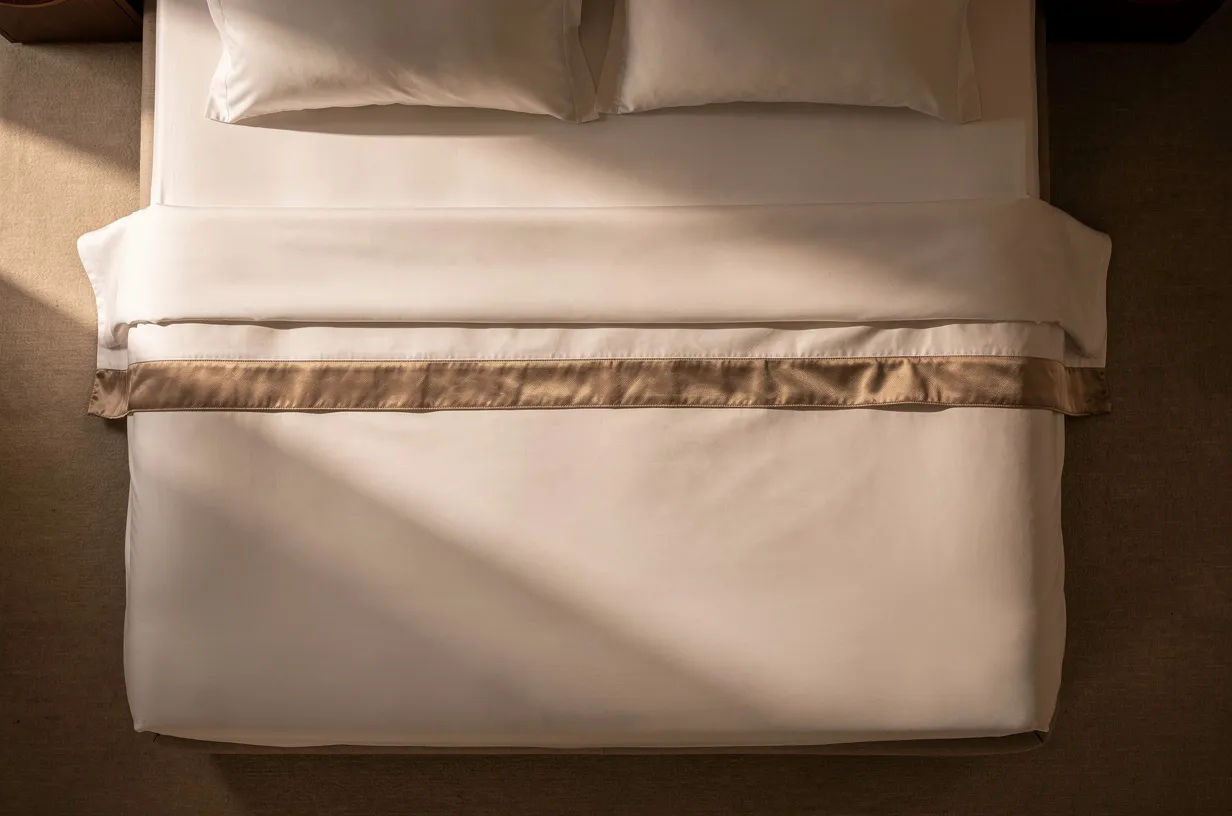
A grounding mattress cover is conductive fabric sized to wrap your whole mattress instead of just the top layer you sleep on. It plugs into the same grounded outlet as a grounding sheet and does the same electrical job. Short answer: unless you have an adjustable bed, an RV mattress, or a setup a sheet can’t handle, a grounding fitted sheet gives you the same skin contact for less money and far less laundry hassle.
A grounding mattress cover works electrically, but full coverage isn’t proven to beat a sheet’s contact area. Buy one only if your bed setup genuinely needs the extra reach.
What is a grounding mattress cover, exactly?
It’s a fitted, conductive layer that goes under your regular sheets and stretches over the whole mattress, corners included. Somewhere on the fabric is a small conductive patch or grommet, and a cord runs from that patch to a grounded wall outlet, the same three-prong connection any grounding sheet uses.
Because it sits underneath your normal bedding, you don’t feel the conductive fibers directly. You still get skin contact wherever bare skin touches through your regular sheet’s weave or through any thin, damp contact point, though that contact is less direct than sleeping right on a grounding sheet.
How is it different from a grounding sheet or a Grounding Mattress Pads: Full-Coverage Earthing Under Your Sheet?
A grounding fitted sheet replaces your existing sheet and touches your skin directly, all night, wherever you lie. A grounding mattress cover sits one layer further down, under a separate regular sheet. A Grounding Mattress Pads: Full-Coverage Earthing Under Your Sheet is usually a thinner topper version of the same idea, meant to sit between mattress and sheet rather than wrap the whole thing.
| Option | Skin contact | Coverage | Washing | Best for |
|---|---|---|---|---|
| Grounding fitted sheet | Direct, wherever you lie | Top surface only | Normal laundry, like any sheet | Most sleepers |
| Grounding mattress cover | Indirect, through your regular sheet | Entire mattress, sides included | Bulkier, less frequent washing | Adjustable beds, shared setups |
| Grounding mattress pad | Direct if worn thin, or through a sheet | Top surface, thinner profile | Similar to a sheet | Layering under existing bedding |
| Grounding blanket | Direct, on top of you | Wherever the blanket covers | Depends on fabric weight | Daytime use, couch, travel |
None of these is objectively “more grounded.” They’re different ways of getting conductive fiber near your skin, and the sheet is the simplest version because there’s no extra layer between you and it.
Does covering the whole mattress actually add anything?
This is where I get honest instead of salesy. The published pilot studies on grounding, Ghaly and Teplitz’s 2004 sleep and cortisol work among them, used a conductive sheet or patch touching a limited area of skin, not full-body, full-mattress contact. Nobody has run a study comparing partial contact to full-mattress coverage and measured whether more fabric means a bigger effect.
So the marketing logic that “more coverage equals more grounding” is plausible on paper but unproven in the actual research. If a small patch of skin against a conductive surface was enough to move the needle in those small trials, a full mattress cover isn’t shown to do more than a sheet does. It just reaches more of the bed.
How does it connect to power, and is that safe?
Same rule as every grounding product on this site: the cord ties into your outlet’s ground pin, the third prong, not the live wires that carry power. That’s the same ground path your washing machine or computer uses for safety. The real risk isn’t the cover, it’s a badly wired outlet where that ground pin isn’t actually connected to earth.
Before you plug anything conductive into your bed, a cheap outlet tester (a few dollars at any hardware store) confirms the ground is live. If you have a pacemaker, another implanted device, or you’re pregnant, talk to your doctor first, standard advice for any conductive bedding, not something specific to covers.
Who actually needs a full mattress cover instead of a sheet?
A handful of real setups make a cover worth the extra cost and bulk:
- Adjustable beds where a fitted sheet keeps sliding or bunching at the hinge points, a wraparound cover stays put.
- RV or camper mattresses that aren’t standard sizes and don’t take a normal fitted sheet well.
- Shared beds where your partner doesn’t want to sleep on a grounding sheet, a cover under your side’s regular sheet can work as a compromise, though contact is less direct.
- Anyone protecting a mattress from moisture or wear who wants that layer to also be conductive, two jobs in one purchase.
Outside those cases, you’re paying more for a bulkier product that touches your skin less directly than a sheet does.
What we’d actually buy
For most people asking about mattress covers, what you actually want is reliable, direct skin contact without extra layers to manage. That’s what a good grounding fitted sheet is built for, our tested pick is Premium Grounding’s sheet, which uses stainless-steel fiber instead of silver, so it doesn’t oxidize and lose conductivity the way silver-thread bedding can after months of washing. It fits under your existing fitted sheet if you want to keep your regular bedding on top.
Premium Grounding Sheet
30% stainless-steel fibers instead of silver, so it will not oxidize and lasts about five times longer. Fits under your fitted sheet, ships worldwide, and comes with a 90-night trial and a 3-year warranty.
Check price on Premium GroundingIf your setup genuinely calls for full coverage, an adjustable base or an odd-sized mattress, a dedicated cover or a Grounding Mattress Pads: Full-Coverage Earthing Under Your Sheet still makes sense. Just don’t buy one assuming it will out-perform a sheet on the evidence. It won’t, because that comparison hasn’t been tested.
Frequently asked questions
Is a grounding mattress cover better than a grounding sheet?
Not on the current evidence. A sheet gives more direct skin contact for less money. A cover only wins when your bed setup, like an adjustable base, makes a sheet impractical.
Can I use a grounding mattress cover under my normal sheets?
Yes, that’s how it’s designed to work. It sits between the mattress and your regular fitted sheet, so your bedding looks and feels unchanged.
Do I still need to test the outlet if I already ground other things in my home?
Test the specific outlet you’ll use for the cover. Grounding can vary outlet to outlet in older homes, so a tester check takes a minute and rules out the real risk.
Will a mattress cover wear out faster than a sheet?
It depends on the fiber. Stainless-steel fiber resists the oxidation that gradually kills silver-thread conductivity, whether it’s woven into a cover, a pad, or a sheet.
Is more skin contact from full coverage actually proven to help sleep more?
No published study has directly compared partial contact to full-mattress contact. The sleep research that exists used limited contact areas, so “more coverage” is a reasonable guess, not a documented result.
- Grounding Blankets: How They Work and When to Pick One Over Sheets
- Earthing Blanket Guide: Conductive Throws Compared
- Grounding Pillow Cases: Small Upgrade, Real Contact Hours
- Grounding Socks: Do Conductive Socks Actually Ground You?
- Grounding Mattress Pads: Full-Coverage Earthing Under Your Sheet
- Grounding Shoes and Footwear: Earthing While You Walk
- Grounding Fitted Sheets: How They Differ
- Grounding Flat Sheets: Pros and Cons
- Grounding Half Sheets: A Simpler Option
- Grounding Throw Blankets: Earthing on the Couch
- Grounding Patches: Targeted Earthing Explained
- Grounding Bands and Wristbands: Do They Work?
← Grounding Products Beyond Sheets: Blankets, Socks, Pillowcases & More