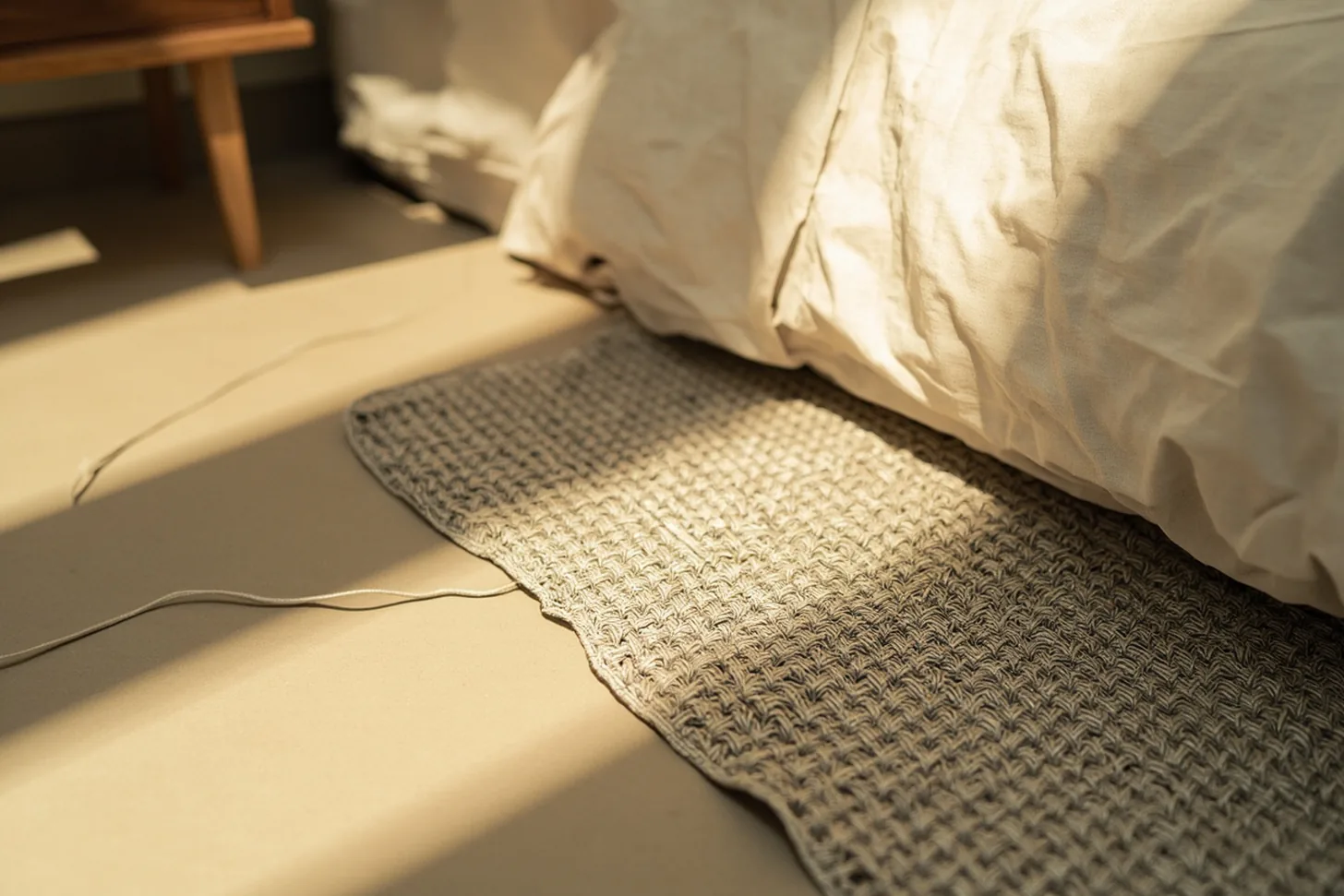
A grounding mat for bed is a small conductive pad, usually a woven mesh or a coated fabric panel, that you lay on top of your mattress or under the sheet so bare skin touches it while you sleep. A cord runs from the mat to the ground pin of a wall outlet, which is the actual point of the whole setup. It’s the cheapest, most localized way to try earthing without committing to a full grounding sheet.
A grounding mat for bed is a fair, low-cost way to test earthing, but it only grounds the skin actually touching it, so a full grounding sheet is the better buy if sleep is your main reason for trying this.
What is a grounding mat, and how is it different from a sheet?
A mat is a patch, usually somewhere between the size of a placemat and a yoga mat, made of conductive threads (often silver-coated nylon or stainless steel fiber) stitched into a fabric backing. You place it where your body will actually rest against it, most often near your feet since that’s the easiest spot to keep skin on the mat all night.
A grounding sheet, by contrast, is a fitted or flat sheet with conductive thread woven through the whole surface, so any part of your body touching the bed is grounded, not just one patch. We break the two down side by side in Grounding Mat vs Grounding Sheet: Which One Fits Your Setup? if you’re deciding between them for your bed specifically.
Where should you place a grounding mat on your bed?
Placement matters more with a mat than with a sheet, because contact is the whole game. The two spots that work best in practice:
- Foot of the bed, under the top sheet, so your feet or lower calves land on it when you stretch out. This is the most common setup because most people’s feet stay in roughly the same spot all night.
- Under the fitted sheet near where a hand or forearm naturally rests if you sleep on your side with an arm tucked down.
Skip putting it under a thick mattress topper or memory foam layer. Grounding needs bare skin or a single thin layer of natural fiber against the mat, not several inches of foam between you and it.
How do you set up a grounding mat for bed use, step by step?
The process is simpler than people expect, and the steps that actually matter are electrical, not decorative.
- Test the outlet first with a cheap outlet tester (five to ten dollars at any hardware store). This checks that the ground pin is genuinely wired to earth, not just present. A miswired outlet is the real safety issue here, not the mat itself.
- Plug the mat’s cord directly into that outlet. Don’t run it through a power strip with a questionable ground path if you can avoid it.
- Lay the mat where your feet or hand will rest for most of the night, then keep the sheet layer between you and the mat thin, ideally just the fitted sheet.
- Give it a week or two before judging anything. The subjective sleep improvements reported in small studies like Ghaly and Teplitz (2004) were measured over sustained use, not one night.
Mat, half-sheet, or full sheet: what actually covers a bed?
Here’s how the three common options stack up for actual bed use.
| Option | Skin contact | Typical price | Best for |
|---|---|---|---|
| Foot mat | Feet or calves only, if positioned right | $25-$50 | Testing the concept cheaply |
| Half-body pad | Lower body, more forgiving of movement | $60-$120 | Side sleepers, restless sleepers |
| Full grounding sheet | Whole bed, any sleep position | $100-$200+ | Anyone actually trying to measure a difference |
A mat is genuinely the right call if you just want to see whether grounding does anything for you before spending more. Once you know you like it, most people upgrade because a mat that’s slipped off the bed by 3 a.m. isn’t grounding anyone. That’s the honest case for the sheet setup we cover under Grounding Pads for Bed: Are They Better Than Full Sheets?, and it’s the approach behind the Premium Grounding Sheet, which swaps the usual silver thread for stainless-steel fiber so it doesn’t oxidize and lose conductivity the way mats often do within a year or two.
Premium Grounding Sheet
30% stainless-steel fibers instead of silver, so it will not oxidize and lasts about five times longer. Fits under your fitted sheet, ships worldwide, and comes with a 90-night trial and a 3-year warranty.
Check price on Premium GroundingWhat should you look for before buying a grounding mat?
A few things separate a mat worth buying from one you’ll stop using in a month.
Cord length matters more than it sounds. Measure the distance from your outlet to your usual sleep position before you order; a cord that’s six inches too short means the mat sits in the wrong spot every night. Material matters too: stainless-steel fiber holds up to sweat and washing far better than silver-coated thread, which tends to tarnish and lose conductivity within a year of regular use. Look for a stated resistance spec (under 100 kilo-ohms to the ground pin is typical for a functioning mat) and a manufacturer that publishes it rather than just claiming conductive without backing it up.
If you want a fuller rundown of tested options rather than shopping specs alone, Best Grounding Mats of 2026: Desk, Floor & Bed Picks covers the desk, floor, and bed picks we’ve actually put hands on. And if a mat’s limited coverage sounds like more hassle than it’s worth, our Grounding Mats: The Complete Guide (vs Sheets, Setup, Picks) hub walks through every format, mats included, so you can pick the one that fits how you actually sleep.
Frequently asked questions
Do I need a special outlet for a grounding mat on my bed?
No special outlet, just a standard three-prong outlet with a properly wired ground pin. Test it with a cheap outlet tester before your first night. If the outlet only has two prongs or the tester flags a wiring fault, the mat has nothing real to connect to.
Can I use a grounding mat instead of a full grounding sheet?
You can, and plenty of people start there because mats cost less. The tradeoff is coverage: a mat only grounds you while a foot, calf, or hand stays on it, while a sheet grounds skin contact anywhere on the bed all night.
Where exactly should I put the mat on my bed?
Most people place it at the foot of the bed, under the top sheet, so bare feet or calves land on it naturally when they stretch out. Some prefer it half under the fitted sheet near the lower legs for more consistent contact.
How many hours a night do I need to use it for it to matter?
The small pilot studies behind grounding mostly used a full night of contact, so more consistent contact time is the honest goal rather than a specific magic number. A mat you fall off of by 2 a.m. isn’t doing much.
Is a grounding mat safe to have on a bed with kids or pets?
Generally yes, since the mat only connects to the outlet’s protective ground, not live power. Keep the cord tucked away from chewing pets and check it periodically for cracks or fraying, same as you would any cord near a bed.
- Best Grounding Mats of 2026: Desk, Floor & Bed Picks
- Grounding Mat vs Grounding Sheet: Which One Fits Your Setup?
- Grounding Mat Benefits: What to Expect (and When)
- Earthing Mats Explained: Types, Conductivity and Placement
- Grounding Pads for Bed: Are They Better Than Full Sheets?
← Grounding Mats: The Complete Guide (vs Sheets, Setup, Picks)