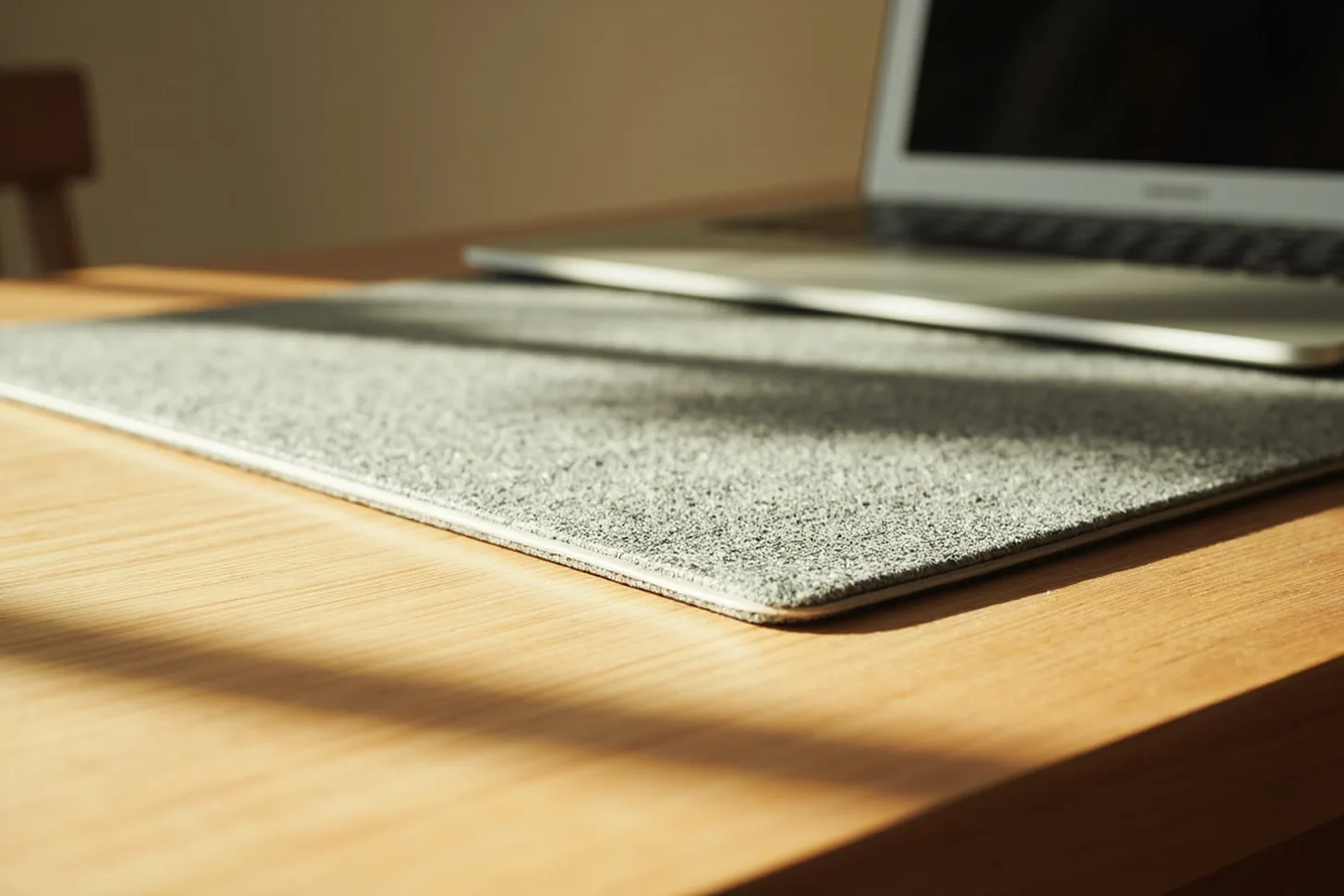
An earthing mat is a small, portable conductive pad, not a full bed sheet, and it exists so you can ground yourself while sitting at a desk, standing at a counter or sleeping without swapping your entire bedding. The verdict: for shorter, targeted contact during the day, a mat is often more practical than a sheet, but for overnight use most people still get more total contact hours from Grounding Mat for Bed: How to Choose and Set One Up.
Earthing mats are a practical way to add grounding to your desk, floor or bed for a few hours at a time. Buy based on the material and where you’ll actually use it, not the marketing photos.
What counts as an earthing mat?
Under the hood, an earthing mat is just a conductive surface with a cord that runs to a grounded outlet or a ground rod. Sit or stand on it with bare skin, and you’re connected to the same ground path a fitted sheet would give you at night. What separates one mat from another is mostly the material and the size, not some hidden technology.
Most mats fall into three physical categories: small desk pads meant for forearms and palms while you type, floor or yoga-style mats meant for bare feet while you stand or stretch, and bed pads meant to sit under or on top of a fitted sheet. Grounding Mat vs Grounding Sheet: Which One Fits Your Setup? gets into how these compare to full sheets if you’re deciding between the two.
What are earthing mats made of?
Two conductive materials dominate the market, and they behave differently. Carbon-rubber mats use a solid, semi-rigid rubber compound infused with carbon, the kind you’ll see under a keyboard or on a yoga mat. They’re stiff, weatherproof, and don’t fray or oxidize, which is why they show up most often as desk and floor mats.
Fabric mats use a woven or knit textile with conductive thread run through it, either silver-coated fibers or stainless-steel fibers. These feel softer against skin and fold flat for travel, but they inherit the same tradeoff we cover in Grounding Mat Benefits: What to Expect (and When): silver threads tend to oxidize and lose conductivity faster with washing, while stainless-steel fibers hold up longer because there’s no coating to strip away.
| Mat type | Typical material | Best placement | Durability |
|---|---|---|---|
| Desk pad | Carbon rubber | Under forearms/hands while working | High, wipes clean |
| Floor/standing mat | Carbon rubber | Bare feet at a desk or counter | High, resists wear |
| Bed pad, fabric | Silver or stainless-steel fiber weave | Under a fitted sheet, contacting legs/feet | Moderate, depends on washing |
| Travel mat | Thin conductive fabric | Hotel beds, folds into a bag | Lower, thinner fibers |
Where should you actually put one?
Placement decides whether a mat does anything at all. A desk mat only helps if your bare forearms or palms rest on it for real stretches of time, not just brush past it while you reach for coffee. A floor mat needs bare feet, so socks and slippers cancel out the whole point.
For the cord itself, keep it away from splash zones and route it to an outlet you actually trust. If you’ve never had your outlets checked, a five-dollar outlet tester tells you in seconds whether the ground pin is wired correctly, which matters more for safety than any spec on the mat’s packaging. We walk through the outlet-versus-rod question in more detail in Grounding Mat for Bed: How to Choose and Set One Up.
Do earthing mats work the same as sheets?
Electrically, yes. A mat wired to a properly grounded outlet gives you the same connection to earth potential as a sheet does. What differs is exposure time. You might touch a desk mat for two or three hours spread across a workday, where a fitted sheet grounds you for most of a night’s sleep.
That distinction matters because the best-supported research on grounding, Ghaly and Teplitz’s small 2004 pilot on sleep and cortisol, tested overnight use, not desk sessions. It’s a small, self-reported study, and it doesn’t tell us much about what a few daytime hours on a mat does. If sleep is your main goal, a sheet gets you closer to what was actually studied. If you want to add grounding during work without changing your bedding, a mat is the more realistic starting point, and our top pick, the
Premium Grounding Sheet
30% stainless-steel fibers instead of silver, so it will not oxidize and lasts about five times longer. Fits under your fitted sheet, ships worldwide, and comes with a 90-night trial and a 3-year warranty.
Check price on Premium GroundingHow do you know a mat is still conductive?
Conductivity fades gradually with wear, oxidation or a cord going bad, and most people never notice until the mat is doing almost nothing. A basic multimeter set to resistance, touched between the mat’s surface and the ground pin on its plug, should read within the range most manufacturers list, usually somewhere in the low hundreds of kilohms to a few megohms depending on the design. Readings that climb far outside that range, or jump around when you press different spots, usually mean the conductive fibers or coating have broken down.
Carbon-rubber mats rarely need this check since they hold conductivity for years. Fabric mats are the ones worth testing every few months, especially if you wash them often or travel with them folded.
Is a mat worth it if you already have a grounding sheet?
Honestly, it depends on your day. If you work from home and spend hours at a desk, a small mat adds contact time without touching your bedding setup at all. If most of your day is spent away from a desk, the extra mat probably sits unused while your sheet does the real work overnight. Start with whichever matches how you actually spend your hours, not which one looks more serious. For the full picture on how mats stack up against sheets and pads, Grounding Mat vs Grounding Sheet: Which One Fits Your Setup? and the Grounding Mats: The Complete Guide (vs Sheets, Setup, Picks) hub cover setup, sizing and picks in more depth.
Frequently asked questions
Are earthing mats and grounding mats the same thing?
Yes. “Earthing” and “grounding” describe the same practice, and the mats sold under either name work the same way: a conductive surface wired to your outlet’s ground pin. Some sellers just prefer one word for branding.
Do I need bare skin touching the mat for it to work?
Yes. The whole idea depends on skin contact, since fabric, socks or a phone case act as insulators. Bare feet, forearms or hands are what make the connection, which is why placement matters as much as the mat itself.
Can I use a desk earthing mat and a bed sheet at the same time?
You can, and plenty of people do, plugging a desk mat into one outlet during work hours and a fitted sheet into another at night. Neither one interferes with the other, since each is just its own grounding path.
How long does a carbon-rubber mat last compared to a fabric one?
Carbon-rubber mats tend to outlast fabric ones because there’s no metal coating to wear off and no washing cycle to weaken fibers. A well-made rubber mat can go years with just a wipe-down, where fabric mats depend on how they’re cared for.
- Grounding Mat for Bed: How to Choose and Set One Up
- Best Grounding Mats of 2026: Desk, Floor & Bed Picks
- Grounding Mat vs Grounding Sheet: Which One Fits Your Setup?
- Grounding Mat Benefits: What to Expect (and When)
- Grounding Pads for Bed: Are They Better Than Full Sheets?
← Grounding Mats: The Complete Guide (vs Sheets, Setup, Picks)