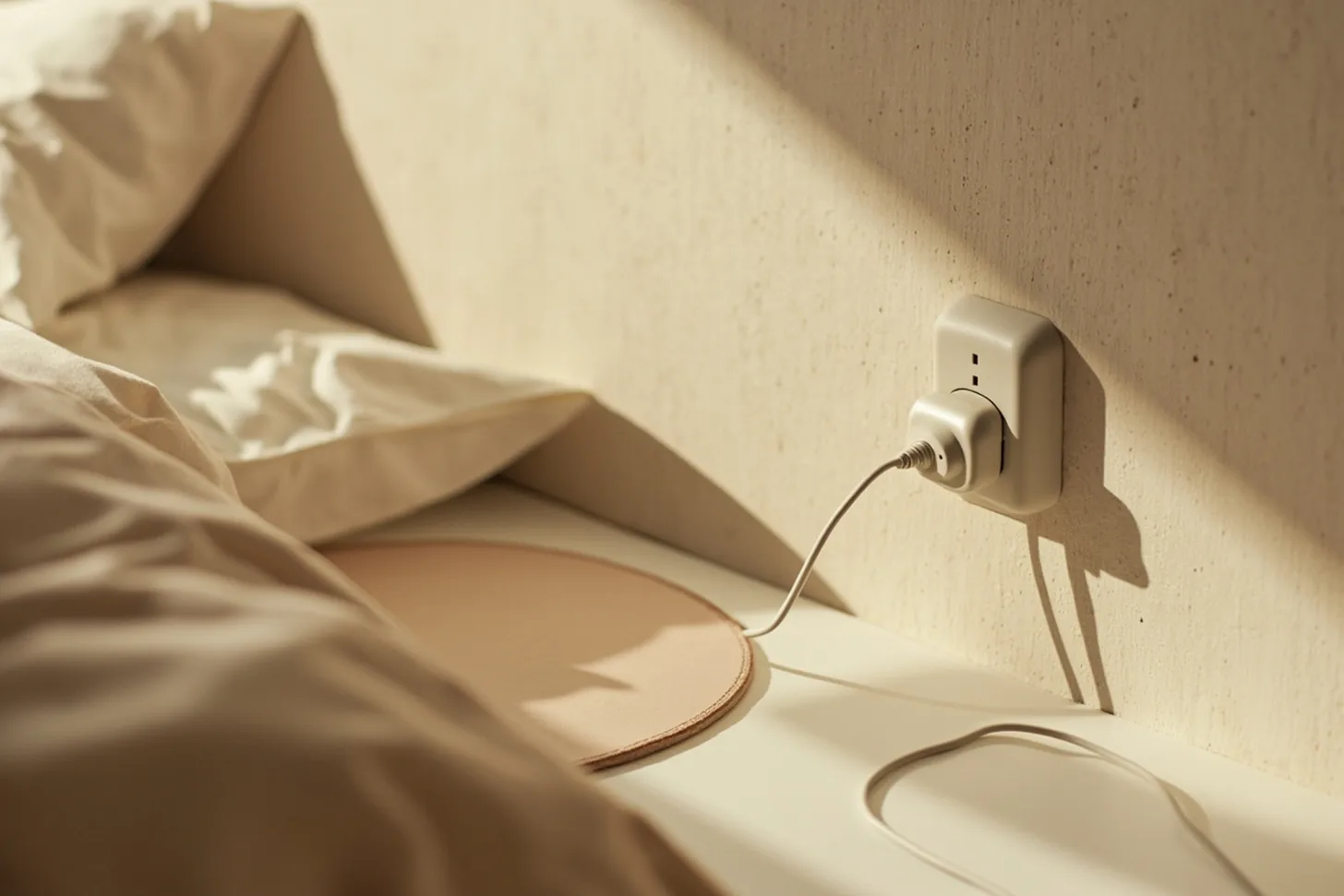
The real dangers of a grounding mat aren’t electrical shocks from mystical earth energy. They’re mundane wiring problems, a damaged cord, or a handful of medical situations where you should ask a doctor first. Get those five things right and a grounding mat is a low-risk product to sleep or work on.
Grounding mats are low risk for most healthy adults when plugged into a verified three-prong outlet with an intact cord. The real risks are a badly wired outlet, a frayed or aging mat, and a short list of medical exceptions like pacemakers.
What is actually risky about a grounding mat?
I’ve tested enough of these mats to know the marketing rarely mentions the boring part: this is a household electrical accessory, and it inherits household electrical rules. The mat itself carries no meaningful current under normal conditions. It simply ties your body to the same potential as your home’s ground wire.
That’s a genuinely low-risk setup, backed by basic electrical theory rather than anything speculative. But five specific failure points can turn ‘low risk’ into ‘actual risk,’ and none of them get much attention on product pages.
| Risk | What actually causes it | How to avoid it |
|---|---|---|
| Miswired outlet | Ground and hot wires swapped or connected wrong during a bad DIY job or old renovation | Buy a cheap plug-in outlet tester (under $10) and check every outlet you plan to use, not just the one nearest the bed |
| No real ground | Two-prong outlets in older homes, or a three-prong outlet that was never actually bonded to earth | Skip the plug adapter trick entirely; get an electrician to add a real ground or use a different room |
| Damaged cord or mat | Frayed conductive threads, a cracked plug, or exposed wire from years of folding and washing | Inspect the cord monthly and retire the mat the moment insulation looks worn or threads are exposed |
| Implanted medical devices | Pacemakers and ICDs interact with electrical environments in ways manufacturers haven’t tested against grounding products | Ask your cardiologist or the device maker before you start, every time |
| Skin irritation | Reaction to the conductive fibers, dye, or detergent residue rather than electricity itself | Wash before first use, and switch to a fragrance-free detergent if a rash shows up |
How big a deal is a miswired outlet, really?
This is the risk worth taking seriously. If an outlet’s ground pin isn’t actually bonded to earth, or if wiring was crossed during a sloppy repair, a grounding mat can end up connected to something it shouldn’t be. That’s not a grounding-mat problem specifically. It’s a house-wiring problem that a grounding mat happens to expose.
The fix is cheap and takes thirty seconds: a plug-in outlet tester with three lights tells you if an outlet is wired correctly, and most hardware stores sell them for less than the shipping on a mat. Test the outlet before you test the product. I do this in every rental I’ve lived in, mat or no mat.
Does grounding bypass my home’s safety devices?
No. A properly wired grounding mat uses the same protective earth path that’s already built into your home, and it shouldn’t interfere with a GFCI or circuit breaker doing its job. If plugging the mat in causes an outlet to trip or behave oddly, that’s a signal to stop and check the wiring, not to force it back in.
For a broader look at how this fits into overall product safety, our Are Grounding Sheets Safe? Risks, Side Effects & Who Should Ask a Doctor guide walks through the full picture beyond just mats, including what side effects to expect in the first few weeks and who should hold off.
Who should skip grounding mats or ask a doctor first?
A short list of people should get medical input before trying one. Anyone with a pacemaker or implantable defibrillator falls into this group, since there’s no dedicated research on how these devices interact with grounding products either way.
Pregnant readers and anyone on medication that affects nerve or muscle activity should also check with their doctor, not because there’s evidence of harm, but because nobody has specifically studied it. If you notice a rash, itching, or unusual sensations after starting, our guide to Grounding Sheet Side Effects: What Users Report in the First Weeks breaks down what’s electrical, what’s just fabric irritation, and when to simply stop using the product.
What about thunderstorms and power surges?
This one gets asked constantly, and the honest answer is that it’s a reasonable precaution rather than a documented danger specific to grounding products. Any grounded electronic device carries a theoretical surge risk during severe storms, which is why unplugging sensitive electronics is standard advice regardless of what’s plugged in.
Some owners just leave their mat unplugged overnight during storm season and plug it back in the next day. It costs nothing and removes the question entirely.
So is a grounding mat actually dangerous?
For most healthy adults on a verified, properly wired outlet, no. The product itself is a low-current accessory, not a hazard waiting to happen. The danger, when it exists, almost always traces back to the outlet or the cord, not the concept of grounding.
If you’re shopping for one and want fewer of these variables to manage, look for a mat with intact stitching, a heavy-gauge cord, and a manufacturer that publishes real specs rather than vague claims. The
Premium Grounding Sheet
30% stainless-steel fibers instead of silver, so it will not oxidize and lasts about five times longer. Fits under your fitted sheet, ships worldwide, and comes with a 90-night trial and a 3-year warranty.
Check price on Premium GroundingTest your outlet, inspect your cord twice a year, and ask a doctor if you fall into one of the medical exception categories. That’s the entire safety checklist, and it takes less time than reading this article did.
Frequently asked questions
Can a grounding mat electrocute you?
Not through normal use. The mat connects to your outlet’s ground pin, not the live current, so it isn’t designed to carry meaningful power. The real danger shows up only when the outlet itself is wired wrong.
Is it safe to use a grounding mat every night?
Yes, for most people, once you’ve confirmed the outlet is properly grounded and the cord is intact. Nightly use is how most owners run these products, and it’s the setup the small sleep studies actually tested.
Should I unplug my grounding mat during a thunderstorm?
It’s a reasonable precaution rather than a proven necessity. We cover the reasoning in our guide to Can You Use Grounding Sheets During a Thunderstorm?, but unplugging any grounded electronics during a severe storm is standard advice, not something specific to earthing.
Can I use a grounding mat if I have a pacemaker?
Talk to your cardiologist or the device manufacturer first. There’s no solid research on grounding products and implanted cardiac devices either way, so this is a case where you skip the guesswork and ask a professional.
What if my outlet only has two prongs?
Don’t use a plug adapter to force a three-prong mat into it. A two-prong outlet usually means there’s no verified ground path at all, which defeats the entire purpose of the product.
- Are Grounding Sheets Dangerous? Separating Real Risks From Fear
- Are Grounding Sheets Legit? How to Spot Scams in the Earthing Market
- Are Grounding Mats a Hoax? An Honest Assessment
- Grounding Sheet Side Effects: What Users Report in the First Weeks
- Can You Use Grounding Sheets During a Thunderstorm?
← Are Grounding Sheets Safe? Risks, Side Effects & Who Should Ask a Doctor