Short answer: grounding sheets are low-risk for most people when they’re plugged into a properly grounded outlet and the cord isn’t damaged. The handful of real risks worth knowing about come from home electrical wiring and a small list of medical situations, not from the sheet itself.
Grounding sheets are low-risk when your outlet is correctly grounded and the cord is intact. The real danger is a miswired outlet, not the concept of grounding.
We covered the broader safety picture in Are Grounding Sheets Safe? Risks, Side Effects & Who Should Ask a Doctor. This page digs into the specific fear people search for: can this thing actually hurt me while I sleep on it.
So, are grounding sheets dangerous?
Mostly no. The sheet’s conductive threads connect through a cord to the ground pin on a wall outlet, which is the same protective earth path that keeps the metal case of your washing machine or laptop charger from becoming live if something inside fails. It isn’t a source of current on its own. You’re borrowing a safety feature that’s already built into your home’s wiring, not adding a new hazard to it.
That said, calling it mostly no isn’t calling it never. The risk isn’t zero, and it isn’t evenly distributed. It concentrates in a few specific, checkable situations, which is good news, because checkable means avoidable.
What could actually go wrong with a grounding sheet?
Four things, realistically:
| Risk | How likely | What causes it |
|---|---|---|
| Miswired or ungrounded outlet | Low, but the main one | Ground pin not bonded to earth, or swapped with hot during a bad DIY wiring job |
| Damaged cord or connector | Low | Frayed insulation, exposed wire, a loose snap connector that’s been yanked too many times |
| Skin irritation | Moderate in the first weeks | Fabric dye, detergent residue or friction, not the conductive fiber itself |
| Medical device interaction | Unknown, so treat as a real question | Pacemakers, ICDs and some medication regimens haven’t been formally studied against grounding products |
Notice that three of the four have nothing to do with the sheet being conductive in some mysterious, unsettled way. They’re ordinary electrical-safety and textile issues you’d flag for any bedding product with a plug.
Why miswired outlets are the real risk
Older homes sometimes have two-prong outlets fitted with three-prong adapters that were never actually bonded to earth, or wiring where the ground terminal got crossed with hot during a repair. In that scenario, a grounding sheet could end up connected to something it was never designed to touch. That’s a fault in the outlet, not in the sheet, and the sheet just happens to be the thing that makes you notice it.
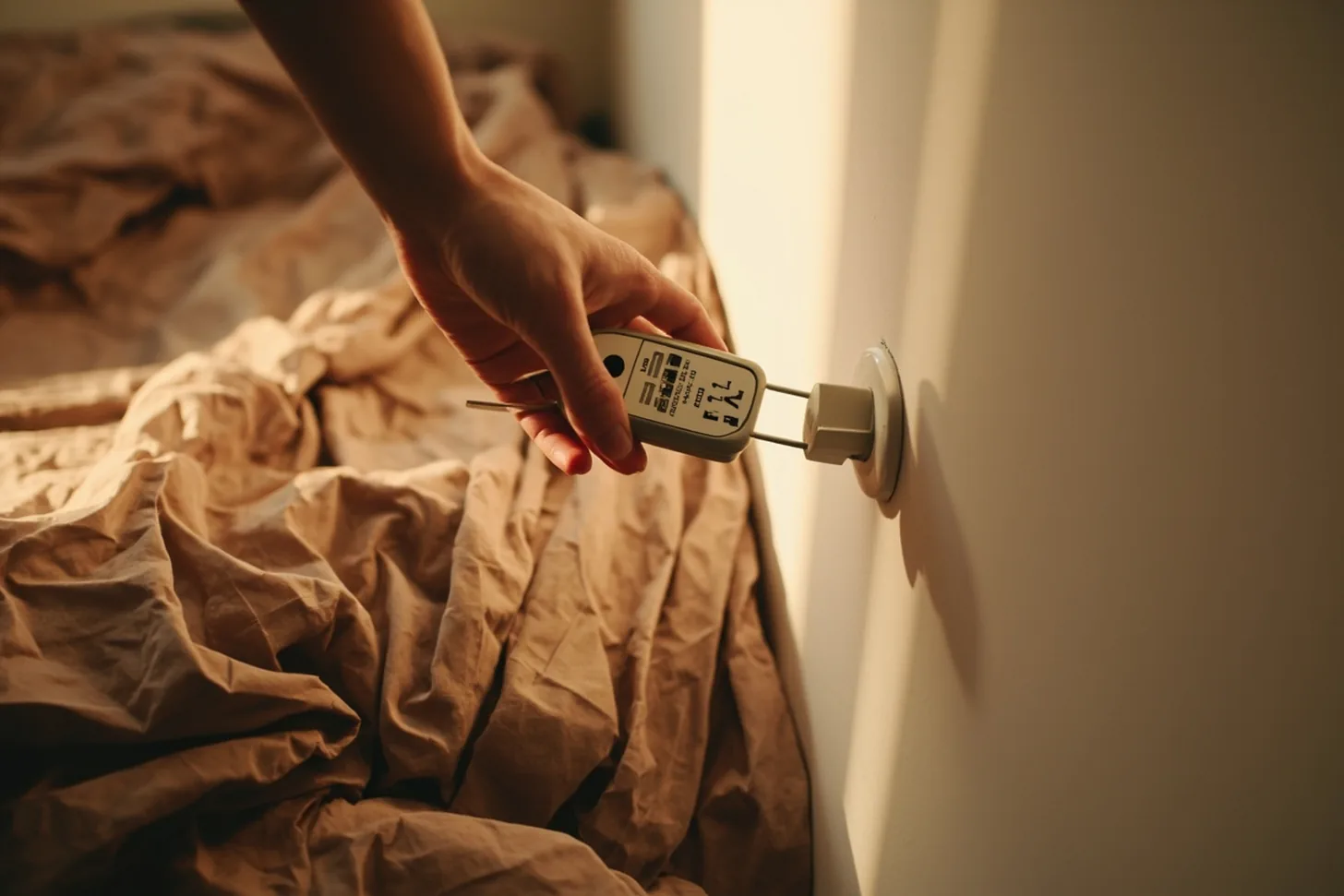
The fix is almost embarrassingly simple: a plug-in outlet tester with three lights, sold at any hardware store for a few dollars, tells you in seconds whether an outlet is correctly grounded. Test the outlet before you use the sheet, not after something feels off. Our guide to Grounding Mat Dangers: The 5 Real Risks and How to Avoid Them walks through the same check for mats, if you’re weighing both.
Who should talk to a doctor before trying one?
A short list, and it’s worth taking seriously rather than skimming past:
- Anyone with a pacemaker or implantable cardioverter-defibrillator, because implanted cardiac devices can be sensitive to unusual electrical environments and haven’t been cleared against grounding products specifically.
- Anyone pregnant, mostly out of general caution around unstudied wellness devices rather than any documented harm.
- Anyone on medication that affects nerve or muscle excitability, or with a condition involving electrolyte balance, since any new symptom deserves a doctor’s opinion rather than an assumption that it’s harmless.
- Anyone with broken skin, an active rash or dermatitis where the sheet would touch, since irritation risk there is about hygiene and friction, not voltage.
None of this means grounding sheets are secretly dangerous for these groups. It means the research hasn’t ruled anything out yet, and that’s a different statement from research that’s been done and came back clean. A doctor’s office visit costs you fifteen minutes. Skipping it costs you nothing if you’re fine, and matters a lot if you’re not.
What about the health claims themselves?
Separate from electrical safety, it’s worth being honest about the other kind of danger: over-trusting a marketing claim. The proposed mechanism behind grounding, that Earth’s surface electrons act as antioxidants inside the body, comes from a hypothesis paper by Oschman, Chevalier and Brown, not a large confirmed trial. Small pilot studies by Ghaly & Teplitz and by Sokal & Sokal reported shifts in cortisol rhythm and other markers, but the samples were tiny and mostly unblinded. None of that makes a grounding sheet unsafe. It just means nobody should tell you it treats a disease, and if a seller does, that’s the actual red flag worth avoiding.
How to check your setup in five minutes
Before your first night on a grounding sheet, run through this once:
- Test the outlet with a $6-10 three-light tester. Green light pattern for correct wiring, anything else means don’t plug in yet.
- Inspect the cord for cracks, exposed copper or a loose snap where it attaches to the sheet.
- Wash the sheet before first use if the manufacturer allows it, to clear factory residue that can trigger mild irritation.
- If you’re on a device or medication from the list above, get a quick yes from your doctor first.
- Unplug during severe storms, same habit as any other plugged-in electronics.
If your outlet passes and your cord looks intact, you’ve addressed the overwhelming majority of what could go wrong. Side effects that show up after that point are almost always skin-related and mild, which we go through in detail in Grounding Sheet Side Effects: What Users Report in the First Weeks.
Premium Grounding Sheet
30% stainless-steel fibers instead of silver, so it will not oxidize and lasts about five times longer. Fits under your fitted sheet, ships worldwide, and comes with a 90-night trial and a 3-year warranty.
Check price on Premium GroundingThe honest bottom line: the fear around grounding sheets is usually pointed at the wrong target. It isn’t the sheet that needs scrutiny, it’s the outlet behind it. Check that, respect the short list of medical exceptions, and the actual risk left on the table is small.
Frequently asked questions
Can a grounding sheet electrocute me?
Not through normal use. The sheet connects to the ground pin on your outlet, which is a protective path, not a live power source. The scenario that actually causes harm is a miswired outlet where the ground pin is accidentally bonded to hot, and that’s a home-wiring problem that exists whether or not you own a grounding sheet.
Is it safe to use a grounding sheet with a pacemaker or ICD?
Talk to your cardiologist or your device manufacturer first. Implanted cardiac devices can be sensitive to unusual electrical environments, and nobody has done the kind of dedicated safety study that would let a website tell you it’s fine. This is a five-minute phone call, not a big ask.
Do grounding sheets cause skin irritation?
Some users report mild itching or a rash in the first week or two, and it’s usually the fabric, dye or detergent rather than the conductive fibers. Washing the sheet before first use and switching to a fragrance-free detergent clears it up for most people.
Should I unplug my grounding sheet during a storm?
It’s a reasonable habit, the same one electricians recommend for any device plugged into an outlet during severe electrical activity. We cover this in more depth in our guide on Can You Use Grounding Sheets During a Thunderstorm?.
How do I know if my outlet is actually grounded?
A cheap three-light outlet tester, usually under ten dollars at any hardware store, tells you in about two seconds. If it shows an open ground or reversed wiring, call an electrician before you plug anything conductive into that outlet, sheet or otherwise.
- Grounding Mat Dangers: The 5 Real Risks and How to Avoid Them
- Are Grounding Sheets Legit? How to Spot Scams in the Earthing Market
- Are Grounding Mats a Hoax? An Honest Assessment
- Grounding Sheet Side Effects: What Users Report in the First Weeks
- Can You Use Grounding Sheets During a Thunderstorm?
← Are Grounding Sheets Safe? Risks, Side Effects & Who Should Ask a Doctor