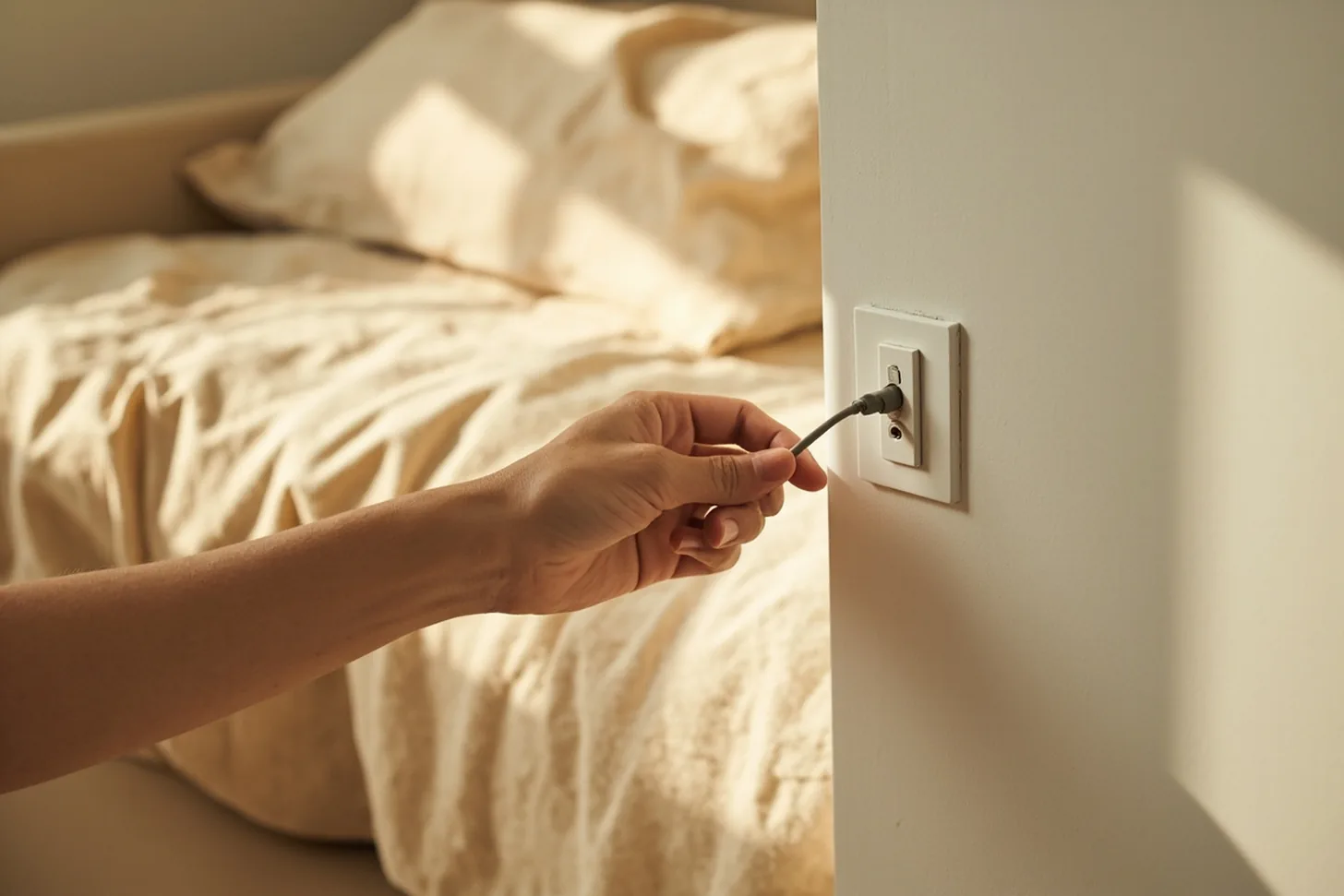
For almost everyone, setting up a grounding sheet means one thing: plugging its cord into a normal, properly grounded 3-prong wall outlet near your bed. No rod, no tools, no electrician required for a standard home. The only real prep step is checking that the outlet is actually grounded, which takes about a minute with a cheap tester.
Use your nearest grounded 3-prong outlet, test it first with a $10 outlet tester, and skip the ground rod unless your home genuinely has no grounded outlets.
What do you actually need before you start?
You need three things: the grounding sheet itself (fitted or flat, connected under your regular sheets), the sheet’s grounding cord with its snap connector, and a grounded outlet within reach of your bed. Most cords run 12 to 15 feet, so an outlet on the far wall is usually fine.
If you’re not sure your bedroom outlets are grounded, that’s the one thing worth confirming before you spend money on anything. We cover the full outlet-checking process in How to Test if Your Grounding Sheet Is Actually Working, but the short version is below.
How do you connect a grounding sheet to a wall outlet?
The setup is genuinely simple, and it’s the same across nearly every brand we’ve tested.
- Lay the grounding sheet on your mattress, under your regular fitted sheet, with the conductive panel positioned where your skin will rest against it.
- Snap the cord’s clip onto the small metal button sewn into the sheet’s corner.
- Plug the other end directly into a wall outlet. Some cords include a small adapter box with an LED; that light should turn on to confirm continuity.
- Sleep on top of your normal sheet as usual, with bare skin (feet, calves, or hands) touching the grounded surface somewhere during the night.
That’s the whole process. No wiring changes, nothing permanent, and you can unplug it in seconds if you need the outlet for something else.
Should you use a ground rod instead of an outlet?
A ground rod (a metal stake driven a foot or two into damp soil outside, connected by a cord run through a window) is the older method, and it’s technically a more direct connection to the earth itself rather than to your building’s wiring. But it comes with real downsides for a bedroom setup.
| Method | Setup effort | Ongoing maintenance | Best for |
|---|---|---|---|
| Grounded wall outlet | Plug in, done in minutes | None, just re-test occasionally | Almost everyone |
| Ground rod | Requires drilling/window gap, weatherproofing the cord run | Check corrosion and soil contact seasonally | Homes with no grounded outlets, off-grid setups |
Unless you live somewhere with no grounded circuits at all, or you’re specifically troubleshooting a suspect outlet, the wall outlet method gives you the same electrical connection with far less to maintain. Save the rod for a genuine last resort.
How do you check the outlet is actually safe to use?
This is the step people skip, and it’s the one that actually matters for safety. The sheet connects to your outlet’s ground wire, not to live power, so the real risk here isn’t the sheet itself, it’s an outlet that was wired wrong in the first place.
A plug-in outlet tester solves this. Push it into the outlet, read the light pattern against the guide printed on the tester, and you’ll know in seconds whether the wiring is correct, reversed, or missing ground entirely. If it comes back anything other than correct, don’t use that outlet for a grounding sheet, and consider having an electrician look at it regardless of the sheet.
What if your home doesn’t have grounded outlets?
Some older homes, especially ones built before the 1960s, only have 2-prong outlets with no ground wire at all. A 2-to-3-prong adapter with a little grounding tab is not a real fix in most cases, since that tab often isn’t connected to anything. In that situation you’ve got two honest options: have an electrician add proper grounding to at least one bedroom outlet, or fall back to a ground rod setup. Renters and apartment dwellers dealing with this exact problem may find it easier to read Grounding in the City: How to Earth Yourself in an Apartment first, since building type changes what’s realistic.
Does the setup change how well it works?
Skin contact matters more than the connection method. Whether you’re grounded through an outlet or a rod, you need bare skin touching the conductive fabric, not skin through a layer of regular sheet or pajamas. Once it’s plugged in and tested, care is mostly about not degrading the conductive fibers over time. Washing habits affect this more than people expect; see How to Wash Grounding Sheets Without Killing Conductivity for what actually kills conductivity versus what’s fine.
If you’re shopping for a sheet before you’ve settled on setup logistics, our top pick uses stainless-steel fiber (not silver) specifically because it holds conductivity through years of normal washing and outlet use, which matters more day to day than which grounding method you pick.
Premium Grounding Sheet
30% stainless-steel fibers instead of silver, so it will not oxidize and lasts about five times longer. Fits under your fitted sheet, ships worldwide, and comes with a 90-night trial and a 3-year warranty.
Check price on Premium GroundingOnce it’s plugged in and tested, this is a five-minute job you never think about again. The outlet method is boring on purpose. That’s the point.
For the full walkthrough on everyday use beyond the initial setup, our How to Use Grounding Sheets: Setup, Care and Daily Practice hub covers washing, nightly practice and troubleshooting in one place.
Frequently asked questions
Do I need an electrician to set up a grounding sheet?
No, not for the standard outlet method. You plug the sheet’s grounding cord into a normal 3-prong wall outlet, the same way you’d plug in a lamp. An electrician only comes in if you want to confirm your home’s wiring is properly grounded, which is worth doing once if your house is older.
Can I use a grounding sheet in a 2-prong outlet?
Not safely without an adapter that’s genuinely wired to ground, and most cheap 2-to-3-prong adapters just fake the third pin without connecting it to anything. If your home only has 2-prong outlets, get an outlet tester or an electrician before you plug in a grounding sheet.
Is a ground rod better than a wall outlet for grounding sheets?
Not for most people. A ground rod driven into soil outside can work, but it means running a cord through a window or wall, protecting it from weather, and re-checking the connection over time. A properly grounded outlet gives you the same electrical connection to earth with none of that upkeep.
How do I know my outlet is actually grounded?
Buy a cheap plug-in outlet tester (a few dollars at any hardware store) and plug it into the outlet you plan to use. It lights up to tell you if the wiring is correct, reversed, or missing a ground entirely. This takes under a minute and it’s the single most useful step in this whole setup.
- How to Wash Grounding Sheets Without Killing Conductivity
- How Do I Ground Myself? 7 Ways, From Free to Effortless
- Grounding Outside: Best (and Worst) Surfaces for Earthing
- Grounding in the City: How to Earth Yourself in an Apartment
- DIY Grounding Sheets: Can You Make Your Own? (And Should You?)
← How to Use Grounding Sheets: Setup, Care and Daily Practice