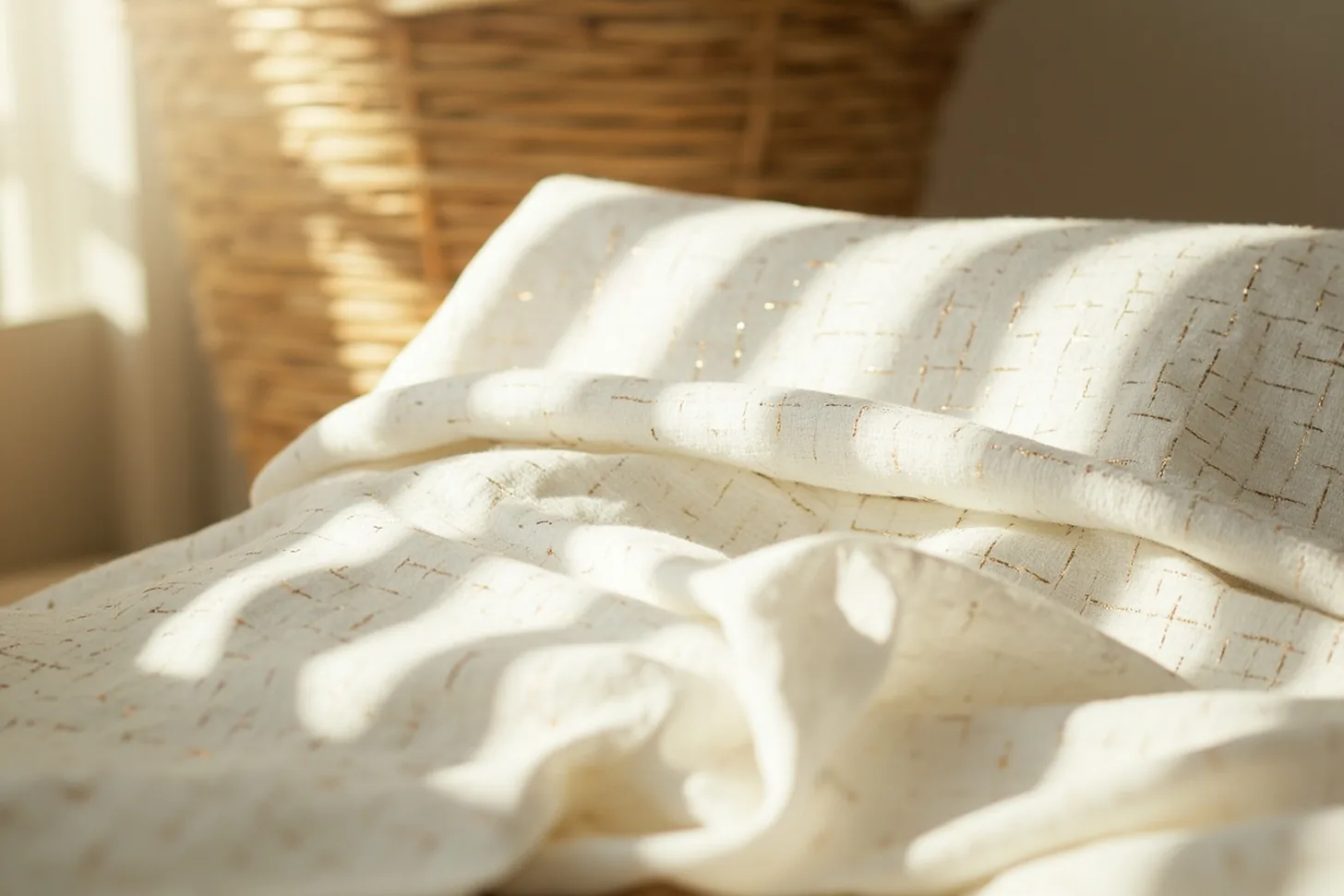
Wash your grounding sheet the way you would treat any fitted sheet you actually care about, just with a couple of extra rules. Cold water, the gentle cycle, a small amount of mild detergent, no bleach, no fabric softener. Skip the dryer if you can, or use the lowest heat setting available.
Wash cold on the gentle cycle with mild detergent, skip bleach and fabric softener, and air dry when possible. Follow that and a well-made sheet keeps its conductivity for years of normal use.
How often should you actually wash it?
Treat it like any sheet that touches your skin for eight hours a night. Once a week or every other week is normal for most households, more often if you sweat heavily or share the bed with pets. There is no special grounding-specific schedule here. The fabric layer needs the same hygiene as regular cotton bedding, and the conductive fibers are woven through it rather than sitting on top, so they do not wear out faster than the sheet itself.
What wash cycle keeps the conductive fibers intact?
Cold water paired with the gentle or delicate cycle is the safest combination I have found across every sheet I have tested. Hot water and aggressive agitation stress the metal threads over time, and that repeated stress is what eventually breaks the conductive path, even when the fabric still looks perfectly fine. A mild, dye-free detergent works best. Skip anything marketed as extra strength or heavy on enzymes, since those formulas can be harder on metal fibers than on plain cotton.
Can you use fabric softener, bleach, or dryer sheets?
No, and this is where most conductivity complaints actually start. Fabric softener and dryer sheets leave a waxy coating across the fabric, and that coating sits right on top of the conductive threads, insulating them instead of letting them touch your skin. Bleach is worse. It is a mild corrosive, and over enough washes it can pit or degrade metal fibers, silver-coated ones especially. Stainless steel fibers resist that corrosion far better than silver, which is one reason stainless has become the standard for anyone who washes bedding on a normal weekly schedule.
Does how you dry it matter as much as washing?
Air drying is the safer default, and most manufacturer care labels say so directly. If you need the dryer, use low heat and pull the sheet out while it is still slightly damp rather than running a full high-heat cycle. High heat will not kill conductivity instantly, but repeated exposure speeds up the same fatigue that hot-water washing causes. Once the sheet is fully dry, reconnect the grounding cord the same way you did during How to Set Up a Grounding Sheet: Outlet vs Ground Rod, and check that the plug seats all the way into the outlet.
How many washes before conductivity actually fades?
Reputable brands generally claim their sheets hold up through hundreds of washes when cared for properly, though I have not seen an independent, long-term study that verifies that number across different brands. What I can say from testing sheets over months is that the drop-off, when it happens, tends to be gradual rather than sudden. You will usually notice a weaker or inconsistent reading on an outlet tester before a sheet stops working altogether. Homemade sheets are a different story. If you have stitched your own using conductive thread, our notes on DIY Grounding Sheets: Can You Make Your Own? (And Should You?) cover why hand-sewn connections tend to fail faster and less predictably than factory-woven ones.
If you are shopping for a new sheet with easy washing in mind, stainless steel fiber construction is the detail worth checking before anything else, since it is the main reason I keep recommending sheets built that way to readers who wash their bedding often.
Premium Grounding Sheet
30% stainless-steel fibers instead of silver, so it will not oxidize and lasts about five times longer. Fits under your fitted sheet, ships worldwide, and comes with a 90-night trial and a 3-year warranty.
Check price on Premium GroundingThat covers washing specifically. For setup, daily habits, and everything else in the routine, our full How to Use Grounding Sheets: Setup, Care and Daily Practice guide walks through the rest.
Frequently asked questions
Can I wash a grounding sheet in a regular washing machine?
Yes. A standard machine is fine as long as you use cold water, the gentle or delicate cycle, and a mild detergent. There is no need to hand-wash it or use a special appliance.
Will bleach ruin the conductive threads?
It can. Bleach is mildly corrosive to metal fibers, and repeated exposure speeds up wear, especially on silver-coated thread. Stainless steel resists it better, but skipping bleach entirely is the safer habit either way.
How do I know if washing damaged the conductivity?
Check it with a cheap outlet tester or a multimeter set to continuity, touching the connector and the fabric surface. A weak or inconsistent reading, rather than a sudden total failure, is usually the first sign something is off.
Is it safe to iron a grounding sheet?
Avoid high heat directly on the fabric. If you need to remove wrinkles, use the lowest iron setting or steam from a short distance instead of pressing straight onto the conductive fibers.
Can I use the sheet right after washing, before it is fully dry?
Let it dry completely first. A damp sheet will not hurt you, but it will not ground properly either, since moisture at the connector can prevent a clean contact with the outlet ground.
- How to Set Up a Grounding Sheet: Outlet vs Ground Rod
- How Do I Ground Myself? 7 Ways, From Free to Effortless
- Grounding Outside: Best (and Worst) Surfaces for Earthing
- Grounding in the City: How to Earth Yourself in an Apartment
- DIY Grounding Sheets: Can You Make Your Own? (And Should You?)
← How to Use Grounding Sheets: Setup, Care and Daily Practice