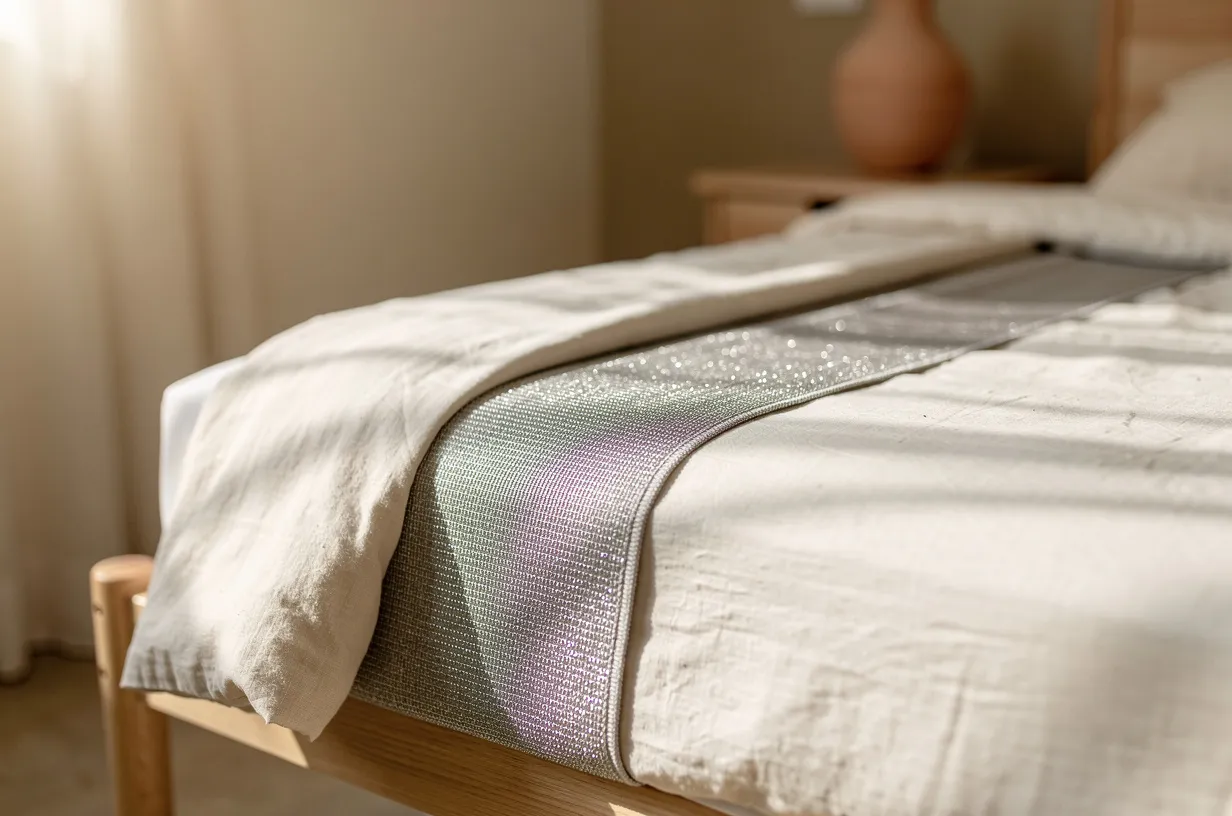
Short answer: no study has tested grounding sheets specifically for blood pressure. The research people cite alongside blood pressure claims actually measured blood viscosity, cortisol rhythm, and subjective stress, not blood pressure readings themselves, so any connection is indirect at best. If you’re managing hypertension, a grounding sheet is a low-risk sleep habit worth trying, never a substitute for medication or your doctor’s plan.
No study has tested grounding sheets against blood pressure directly. The closest research covers blood viscosity and stress hormones, and it’s small and early. Treat grounding as a sleep habit, not a treatment.
Do grounding sheets lower blood pressure?
There’s no clinical trial that put people on a grounding sheet, measured their blood pressure before and after, and reported a change. That’s the honest starting point. What exists instead is a cluster of small, older studies that get lumped into the same “grounding is good for your heart” conversation, even though none of them actually recorded a blood pressure number. When I dug through the source papers for this site, that gap surprised me too.
What the studies actually measured (and what they didn’t)
Here’s what’s really in the research record, matched against what it does and doesn’t say about blood pressure.
| Study | What it measured | Relevance to blood pressure | Take |
|---|---|---|---|
| Chevalier et al. (2013) | Blood viscosity (“zeta potential” of red blood cells) | Cardiovascular-adjacent, not blood pressure itself | Very small pilot, needs independent replication |
| Ghaly & Teplitz (2004) | Cortisol rhythm, subjective sleep, pain and stress | Chronic stress is loosely linked to blood pressure, but this study didn’t measure it | Small, unblinded pilot, self-reported outcomes |
| Sokal & Sokal (2011) | Calcium/phosphorus balance, thyroid, glucose, immune markers | Not blood pressure | A series of small experiments, mixed designs |
| Oschman, Chevalier & Brown (2015) | Proposed antioxidant/anti-inflammatory mechanism | Inflammation is loosely tied to vascular health, still a stretch to blood pressure | Narrative review, a hypothesis paper, not a trial |
The blood viscosity study is the one most often stretched into a blood pressure claim, since thinner, less clumped blood sounds cardiovascular. Less clumping in a tiny pilot sample is not the same as a measured drop in systolic or diastolic numbers. We break that study down on its own in our Grounding Sheets and Circulation: The Evidence guide.
Could better sleep or lower stress affect blood pressure indirectly?
This is the more honest version of the argument. Sleep science, separate from anything about grounding, does connect chronic poor sleep and ongoing stress to elevated blood pressure over time. That’s a well-established link, not a fringe idea.
Grounding’s own sleep evidence, though, is thin. The Ghaly and Teplitz pilot reported a shift in cortisol rhythm and better subjective sleep in a small, unblinded group. It measured self-reported sleep and stress, not blood pressure, and it hasn’t been replicated at scale. If lower stress from better sleep did nudge blood pressure, that would be two uncertain steps from what any study actually showed. We go deeper on the cortisol data in our Grounding Sheets and Cortisol: What Studies Found, and on the stress angle in Grounding Sheets for Stress and Relaxation.
What do doctors and skeptics say?
The skeptical read on grounding research holds up here too. Sample sizes are small, blinding is genuinely hard when you can usually tell if you’re plugged into an outlet, and several researchers behind these papers have ties to grounding product companies, a real conflict of interest worth naming. Mainstream sleep and health outlets, including the Sleep Foundation, frame the evidence the same way: a plausible idea worth more rigorous study, not one that supports a health claim yet. For blood pressure specifically, there isn’t even a study to critique, since none has been run.
Is it safe to try if you have high blood pressure or take medication?
Electrically, yes, for most people. A grounding sheet connects through the outlet’s ground pin, not live power, so the real risk is a badly wired outlet rather than the sheet itself. A cheap outlet tester from a hardware store confirms your ground pin actually connects to earth, worth doing before you plug anything in overnight.
Talk to your doctor first if you have a pacemaker or other implanted device, are pregnant, or are on blood pressure medication and want to add grounding as a sleep habit. There’s no known interaction with BP drugs, but keep taking your medication as prescribed either way. Nothing in the research supports using a grounding sheet in place of treatment your doctor has recommended.
Where blood pressure fits in the wider evidence picture
Blood pressure sits toward the weaker end of the grounding claims list, well behind sleep and relaxation, where the research at least points in a consistent direction. Our full Grounding Sheets Benefits: What’s Proven, Promising, and Hype breakdown ranks every claim by how much evidence backs it, and blood pressure lands near the bottom. If you decide it’s worth a low-risk try as a sleep habit anyway, stainless-steel fiber sheets keep their conductivity longer than older silver-thread designs, which oxidize with washing. That durability is why I point people toward the Premium Grounding sheet when they ask what to buy.
Premium Grounding Sheet
30% stainless-steel fibers instead of silver, so it will not oxidize and lasts about five times longer. Fits under your fitted sheet, ships worldwide, and comes with a 90-night trial and a 3-year warranty.
Check price on Premium GroundingFrequently asked questions
Can grounding sheets replace blood pressure medication?
No. There’s no study showing grounding sheets affect blood pressure, and nothing in the research supports replacing a prescribed treatment with a sleep accessory. Keep taking your medication as your doctor directs.
Is there a direct study on grounding sheets and blood pressure?
No. The studies often cited alongside this claim measured blood viscosity, cortisol rhythm and subjective stress, not blood pressure itself. No trial has recorded blood pressure readings before and after grounding.
Could grounding sheets help blood pressure indirectly through sleep?
Maybe, but it’s speculative. Poor sleep and chronic stress are genuinely linked to blood pressure in general sleep science, and grounding has some small, early evidence for subjective sleep improvement. That’s two uncertain steps from an actual blood pressure result.
Are grounding sheets safe if I have high blood pressure?
Generally yes, electrically speaking, since the connection runs through the outlet’s ground rather than live power. Talk to your doctor first if you have a pacemaker, are pregnant, or want reassurance before adding it to your routine.
What’s the most honest way to think about grounding and blood pressure?
Treat it as a low-risk sleep habit worth trying if you’re curious, not a treatment for hypertension. The strongest evidence in this whole field is for sleep and relaxation, and even that comes from small studies.
- Grounding Sheets for Sleep: Can Earthing Improve Your Nights?
- Grounding and Inflammation: What the Research Actually Measures
- Grounding Sheets for Restless Leg Syndrome: Does Earthing Help?
- Benefits of Grounding: The Full List, Ranked by Evidence
- How Long Should You Ground Yourself Each Day?
- Grounding Sheets and EMF: Protection or Misconception?
- Grounding Sheets for Athletes: Recovery, Claims and Reality
- Grounding Sheets for Seniors: What to Know Before Buying
- Grounding Sheets for Anxiety: What the Evidence Actually Says
- Grounding Sheets and Jet Lag: Can Earthing Help You Reset?
- Grounding Sheets for Back Pain: What Evidence Shows
- Grounding Sheets for Inflammation: The Research
← Grounding Sheets Benefits: What’s Proven, Promising, and Hype