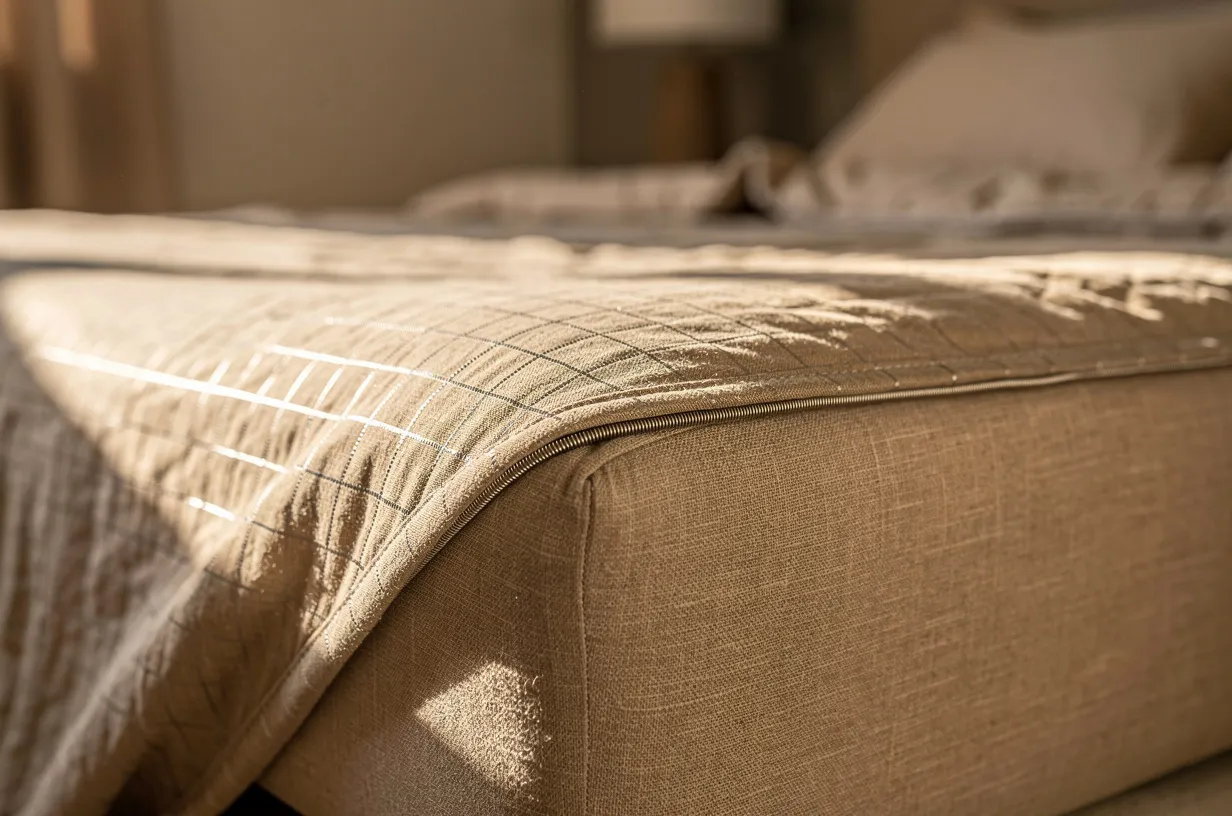
Short answer: a grounding sheet will not treat, slow, or reverse arthritis. If you came here hoping for a fix for joint damage or autoimmune inflammation, that’s not what the evidence supports, and no honest reviewer will tell you otherwise. What the small studies do point to, cautiously, is better subjective sleep and lower stress for some people, and if you’re managing a chronic pain condition, sleep quality is not a small thing. Think of grounding as a low-cost, low-risk add-on to whatever your doctor already has you doing, not a replacement for it.
Grounding sheets aren’t a treatment for arthritis. The best-supported effect is sleep and stress-related, from small pilot studies. Any pain or inflammation benefit specific to arthritis is still unproven.
Do grounding sheets help arthritis pain?
There’s no study we can point to that tested grounding sheets on people with diagnosed arthritis. That’s worth saying plainly, because a lot of pages selling these sheets blur that line. Ghaly and Teplitz (2004) ran a small, unblinded pilot where participants slept grounded and reported improved sleep, along with less subjective pain and stress. It’s the most cited paper for “grounding helps sleep,” and it’s real, but the sample was small, self-reported, and not focused on arthritis specifically.
Sokal and Sokal (2011) looked at grounding’s effect on things like calcium and phosphorus balance, thyroid function, glucose and immune markers, again in small groups without an arthritis diagnosis as the entry criteria. None of this adds up to “grounding treats arthritis.” It adds up to “a few small studies noticed some interesting changes in general measures, and nobody has followed up with a proper trial in arthritis patients.”
What’s the inflammation theory, and how solid is it?
The idea you’ll see repeated most often is that the earth carries a steady supply of free electrons, and that skin contact with the ground (through a conductive sheet, wired to your outlet’s ground pin) lets those electrons act as antioxidants, neutralizing the free radicals involved in inflammation. That’s the core argument in Oschman, Chevalier and Brown’s 2015 paper in the Journal of Inflammation Research.
Here’s the catch: that paper is a narrative review and hypothesis piece, not a clinical trial. It proposes a mechanism and pulls together earlier small studies to support it. It does not prove that grounding reduces inflammation in a living person, let alone in someone with rheumatoid or osteoarthritis. Separately, Brown, Chevalier and Hill ran small pilots on delayed-onset muscle soreness after exercise, which is a different kind of inflammation (temporary, exercise-induced) than the chronic joint inflammation in arthritis. Interesting groundwork, not evidence for your knees.
Could better sleep make arthritis symptoms feel more manageable?
This is the honest, indirect angle, and it’s probably the most useful one. Poor sleep is well known to lower pain tolerance and make chronic pain feel worse the next day; sleep researchers have documented that relationship for years, independent of grounding. If grounding’s most consistent, best-replicated effect really is subjective sleep quality, then a night that feels more restful could make arthritis pain feel a bit more tolerable the next morning, simply because you slept better. That’s not the same as reducing inflammation or joint damage. We go deeper on the sleep angle in Grounding Sheets for Sleep: Can Earthing Improve Your Nights?, and on what the inflammation research does and doesn’t show in Grounding and Inflammation: What the Research Actually Measures.
Is grounding safe if you have arthritis or take medication for it?
The sheet itself connects to your outlet’s ground wire, not live power, so under normal conditions the electrical risk is low. The real risk is a miswired outlet, which is why we’d suggest a cheap outlet tester before you plug anything in nightly for months. If you’re on blood thinners, immunosuppressants for rheumatoid or another autoimmune arthritis, or you have a pacemaker or other implanted device, talk to your doctor before adding a grounding sheet to your routine. It’s a low-key product, but “low-key” still means checking with someone who knows your full medical picture. The most common complaint we’ve seen reported isn’t electrical at all, it’s mild skin irritation from the fabric, which usually settles down after a wash or two.
What to look for if you’re going to try one
If you’re using this every night for a chronic condition, durability matters more than it would for a one-off gadget. Most grounding sheets use silver thread, which conducts well when new but oxidizes with repeated washing, so conductivity (and the point of the sheet) fades over time. Stainless-steel fiber doesn’t oxidize the same way, so it tends to hold up over more wash cycles.
| Feature | Stainless-steel sheets (our tested pick) | Typical silver-thread sheets |
|---|---|---|
| Conductive material | 30% stainless-steel fibers | Silver thread |
| Durability with washing | Resists oxidation, longer effective life | Oxidizes over months, conductivity fades |
| Fit | Goes under your fitted sheet | Varies by brand |
| Trial period | 90 nights | Check current policy per brand |
| Warranty | 3 years | Often 1 year |
If you’d rather try before you fully commit, that’s a reasonable way to approach a low-risk, unproven-for-arthritis product: pick something with a real trial window and a durable conductor, and give it a few weeks on a normal sleep schedule.
Premium Grounding Sheet
30% stainless-steel fibers instead of silver, so it will not oxidize and lasts about five times longer. Fits under your fitted sheet, ships worldwide, and comes with a 90-night trial and a 3-year warranty.
Check price on Premium GroundingWhere this fits into a broader arthritis routine
Arthritis management is medication, movement, weight and joint load, and sleep, in whatever combination your doctor recommends. A grounding sheet doesn’t belong at the top of that list. It’s a reasonable, inexpensive addition if better sleep is genuinely something you’re chasing, especially if arthritis pain has been keeping you up. Arthritis is also more common with age, so if that’s your situation, our guide to Grounding Sheets for Seniors: What to Know Before Buying covers a few extra considerations. For the wider evidence picture across every claimed benefit, not just pain, see Benefits of Grounding: The Full List, Ranked by Evidence.
The honest version of this page is short: nobody has run the study that would let us say grounding helps arthritis specifically. What exists is a handful of small, mostly non-arthritis studies pointing toward sleep and stress, plus a hypothesis about inflammation that hasn’t been tested in this population. Low risk, unproven benefit, worth trying only if you keep your expectations realistic and your doctor in the loop.
Frequently asked questions
Can grounding sheets cure or treat arthritis?
No. There’s no research showing grounding sheets treat, slow, or cure arthritis of any kind. Don’t stop or change a prescribed treatment plan because of a grounding sheet.
Is there any research at all on grounding and joint inflammation?
There’s a hypothesis, laid out in a 2015 narrative review by Oschman, Chevalier and Brown, that grounding may act as an antioxidant against inflammation. It’s a proposed mechanism drawn from small pilot studies, not a clinical trial in arthritis patients, so treat it as an idea worth watching, not a proven effect.
Is it safe to use a grounding sheet if I take arthritis medication or have a pacemaker?
The sheet connects to your outlet’s ground, not live power, so basic electrical risk is low with a properly wired outlet. Still, if you’re on blood thinners, immunosuppressants, or have a pacemaker or other implanted device, check with your doctor before adding one to your routine.
How long would I need to use one before noticing anything?
The small pilot studies behind grounding’s sleep effects ran over a period of weeks, not days. There’s no guaranteed timeline, and results are individual; if you try it, give it a few weeks on a consistent sleep schedule before deciding either way.
What should I actually buy if I want to try grounding for arthritis-related sleep issues?
Look for a real trial period and a conductor that holds up to nightly washing. Stainless-steel fiber resists the oxidation that dulls silver-thread sheets over time, which matters if you’re planning to use it every night for months.
- Grounding Sheets for Sleep: Can Earthing Improve Your Nights?
- Grounding and Inflammation: What the Research Actually Measures
- Grounding Sheets for Restless Leg Syndrome: Does Earthing Help?
- Benefits of Grounding: The Full List, Ranked by Evidence
- How Long Should You Ground Yourself Each Day?
- Grounding Sheets and EMF: Protection or Misconception?
- Grounding Sheets for Athletes: Recovery, Claims and Reality
- Grounding Sheets for Seniors: What to Know Before Buying
- Grounding Sheets for Anxiety: What the Evidence Actually Says
- Grounding Sheets and Jet Lag: Can Earthing Help You Reset?
- Grounding Sheets for Back Pain: What Evidence Shows
- Grounding Sheets for Inflammation: The Research
← Grounding Sheets Benefits: What’s Proven, Promising, and Hype