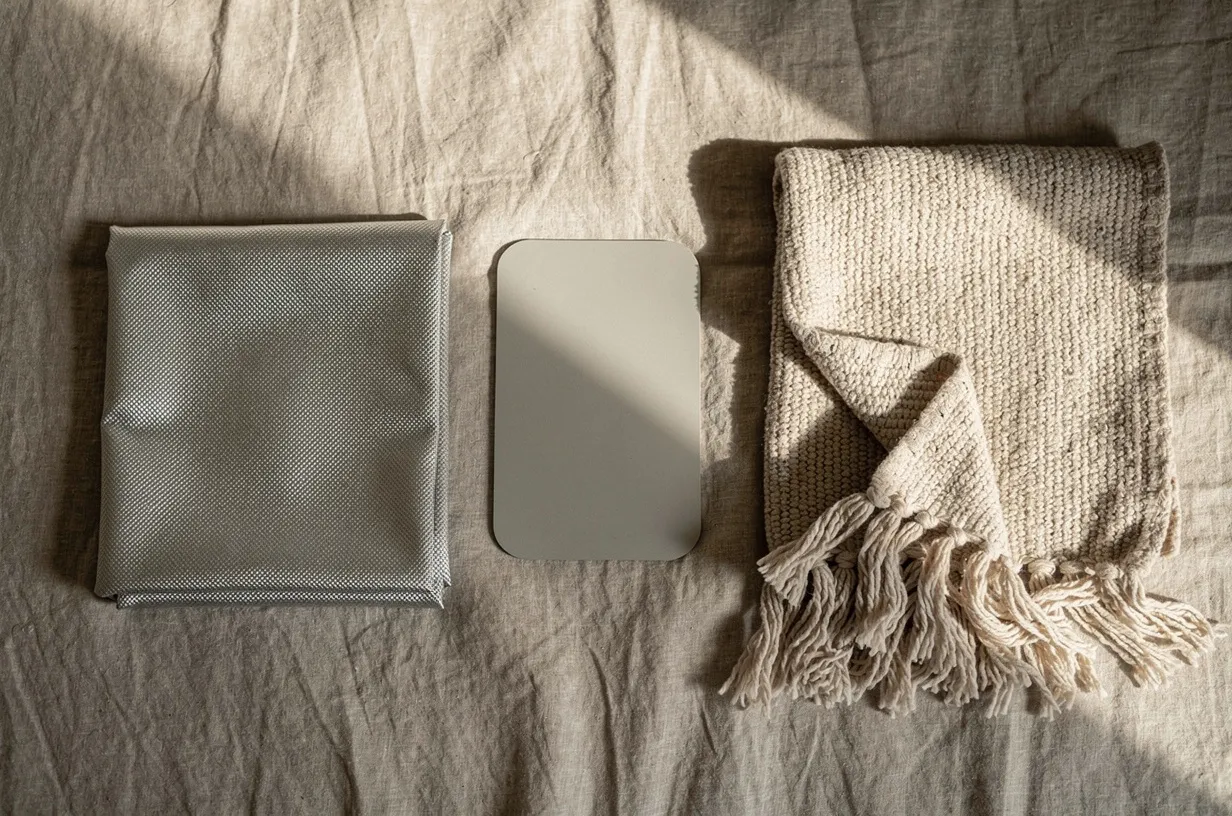
Short answer: a grounding sheet wins on skin contact time, a grounding mat wins on price and flexibility, and a grounding blanket sits in between as a daytime layer. If you only buy one thing and you’re after the sleep and relaxation effect the research actually looked at, get a sheet. The others are good add-ons, not substitutes.
A grounding sheet gives you the most hours of skin contact for the least daily effort, which is the format the sleep studies actually used. A mat or blanket is a fine second purchase, not a replacement.
What’s the real difference between a sheet, a mat and a blanket?
All three do the same basic job: a woven conductive fiber, usually silver thread or stainless steel, connects through a grounding cord to the ground pin of a wall outlet. Your skin touches the fabric, the fabric carries a path to earth potential, and that’s the entire mechanism. The difference is where and how long you’re actually in contact with it.
A grounding sheet fits under your fitted sheet or works as the fitted sheet itself, so your legs, back and arms stay in contact for most of the night. A mat is smaller, usually sized for your feet, hands or a desk chair, and you use it in short sessions while you work or watch TV. A blanket is a throw you drape over your lap or legs on the couch, or layer over your regular bedding, so contact is partial and depends on how you position it.
Why does contact time actually matter here?
It matters because the best-supported study in this space, Ghaly and Teplitz (2004), measured people sleeping grounded through the night and reported shifts in cortisol rhythm and self-reported sleep, pain and stress. That’s a small, unblinded pilot, and we say so every time we cite it, but it’s still the closest real-world setup grounding has been tested in. A sheet replicates that directly. A mat or blanket used for twenty minutes on the couch is a different exposure, and we don’t have good data on what a shorter daytime session does.
None of this means grounding treats or prevents anything. Overnight contact is simply the scenario with the most, still limited, research behind it, so if the goal is sleep, the sheet is the format built for that job.
Sheet vs mat vs blanket, side by side
| Format | Typical contact time | Best use case | Setup effort | Portability |
|---|---|---|---|---|
| Grounding sheet | Full night, whole body | Sleep, overnight relaxation | One-time under fitted sheet, then plug and forget | Low, stays on the bed |
| Grounding mat | Short daytime sessions | Desk work, TV time, feet or hands only | Lay flat, plug in each session | High, easy to move or travel with |
| Grounding blanket | Partial, variable | Couch, layering over bedding, cooler climates | Drape and plug in | Medium, folds for storage |
Price tends to follow the same order: mats are usually the cheapest entry point, sheets sit higher because of the fabric and stitching involved, and blankets vary with material weight. Check the current price on each product page rather than trusting a number here, since these shift.
Which one is easiest to live with day to day?
A sheet mostly disappears into your routine once it’s made up on the bed. You wash it like any other sheet, just gentler and less often to protect the conductive threads, and you don’t have to set anything up each night. We cover the full care routine, and why stainless steel holds up to washing better than silver, in our guide to Grounding Mats: The Complete Guide (vs Sheets, Setup, Picks).
A mat asks more of you, since it’s a deliberate short session rather than a passive overnight habit. That’s a strength if you want to test conductivity with a multimeter before committing to a full sheet, or if you split time between a bed and a desk. A blanket is the lowest-commitment option, easy to try on the couch first, but the least controlled skin contact of the three since it depends on how you drape it. For a deeper look at the last two specifically, see our Grounding Mat vs Grounding Sheet: Which One Fits Your Setup? breakdown.
Which one should you actually buy first?
If sleep is the goal, start with a sheet. It’s the format the research used, it requires the least ongoing effort, and it fits into a bed you already have. Our tested top pick uses stainless-steel fibers instead of silver, which matters more than it sounds: silver conducts well out of the box but oxidizes with repeated washing, so conductivity drops over months. Stainless steel holds up longer, and that’s the honest reason we recommend it over most silver-thread options on the market.
Premium Grounding Sheet
30% stainless-steel fibers instead of silver, so it will not oxidize and lasts about five times longer. Fits under your fitted sheet, ships worldwide, and comes with a 90-night trial and a 3-year warranty.
Check price on Premium GroundingIf budget is tight or you’re not sure grounding will do anything for you, a mat is the lower-risk way to test the idea for a few weeks. A blanket makes the most sense as a second product, layered onto a sheet you already have. We rank every format and brand honestly in our full Grounding Sheet Reviews 2026: Every Major Brand, Tested Standards, including where blankets fit against sheets in our Grounding Blankets: How They Work and When to Pick One Over Sheets guide.
Frequently asked questions
Can I use a grounding sheet, mat and blanket all at once?
Yes, and it won’t hurt anything. Just plug each one into its own grounded outlet or a grounding cord splitter rated for multiple devices, and don’t daisy-chain cords in ways that strain the plug. Using more than one doesn’t multiply the effect the way a supplement stack might; it just adds contact area and convenience across different parts of your day.
Do grounding mats work as well as sheets for sleep?
Not really, simply because most people use a mat for their feet or hands while sitting rather than lying on it all night. If you specifically want overnight grounding and only own a mat, you’d need to sleep with your feet resting on it, which is awkward for most sleep positions. A sheet solves that by covering the whole bed.
Is a grounding blanket worth it if I already have a grounding sheet?
It’s a nice-to-have rather than a need. A blanket adds grounded time on the couch or during a nap when you’re not on your sheet, and some people like the extra weight and texture. If your budget only stretches to one product, the sheet already covers the use case with the strongest research behind it.
What should a total beginner buy first?
A grounding mat is the cheapest way to find out whether you notice anything at all, since you can test it at your desk for a couple of weeks without changing your bedding. If you like it, a sheet is the natural upgrade for sleep. If you’re confident you want the sleep benefit specifically, skip straight to the sheet.
Does contact through pajamas or socks still count?
Thick fabric weakens the connection, since conductivity depends on skin actually touching the fiber. Thin cotton is usually fine; heavy socks or sleepwear will noticeably cut how much surface area is grounded, regardless of which format you’re using.
- Premium Grounding Review: Why Stainless Steel Changes the Game
- Grounding Well Review: Honest Look at the Popular Brand
- The Grounding Co Review: Terra Sheets Under the Microscope
- Bare Earth Grounding Sheets Review: Worth the Price?
- Hooga Grounding Mat Review: Budget Pick or Compromise?
- Terra Grounding Sheets Review: What Buyers Should Know
- Earthing.com Review: The Original Brand, Decades Later
- Premium Grounding vs Grounding Well: Which Sheet Wins?
- Premium Grounding vs Earthing.com: Honest Comparison
- Grounding Well vs Earthing.com: Which Is Better Value?
- Hooga vs Premium Grounding: Budget vs Best-in-Class
- Grooni Earthing Review: Is It Worth Buying?
← Grounding Sheet Reviews 2026: Every Major Brand, Tested Standards