Grounding sheets pick up a lot of internet noise, some of it useful, most of it not. Sort through enough forum threads and marketing pages and you’ll hit the same seven claims over and over. Some hold up. A couple are wildly overstated. One or two are just wrong.
Here’s what actually survives contact with the studies we track and the electrical facts of how these sheets work.
Short answer: grounding sheets are backed by a handful of small, honest studies mostly pointing at better sleep, not a cure for anything, and the real safety concern is a badly wired outlet, not the sheet itself.
Myth 1: Grounding sheets treat or cure disease
No grounding sheet treats, cures or prevents cancer, arthritis, diabetes, chronic pain or anything else. The best-supported outcome in the research, from Ghaly and Teplitz’s 2004 sleep and cortisol pilot, is subjective sleep quality: people reported falling asleep faster and feeling less stressed. Real, if modest. Not a cure for anything.
The proposed mechanism behind bigger claims, that Earth’s electrons act as antioxidants mopping up free radicals, comes from Oschman, Chevalier and Brown’s 2015 paper. Read past the headline and it’s a hypothesis paper, not a clinical trial. If a seller tells you grounding fixes a diagnosed condition, talk to your doctor instead. Don’t swap treatment for a bedsheet.
Myth 2: You could get electrocuted sleeping on one
A cord running from your bed to a wall outlet sounds risky until you look at what it connects to. A grounding sheet ties into the outlet’s ground pin, not the live wire, the same protective earth path your washing machine already uses.
The real risk is a miswired outlet, not the sheet. Older homes and reversed-polarity outlets are the actual danger, with or without a grounding sheet plugged in. A five-dollar outlet tester answers the question in a minute. Pacemaker, pregnant, or on heart medication? Mention it to your doctor first.
Myth 3: It’s all placebo, there’s no real effect
Skeptics raise fair points. Samples are small, often under a few dozen people. Blinding someone to whether they’re touching a conductive sheet is genuinely hard, and several researchers behind the core studies have ties to grounding product companies.
Still, “the studies are weak” isn’t the same as “there’s nothing here.” Separate small pilots, from the cortisol work to Sokal and Sokal’s 2011 series, reported similar directional shifts in sleep and stress markers. Could be placebo, could be a real small effect. Nobody has run the large blinded trial that would settle it.
Myth 4: The science is settled and grounding is medically proven
Also false, in the opposite direction. What exists is a stack of small pilot studies from overlapping research groups, not large randomized trials with independent replication. Chevalier’s blood viscosity work and the Sokal thyroid and glucose findings are leads, not proof.
No major medical body has reviewed and endorsed grounding as treatment. That doesn’t make it fake. It means “promising and under-studied” is the honest label, not “proven.”
Myth 5: You have to stay grounded 24/7 or it won’t work
This shows up in sales copy a lot and isn’t backed by the research. Studies mostly tested nightly sleep grounding over a period of weeks, not round-the-clock contact. Nobody has compared two hours a night against eight.
Sleeping grounded most nights matches what the pilot studies actually tested. Anything beyond that is a guess, ours included.
Myth 6: All grounding sheets are basically the same
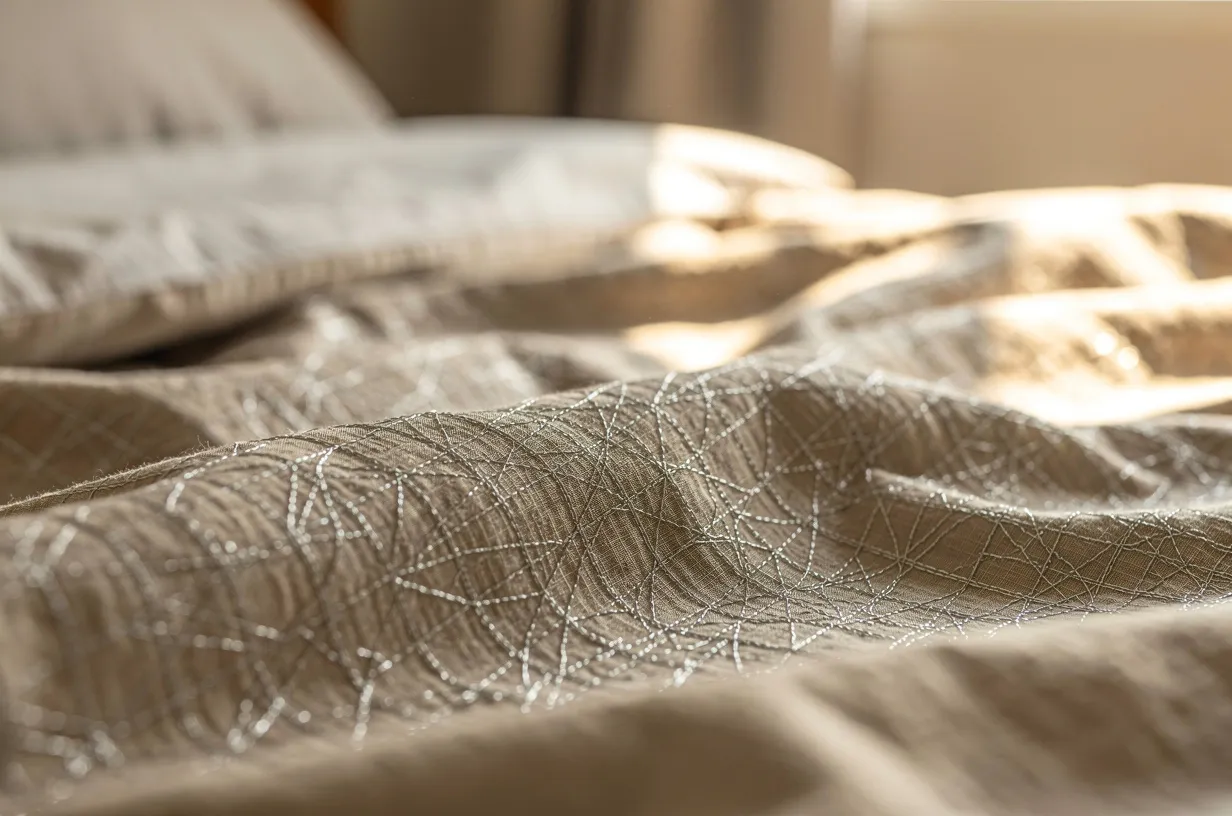
They’re not. Most grounding sheets use silver thread, which conducts well new but oxidizes with repeated washing, so conductivity fades over months. Stainless-steel fiber doesn’t oxidize the same way and holds its conductivity longer.
That durability gap is the honest reason to favor stainless-steel construction over silver, not because silver sheets are a scam, just because they wear out faster.
Premium Grounding Sheet
30% stainless-steel fibers instead of silver, so it will not oxidize and lasts about five times longer. Fits under your fitted sheet, ships worldwide, and comes with a 90-night trial and a 3-year warranty.
Check price on Premium GroundingMyth 7: No doctor would ever recommend grounding
Doctors aren’t united against it, they’re mostly cautious and non-committal. The general clinical stance: low-risk for most healthy adults, the sleep-quality angle is plausible enough not to dismiss, but not strong enough evidence to prescribe.
What you won’t hear from an actual doctor is a promise that grounding treats a diagnosed condition. For the fuller picture, see What Do Doctors Say About Grounding Sheets?.
| Myth | What the evidence actually says |
|---|---|
| Cures or treats disease | No. Best-supported outcome is subjective sleep quality, not disease treatment. |
| Electrocution risk | Connects to outlet ground, not live power. Real risk is a miswired outlet, not the sheet. |
| Pure placebo, zero effect | Unproven either way. Small studies, hard to blind, but a consistent directional pattern. |
| Medically proven | No large independent trials exist yet. Promising, not settled. |
| Must be grounded 24/7 | Studies tested nightly sleep grounding over weeks, not constant contact. |
| All sheets are equal | Silver oxidizes and loses conductivity over time; stainless steel holds up longer. |
| Doctors reject it outright | Mostly cautious, not opposed. Low-risk to try, not a substitute for treatment. |
For the full breakdown of every anchor study behind these claims, see The Science of Grounding Sheets: Every Study, Summarized. If you want the skeptics’ side argued in full, Earthing Debunked? A Fair Look at the Skeptics’ Arguments covers it fairly. And for the bigger question this page keeps circling back to, Do Grounding Sheets Work? What the Research Really Shows is the honest verdict page.
Frequently asked questions
Is grounding backed by real science?
There’s real research, but it’s small and early-stage. The most-cited papers are pilot studies with a few dozen participants each, mostly pointing toward better subjective sleep and lower stress, not large clinical proof.
Can a grounding sheet hurt you?
For most people using a properly grounded outlet, no. The main risk is electrical, tied to bad household wiring rather than the sheet, so a cheap outlet tester is worth the two minutes it takes. Anyone with a pacemaker or a heart condition should check with their doctor first.
Is grounding just a placebo effect?
Possibly, at least in part. The studies are too small and too hard to blind to rule placebo out completely, but they’re also too consistent across separate pilots to dismiss entirely. It’s an honest “we don’t fully know yet.”
Do doctors recommend grounding sheets?
Most take a wait-and-see stance: low-risk enough to try, not strong enough evidence to prescribe. None recommend it as a substitute for actual medical treatment.
How long before I’d notice anything?
The sleep-focused pilot studies tracked changes over a period of weeks of nightly use, not a single night. If you try it, give it a few weeks before deciding whether it’s doing anything for you.
- The Science of Grounding Sheets: Every Study, Summarized
- Earthing Debunked? A Fair Look at the Skeptics’ Arguments
- Do Grounding Mats Work? Evidence vs Marketing
- Are Grounding Sheets a Placebo? What Blinded Studies Suggest
- Grounding Studies: The Complete List of Clinical Research (2004-2026)
- Grounding Sheets on Reddit: What Real Users Report After Months
- Grounding Sheet Clinical Studies: Full List
- The Grounding Cortisol Study, Explained
- Grounding and Blood Viscosity: The Study
- The 2015 Grounding Inflammation Review, Explained
- Is Grounding Pseudoscience? A Fair Look
- Grounding and the Placebo Effect