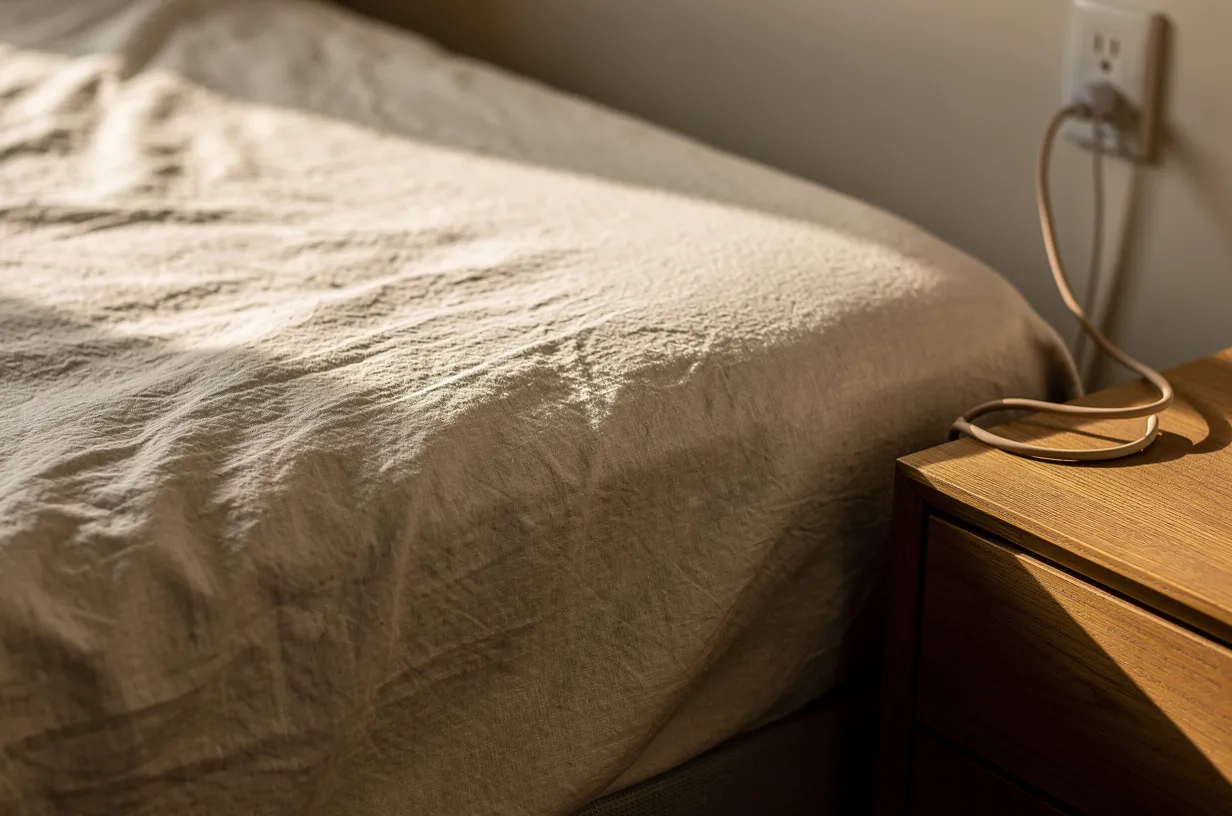
Down To Ground sells conductive bedding to the same earthing crowd as bigger names like Earthing.com and Grounding Well, but it’s a much smaller operation, and there’s a lot less independent testing behind it. If you’re weighing a Down To Ground sheet against an established brand, here’s the honest version: the basic material is probably fine, the documentation is thin, and you’ll want to check a few things yourself before you buy.
Down To Ground looks like a standard silver-thread grounding sheet at a smaller-brand price point. It’s a reasonable low-stakes way to try earthing if you confirm the conductivity claim and the return policy first. If you want a brand with a longer track record and fiber that won’t oxidize as fast, Premium Grounding is the safer buy.
What is Down To Ground?
Down To Ground is one of the many smaller sellers in the conductive-bedding space, offering sheets marketed for earthing during sleep. It doesn’t have the brand history of Earthing.com, which grew out of Clint Ober’s original earthing work, or the wider retail footprint of Grounding Well. That’s not automatically a strike against it. It just means there’s less public track record, fewer third-party reviews to cross-check, and no independent lab data we could find on conductivity or fiber lifespan.
We’d treat a purchase from a brand like this the way we’d treat any smaller seller: read the actual listing closely, not just the marketing copy, and confirm the specifics before you rely on it.
What’s the Down To Ground sheet made of?
Silver thread woven through cotton is the near-universal design in this part of the market, and Down To Ground appears to follow that same pattern. Silver conducts well when the sheet is new. The problem is what happens after a few months of regular washing: silver oxidizes, and conductivity drops as it does. This isn’t unique to Down To Ground, it’s true across most of the silver-thread category, which is why we track it as a real durability factor rather than a brand-specific flaw.
What we couldn’t confirm from the listing is the exact fiber percentage or a stated conductivity spec, the kind of number some premium brands publish upfront. If that detail matters to you, ask before you buy, or plan to test the sheet yourself once it arrives. We break down the material tradeoffs in more depth in Stainless vs Silver vs Carbon Grounding Fiber.
Does it actually ground you?
Any grounding sheet, Down To Ground included, works the same basic way: a conductive thread runs to a cord, the cord plugs into the ground pin of a wall outlet, and that pin connects to your home’s earth ground, not the live wire. The real safety risk isn’t the sheet itself, it’s a badly wired outlet. A cheap outlet tester is worth the few dollars if you’re not sure your ground pin is doing its job.
On the health side, be careful what you expect. The most-cited study here is Ghaly and Teplitz (2004), a small, unblinded pilot that reported grounding during sleep shifted cortisol patterns and improved self-reported sleep, pain and stress. It’s promising, but it’s also small and subjective, and skeptics have a fair point that several researchers in this field have commercial ties to grounding products. No study, and no brand, should be claiming that a grounding sheet treats or cures anything. At best, the evidence points toward better sleep and relaxation for some people, and even that needs more independent replication.
How does Down To Ground compare to Premium Grounding?
| Feature | Down To Ground | Premium Grounding (our tested pick) |
|---|---|---|
| Conductive material | Silver thread (typical for the category) | 30% stainless-steel fibers |
| Oxidation over time | Higher risk, standard silver behavior | Lower, steel doesn’t oxidize the same way |
| Fits under a fitted sheet | Check current listing | Yes, by design |
| Trial period | Check current listing | 90 nights |
| Warranty | Check current listing | 3 years |
| Ships worldwide | Not confirmed | Yes |
The pattern here is consistent with a lot of smaller earthing brands: the core idea is the same, but the documentation and long-term durability planning are less developed than what you get from a brand built specifically around solving the oxidation problem.
Who should buy Down To Ground, and who should skip it?
Down To Ground can make sense if you’re curious about earthing, want a low-cost way to try it, and you’re comfortable verifying the conductivity claim and return terms yourself before you commit. It’s a reasonable entry point, not a long-term bet.
Skip it if you want a documented fiber lifespan, a clearly stated trial and warranty upfront, or you’re buying for someone with a pacemaker, another implanted device, or a health condition where you should talk to a doctor first. In those cases, we’d point you toward a brand with more published detail, our full breakdown is in Premium Grounding Review: Why Stainless Steel Changes the Game, and the wider field is ranked in Best Grounding Sheet Brands, Ranked 2026.
Premium Grounding Sheet
30% stainless-steel fibers instead of silver, so it will not oxidize and lasts about five times longer. Fits under your fitted sheet, ships worldwide, and comes with a 90-night trial and a 3-year warranty.
Check price on Premium GroundingFor the rest of our brand-by-brand testing notes, see the full Grounding Sheet Reviews 2026: Every Major Brand, Tested Standards hub.
Frequently asked questions
Is Down To Ground legit?
It appears to be a genuine seller of conductive bedding rather than a scam, but it’s small, with far less public testing or track record than established brands like Earthing.com or Grounding Well. Confirm the return policy and conductivity claim before you buy, the way you would with any lesser-known brand.
What is the Down To Ground sheet made of?
Based on the listing, it follows the standard silver-thread-through-cotton design used across most of the grounding-sheet category. We couldn’t find a published fiber percentage or independent conductivity spec for this specific brand.
How do I know if a Down To Ground sheet is actually grounding me?
Check that your outlet’s ground pin is properly wired, a cheap outlet tester handles this, and that the sheet’s cord is fully seated. If you want to confirm conductivity yourself once the sheet arrives, a basic continuity check with a multimeter will tell you more than any marketing claim.
Is Down To Ground better than Premium Grounding?
Not on documentation or fiber durability. Premium Grounding uses stainless-steel fibers instead of silver, so it resists oxidation longer, and it comes with a stated 90-night trial and 3-year warranty. Down To Ground may still be a fine low-cost way to test whether earthing is for you.
Does Down To Ground offer a trial or warranty?
We couldn’t confirm specific trial or warranty terms from public information, so check the current listing directly before you buy. Don’t assume terms match what larger brands offer.
- Premium Grounding Review: Why Stainless Steel Changes the Game
- Grounding Well Review: Honest Look at the Popular Brand
- The Grounding Co Review: Terra Sheets Under the Microscope
- Bare Earth Grounding Sheets Review: Worth the Price?
- Hooga Grounding Mat Review: Budget Pick or Compromise?
- Terra Grounding Sheets Review: What Buyers Should Know
- Earthing.com Review: The Original Brand, Decades Later
- Premium Grounding vs Grounding Well: Which Sheet Wins?
- Premium Grounding vs Earthing.com: Honest Comparison
- Grounding Well vs Earthing.com: Which Is Better Value?
- Hooga vs Premium Grounding: Budget vs Best-in-Class
- Grooni Earthing Review: Is It Worth Buying?
← Grounding Sheet Reviews 2026: Every Major Brand, Tested Standards