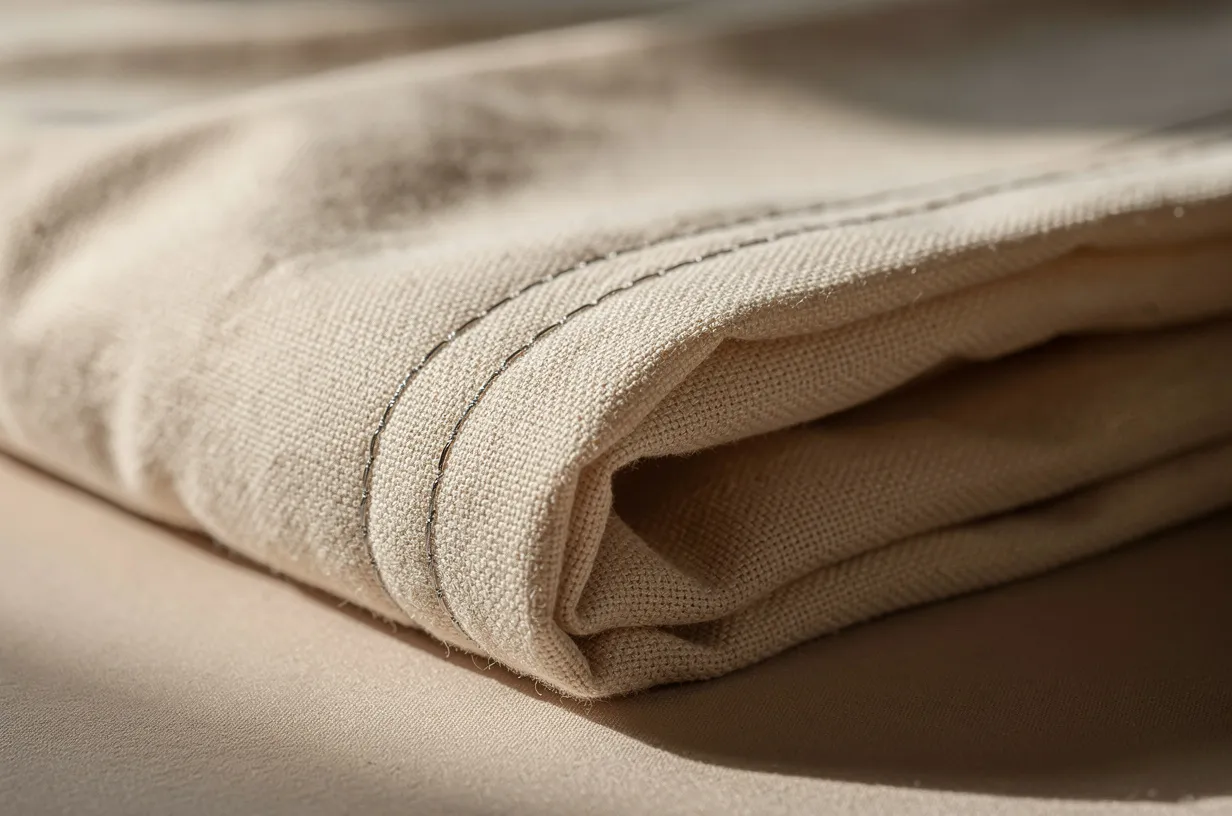
Organic cotton makes a grounding sheet feel softer against your skin and it tells you something about how the base fabric was farmed. It tells you almost nothing about how well the sheet actually grounds you. That part comes from the metal thread woven through the cotton, not the cotton itself.
Organic fabric is about comfort, chemical exposure and how the sheet ages, not conductivity. The ground connection comes from the metal fiber woven into the weave, so shop organic for softness and certifications, and shop the thread type for how well and how long it actually grounds.
What does “organic” actually mean on a grounding sheet label?
On a regular bedsheet, organic cotton means the fiber was grown without synthetic pesticides or fertilizers, under a certified farming standard. Nothing about that process has anything to do with electrical conductivity.
A grounding sheet is really two products stitched together: a cotton (or cotton-blend) base, and a network of fine metal fibers woven through it that carries a small current from your skin to the ground wire in your wall outlet. “Organic” describes the first part. It says nothing about the second.
That’s worth sitting with for a second, because a lot of listings lean on the word “organic” as if it’s the headline feature. For comfort and peace of mind about what’s touching your skin all night, it matters. For grounding performance, it’s a side note.
Does organic cotton make a grounding sheet ground better?
No. Conductivity depends on the metal, not the plant fiber around it. Most grounding sheets use either silver-coated thread or stainless-steel thread, and that choice affects performance and durability far more than whether the cotton was organically grown.
Silver conducts extremely well when it’s new, but it oxidizes with repeated washing, and oxidized silver conducts less over time. Stainless steel starts out slightly less conductive but doesn’t oxidize the same way, so it tends to hold up better across years of laundering. We go deeper on this trade-off in our Stainless Steel vs Silver Grounding Sheets: Which Lasts Longer? comparison, and it applies exactly the same whether the cotton around the thread is organic or conventional.
What certifications are actually worth checking?
Two labels show up most often, and they’re not measuring the same thing.
GOTS (Global Organic Textile Standard) certifies the cotton itself, covering how it was grown and processed, with limits on chemical inputs at every stage. OEKO-TEX Standard 100 is different: it tests the finished textile for a long list of harmful substances, and it applies to conventional and organic fabrics alike.
A sheet can carry OEKO-TEX certification without being organic at all, and a genuinely organic sheet without any third-party testing on the finished product is possible too, though less common from brands that bother with the organic label in the first place. If low chemical exposure is the reason you’re looking at organic in the first place, OEKO-TEX on the finished sheet is arguably the more direct proof, since it’s tested at the end, not just at the farm.
Organic vs conventional cotton base: what actually changes
| Factor | Organic cotton base | Conventional cotton base |
|---|---|---|
| Farming inputs | No synthetic pesticides/fertilizers, certified | May use standard synthetic inputs |
| Feel | Often softer, sometimes coarser depending on weave | Varies by weave and thread count, same range |
| Conductivity | Unaffected, comes from the metal thread | Unaffected, comes from the metal thread |
| Price | Usually higher | Usually lower |
| Common certification | GOTS, sometimes also OEKO-TEX | OEKO-TEX only, if any |
| Durability | Depends on weave quality, not organic status | Depends on weave quality, not organic status |
Does organic fabric change comfort or how long the sheet lasts?
Breathability and softness come down to weave and thread count more than whether the cotton is organic. Some organic sheets feel noticeably softer because the brands selling them tend to use longer-staple cotton and a tighter weave, but that’s a correlation with the kind of brand, not a rule about organic fiber itself.
Durability of the sheet as a whole is really a story about the metal thread, not the cotton. If you wash a lot, as you should with any sheet that touches your skin every night, the thread type is what determines whether the sheet still grounds well in year three. We cover general care and washing in our How to Choose a Grounding Sheet: A Practical Buyer’s Checklist checklist.
Is it worth paying more for organic?
If avoiding synthetic pesticide residue and supporting certified organic farming matters to you on principle, yes, and that’s a reasonable thing to pay for. If your main goal is the strongest, longest-lasting ground connection, put your attention on the thread material and the certification of the finished textile instead, since neither of those is guaranteed by the word “organic” on the package.
Our tested top pick, Premium Grounding, uses 30% stainless-steel fiber rather than silver, which is the detail that actually extends the sheet’s working life, and it comes with a 90-night trial and a 3-year warranty so you’re not guessing. If the organic label specifically matters to you, check the current listing for its fabric certification before you buy, since that can change between manufacturing runs.
Premium Grounding Sheet
30% stainless-steel fibers instead of silver, so it will not oxidize and lasts about five times longer. Fits under your fitted sheet, ships worldwide, and comes with a 90-night trial and a 3-year warranty.
Check price on Premium GroundingFor a fuller buying framework beyond fabric, our Best Grounding Sheets of 2026: Tested Picks & Buying Guide guide covers sizing, thread type and price range together, and if you’re still deciding whether any of this is worth the money, Are Grounding Sheets Worth It? An Honest Cost vs Benefit Look lays out the honest cost-versus-benefit case.
Frequently asked questions
Is organic cotton necessary for a grounding sheet to work?
No. The grounding function comes from the metal fiber woven into the fabric, not the cotton itself. An organic sheet and a conventional cotton sheet with the same thread type will conduct the same.
What’s the difference between GOTS and OEKO-TEX certification?
GOTS certifies how the cotton was farmed and processed. OEKO-TEX tests the finished textile for harmful substances. A sheet can carry one, both, or neither, and they answer different questions.
Do organic grounding sheets cost more than conventional ones?
Usually, yes. Certified organic cotton costs more to grow and process, and that tends to show up in the price of the finished sheet.
Does organic cotton wear out faster than conventional cotton?
Not inherently. Durability of the sheet as a whole depends mostly on the metal thread and the weave quality, not on whether the cotton was organically grown.
Can I wash an organic grounding sheet the same way as a regular one?
Generally yes, following the care label, though washing gently and avoiding harsh detergents helps any grounding sheet’s conductive thread last longer, organic or not.
- Grounding Sheets Made in USA: Brands That Actually Manufacture Here
- Organic Cotton Grounding Sheets: Why the Fabric Base Matters
- Stainless Steel vs Silver Grounding Sheets: Which Lasts Longer?
- Best Earthing Sheets: Top Picks Ranked by Conductivity & Durability
- King Size Grounding Sheets: Sizing Guide & Best Options
- Cheap Grounding Sheets: What You Sacrifice Below $100
- How to Choose a Grounding Sheet: A Practical Buyer’s Checklist
- Are Grounding Sheets Worth It? An Honest Cost vs Benefit Look
- How We Test Grounding Sheets: Our Rating Method
- Grounding Sheet Ratings 2026: Every Sheet We Tested, Scored
- Twin Grounding Sheets: Sizing and Picks
- Full Size Grounding Sheets: Options
← Best Grounding Sheets of 2026: Tested Picks & Buying Guide